
Rieke Urges Swift Passage of the PPRT Bill After 22-Year Wait
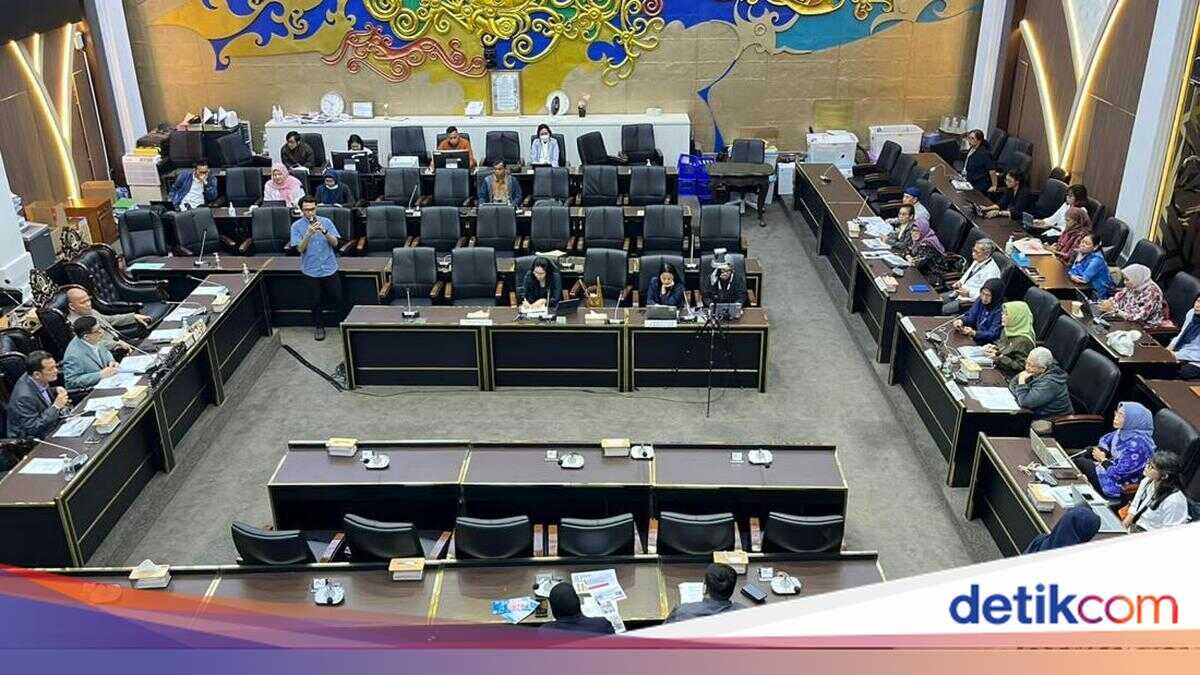
Member of DPR’s Commission XIII and concurrent chairperson of the Confederation of Indonesian Domestic Workers, Rieke Diah Pitaloka, has highlighted the lengthy discussion around the Draft Law on Protection for Domestic Workers (PPRT Bill), which has waited for enactment for more than two decades. Rieke urged that the PPRT Bill be enacted promptly. She made the remarks during a public hearing (RDPU) of the Legislative Body (Baleg) of the DPR discussing input for the PPRT Bill at the Parliament complex in Senayan, Jakarta, on Thursday (5 March 2026). According to her, the state has an obligation to ensure every citizen receives fair and decent treatment in employment relations.
“Protection of workers is not merely a social policy, but a constitutional mandate that must be realised through adequate regulations,” said Rieke.
Rieke explained that the number of Indonesian migrant workers abroad reaches about 5.2 million. Of that number, around 2.5 to 3 million work as domestic workers, with around 100,000 new placements every year.
According to her, migrant workers make a significant economic contribution to Indonesia. Based on Bank Indonesia data, migrant worker remittances in 2024 reached about USD 15.7 billion, or around Rp 253 trillion.
“That means migrant workers, including millions of domestic workers, are the national economic backbone and drive household economies in various migrant home regions,” she said.
“Ironically, the sector that makes such a large economic contribution is still under the weakest legal protection. Indonesia has yet to ratify ILO Convention No. 189 on decent work for domestic workers, and domestic workers are not yet fully recognised within the national labour law system,” she added.
She noted that the vulnerability of domestic workers is not only due to regulatory gaps but also to outdated perceptions of domestic work.
Rieke said domestic workers are often not recognised as workers, and there remains social stigma as helpers.
“There is an unequal power relation between workers and employers, worsened by social stigma as ‘assistants’ or, worse, as ‘babau’ (servants). Care work has yet to be recognised as economically valuable work,” she said.
Furthermore, Rieke highlighted various cases of violence against domestic workers that still occur. She stated that Amnesty International data for 2025 records at least 122 cases of sexual violence and domestic violence against domestic workers in Indonesia.
“This year, during Ramadan, the most recent case we advocated together involved violence by almost the entire family against a domestic worker who was tortured in the extreme,” she said.
Therefore, Rieke urged the government to ratify ILO Convention 189 and expedite the enactment of the PPRT Bill. She also called for support from the DPR Baleg leadership and members from all factions to pass the bill soon to recognise workers’ status, secure their rights, and provide effective legal protection mechanisms.
“The PPRT Bill cannot wait any longer. The state cannot merely enjoy the economic contributions of migrant workers,” she stressed, noting that migrant domestic workers contribute around Rp 253 trillion in foreign exchange each year, which ultimately becomes part of the salaries and allowances in parliament. The state must not enjoy their economic contributions without providing proper legal protection; the PPRT Bill has waited 22 years,” she concluded.
See also Video: DPR Baleg Member: The PPRT Law Will Be the Nation’s and Government’s Atonement.