
Rice Prices Remain High Despite Abundant Stocks, Amran Explains Why
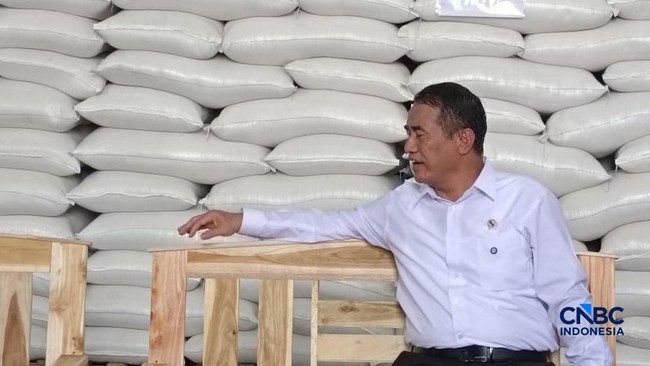
Jakarta, CNBC Indonesia - Agriculture Minister and Head of the National Food Agency (Bapanas), Amran Sulaiman, has explained the reason why rice prices remain high despite abundant stocks. He emphasised that rice prices are not being reduced to safeguard the low income of farmers.
Amran revealed that, based on calculations with the All-Indonesia Student Executive Board (BEM), the average daily income of farmers is only around Rp37,000.
“Ah, I just explained this. The students asked, and I explained… do you know what the farmers’ daily income is? We calculated it with students from BEM across Indonesia, and it’s only Rp37,000 per day. For one farmer. Then a bricklayer can earn Rp75,000 (per day), that’s what the students said,” Amran stated when met after a meeting with the All-Indonesia BEM at his residence in Jakarta on Wednesday (6/5/2026).
He also compared rice prices to cigarette prices to illustrate the public’s perception of expense. “Then cigarettes cost Rp40,000 (per pack). Now, which is more expensive? Cigarettes, right. Why don’t you protest that cigarettes are expensive?” he continued.
Nevertheless, Amran believes that rice, as a staple food, must have its price balanced, not just suppressed to be cheap. “Well, that’s why rice, because it’s consumed by many people, we maintain it,” he said.
He stressed that lowering rice prices would further pressure farmers’ already small incomes.
“Now, do you want to lower rice prices? I ask, farmers’ income is Rp37,000, 115 million farmers earn Rp37,000. Do you want farmers earning Rp37,000 per day to drop another Rp10,000 per day? No, don’t. It’s already written, don’t lower it,” he asserted firmly.
He assured that the current government policy is to maintain the stability of rice prices, not to reduce them. “That’s right. We stabilise the price. But we don’t lower it. We stabilise it,” he said.
Previously, the government raised the Government Purchase Price (HPP) for Harvested Dry Grain (GKP) at the farm level to Rp6,500 per kg, effective from 15 January 2025. The aim is to improve farmers’ welfare and absorb the entire harvest. This HPP increase has also contributed to the rise in consumer rice prices.