
Rice Farmers' Pricing Challenges
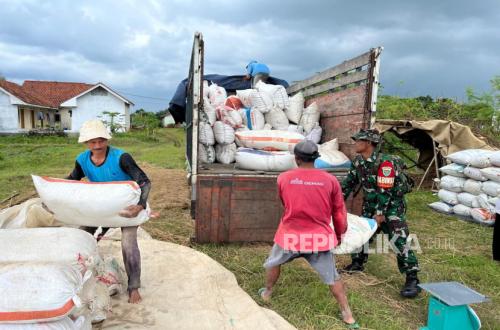
In this country, most rice farmers sell their harvest as paddy (GKP). Few can process paddy into rice.
Processing paddy into rice appears beyond farmers’ control, with rice millers, traders, tengkulak, and Bulog being the main stakeholders.
The statement that rice farmers prefer selling paddy over rice stems from five practical reasons, including the need for quick cash and limited capital, as well as cash flow concerns.
After harvest, farmers must settle debts for fertiliser, labour wages, and living costs. Selling paddy brings cash within one to three days, whereas processing into rice takes weeks: drying for two to three days, milling, and packaging. During this time, households struggle to put food on the table, and rain can spoil the paddy.
Second, high milling costs and weight loss. Milling costs average between Rp300-Rp500 per kg; for a 5-ton harvest, that’s Rp1.5m-Rp2.5m upfront. From 100kg of paddy, only 62-65kg of rice is produced.
Farmers bear the loss risk, with quality deteriorating if paddy is inadequately dried, leading to broken grains during milling and lower prices.
Third, lack of equipment and storage. Quality rice milling units cost tens to hundreds of millions of rupiah.
Most farmers cultivate less than 0.5 hectares, making ownership impractical. Limited drying space is another issue; rainy seasons cause mould, and storing rice risks pests, spoilage, and price drops. Selling paddy shifts these risks to middlemen or mills.
Fourth, paddy prices are more stable. The Government Purchase Price (HPP) is set annually, with Bulog mandated to buy. This provides a safety net. Middlemen collect paddy directly from fields, eliminating transport concerns: arrive, weigh, pay, and collect.
Rice prices fluctuate, requiring competition with major brands, packaging, distribution permits, and complex supply chains.
Fifth, small-scale operations lack profitability. To profit from rice sales, farmers need large volumes and brands. Smallholders with 1-2 tons struggle to gain margins, making paddy sales preferable despite thin but certain profits.
In short, selling paddy offers low risk, quick cash, and no extra capital. Rice sales promise higher profits but require significant investment, time, and risk. Only farmers in groups with their own RMUs can afford to sell rice directly, cutting milling costs and scaling up.
The government encourages farmers to sell rice instead of paddy to capture higher value and profits. Current support measures include:
Post-harvest equipment assistance, such as Rice Milling Units (RMUs). The Ministry of Agriculture, through the Directorate General of Crops, provides milling machines to farmers’ groups, with capacities of 1-2 tons per hour.
Vertical dryers to ensure consistent drying regardless of weather, with 5-10 ton batch capacity, reducing moisture to 14% and preventing broken grains. Power threshers and combine harvesters improve efficiency and reduce losses.
Key requirements include membership in farmers’ groups and submitting proposals through district agricultural offices.
Business loans such as KUR (People’s Business Credit) at 6% annual interest, up to Rp500m, for milling costs, packaging, and warehouse rentals.
The YESS and Milennial Farmers Program offers mentorship and capital access for youth entering rice milling and sales. Microfinance institutions (PMI/LKM-A) within gapoktan provide loans for processing paddy into rice.
Bulog now directly procures rice from gapoktan and small mills, not just paddy. Since 2023-2024, policy changes include a Government Purchase Price for rice in Bulog warehouses.
Gapoktan milling their own rice yields higher margins than selling paddy to middlemen. The Government Rice Reserve programme ensures Bulog stocks, creating a clear market.
Farmer corporations and downstream processing via Food Estate initiatives encourage consolidation. Aggregating 1,000 tons of paddy makes owning an RMU and branding rice feasible.
Packaging and branding support through TTI (Toko Tani Indonesia) programmes, where gapoktan are trained to package rice, with Bulog and ID FOOD assisting distribution.
Digitalisation via apps like SIPINDO and Mitra Tani connects gapoktan directly to modern markets, bypassing middlemen.
Training and mentorship through P4S and BPP centres teach milling techniques, rice sorting, packaging, and HPP calculation. Certification support for PIRT, halal, and SNI standards enables entry into modern retail.
On-ground challenges persist. Despite existing programmes, bureaucratic hurdles prevent access: complex proposals, active group requirements, and regular reporting. Small-scale farmers with less than 0.5 hectares produce insufficient paddy to cover milling costs.
They cannot cover milling costs alone. Group management is another issue; many gapoktan fail after receiving RMU aid due to poor maintenance and financial oversight.
To improve farmers’ economic value, consolidation through gapoktan or cooperatives is essential. Individual farmers struggle, but pooled 50-100 hectare operations make RMU and dryer investments viable for direct rice sales.