
Ribka Haluk Appreciates Strengthening of Governance in Jayapura Regional Hospitals
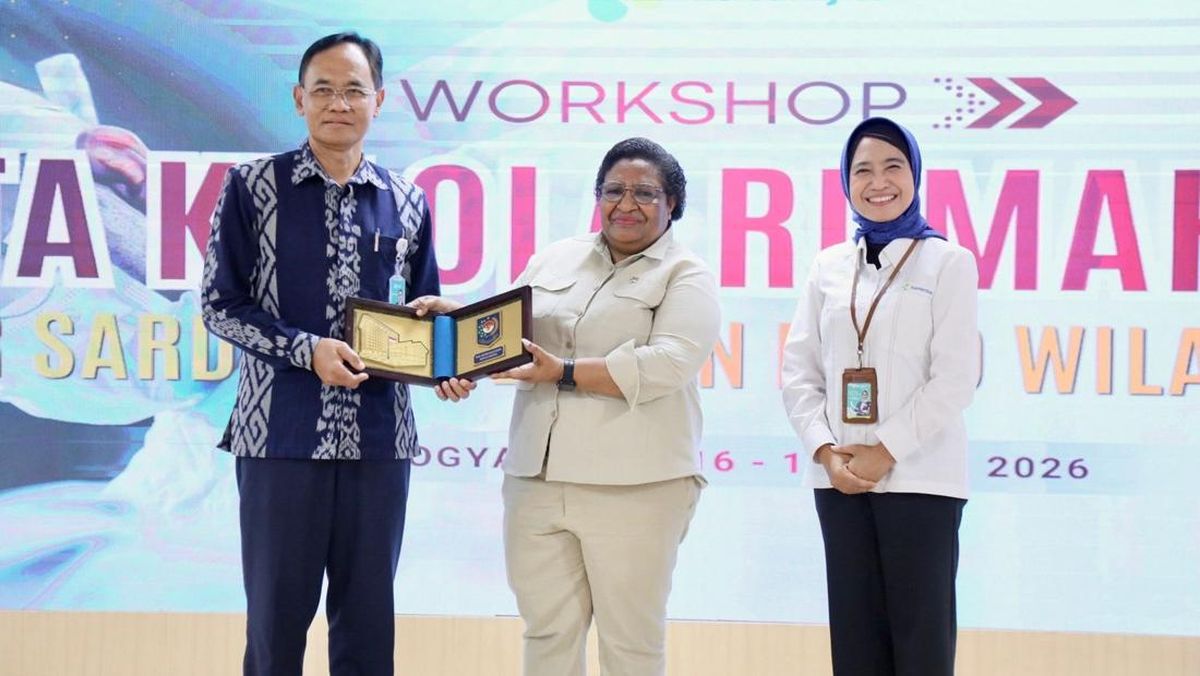
Deputy Interior Minister (Wamendagri) Ribka Haluk has appreciated the strengthening of governance in regional hospitals in the Jayapura area through a workshop held in the Special Region of Yogyakarta on Thursday (16/4). She considers the workshop on hospital governance between RSUP Dr. Sardjito and regional hospitals in Jayapura as a beneficial effort for improving the quality of healthcare services in Papua. Ribka emphasised that strengthening the health sector aligns with the vision of the government under President Prabowo Subianto and Vice President Gibran Rakabuming Raka in Asta Cita. In one of the points of Asta Cita, Ribka mentioned that the government is committed to strengthening human resource development (SDM), including in the health sector. This is manifested, among others, through the Free Health Check Programme (CKG). “One of the missions of the President is how we carry out development in the health sector, namely starting with free health checks, CKG,” said Ribka. To ensure the success of this programme, Interior Minister (Mendagri) Muhammad Tito Karnavian has specifically tasked Ribka with overseeing its implementation in eastern Indonesia. Routinely, Ribka coordinates with governors, regents, and mayors to ensure the policy is carried out well. Based on her observations, Ribka highlighted the need to improve the quality of healthcare service governance in Papua, particularly at the community health centre (Puskesmas) level. This is because such services are the frontline in the success of the programme promoted by President Prabowo Subianto. “The government’s task is to ensure the most frontline service centres in the community, for example at the village level in Pustu (Puskesmas Pembantu) and so on. We must ensure that the people there (in Papua) have undergone free health checks,” added Ribka. In addition to this programme, Ribka revealed that the government is currently accelerating the elimination of tuberculosis (TB) cases. According to her, this handling cannot be done unilaterally by the Ministry of Health (Kemenkes), but requires active roles from local governments (Pemda) and all levels of society. “I think the spirit is how the usual health education from the Ministry of Health should be increased,” she said. On the same occasion, Ribka emphasised that high-quality healthcare services will have a significant impact on improving the Human Development Index (IPM). This contribution will not only be felt directly by the community but also serves as a strategic step in supporting the achievement of Golden Indonesia 2045. “So it must target the community in 100 years [of Indonesia’s age] in 2045 to be a healthy community, a quality community in terms of education, the IPM must be good, and growth must be good,” Ribka asserted. Also present at the event were the Director of Referral Healthcare Service Governance from the Ministry of Health, Ockti Palupi Rahayuningtyas, the Director General of RSUP Dr. Sardjito, Romaniyanto, along with their teams, and workshop participants from regional hospitals in the Jayapura area.