
Riau Police Initiate Waste-to-Energy to Address Waste at Muara Fajar Landfill
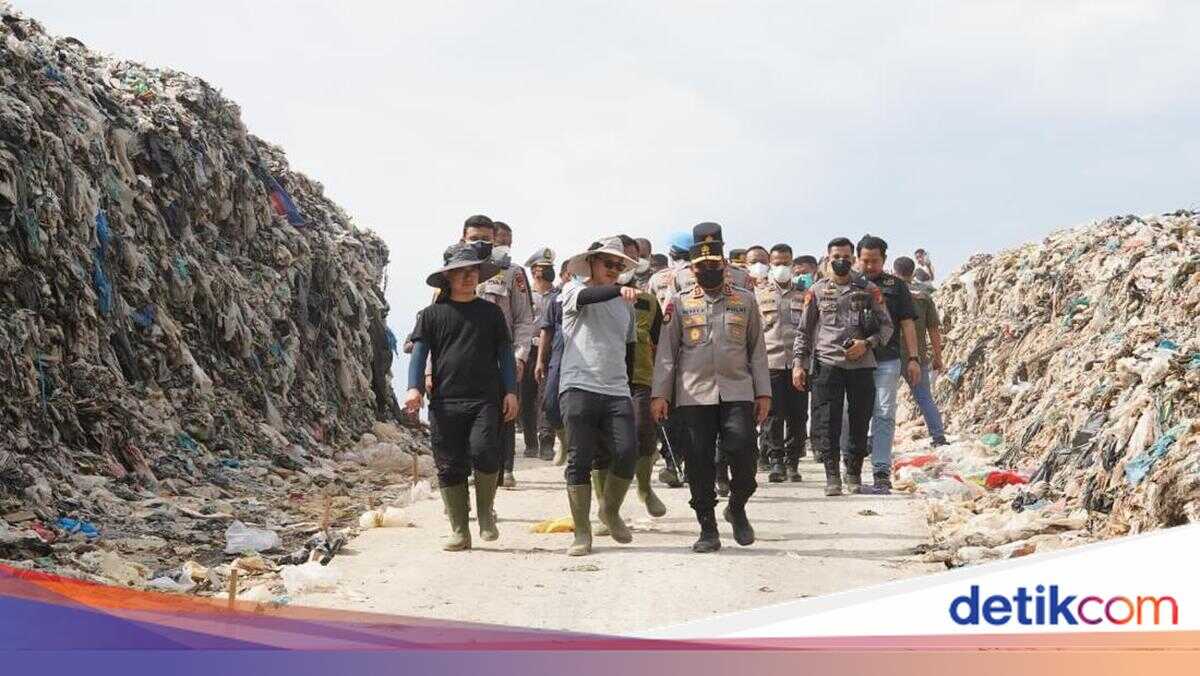
Facing an increasingly urgent waste management crisis, the Riau Police (Polda Riau), in collaboration with the Pekanbaru City Government (Pemkot Pekanbaru), is taking concrete steps by introducing Waste-to-Energy (WTE) technology at the Muara Fajar Final Disposal Site (TPA Muara Fajar) in Pekanbaru. The innovation is expected to be a permanent solution to the waste emergency in Pekanbaru and, at the same time, to convert waste into a source of renewable energy.
Kombes Zahwani Pandra Arsyad, Head of Public Relations at Polda Riau, said the force’s role in this WTE project is as a nexus (cross‑sector hub) coordinating a five‑helix collaboration among government, business players, academia, the community, and the media.
“Why should the police manage waste? Referring to the Broken Windows Theory, Polda Riau regards a dirty environment as the starting point of social disorder. Waste management is a form of proactive policing (pre‑emptive strike) against potential kamtibmas disturbances,” he said in a statement on Thursday, 5 March 2026.
Beyond waste management, through this WTE technology the police provide a guarantee of ‘security as a capital’ (security as capital). In this context, the police ensure security and legal certainty, creating a climate of investment that is highly conducive, so that major capital (investors) are willing to come to Pekanbaru to tackle the waste problem without burdening the public budget (APBD).
Waste-to-Energy is a solution to address the waste piling up at Muara Fajar landfill. With this technology, it allows the waste to be converted into energy — a Biogas Power Plant (PLTBio). The mega-project is realised through a purely Business‑to‑Business (B2B) mechanism between the Pekanbaru City Government and the investor (PT ICE), meaning 0% budget relief from the APBD.
The realisation of green investment is inseparable from the tactical intervention of the Riau Regional Police (Polda Riau). With the vision of Riau Police Chief Irjen Pol Herry Heryawan, the police force are not merely law enforcers but accelerators of the green economy through the ‘Green Policing’ programme and the ASRI Task Force (Aman, Sehat, Resik, Indah) initiated by the Chief of Police.
Through the B2B scheme, the PLTBio, overseen under Polda Riau’s Green Policing programme, is believed to bring a host of multiplier effects for the Riau Province, economically, ecologically and socially.
Technically, this advanced facility will capture the toxic methane from the waste pile and convert it into green electricity with a capacity of 3 megawatts (MW). The facility is projected to feed 20.5 million kWh of electricity per year into the PLN grid,” added Pandra.
Not only will this have a tangible impact on waste management, the PLTBio project is expected to yield economic benefits for the local government. Pekanbaru City Government will no longer need to pay tipping fees, and the APBD operational burden for the TPA will be greatly reduced.
Waste volume is expected to be reduced by 80-90%, odour at the TPA will disappear, and the risk of waste-fire on land will be prevented. In terms of revenue and the economy, the project is not only profitable from electricity sales but also potentially earns revenue from carbon credits, estimated at Rp 6.7 billion per year.
For reference, according to the Waste Management Master Plan (RIPS), with a population of more than 1.16 million, the total waste stock in Pekanbaru in 2025 is projected at 1,378.37 tonnes per day. Of that, hundreds of tonnes end up at Muara Fajar landfill, which is currently over capacity.