
Riau Forest and Land Fires Reach 4,400 Hectares as Manggala Agni Intensifies Extinguishing Efforts
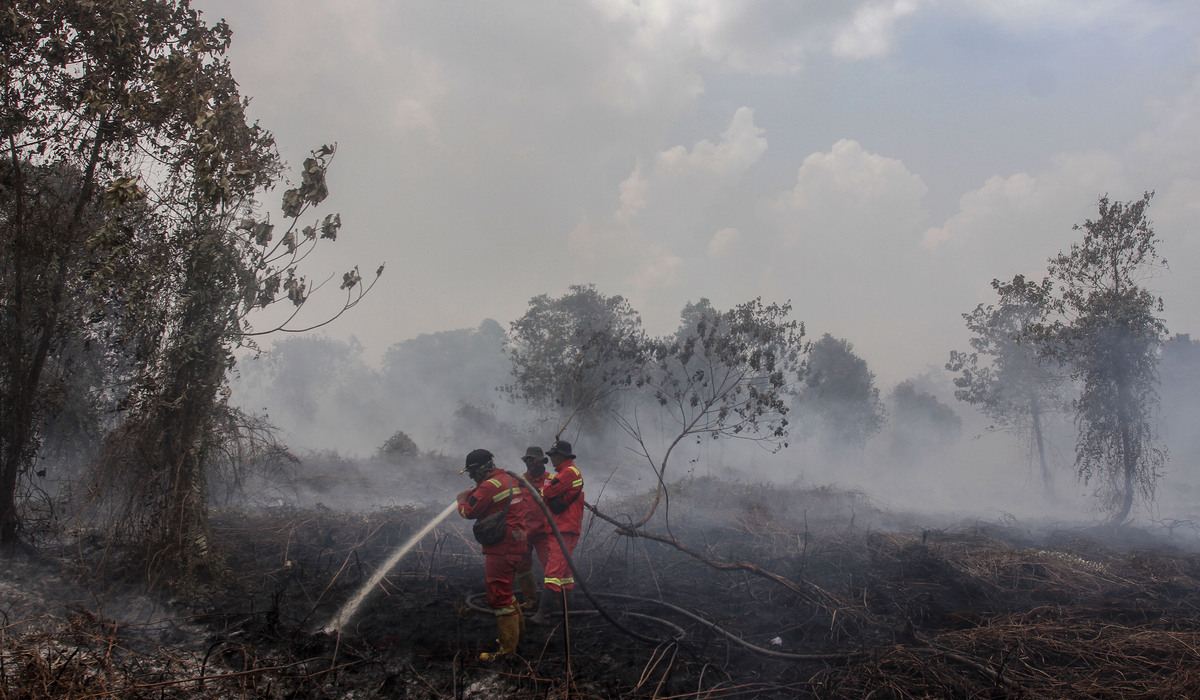
Forest and land firefighting teams from Manggala Agni continue to intensify extinguishing efforts across multiple fire points in Riau Province and the Riau Islands. Based on satellite imagery analysis from the Indonesian Ministry of Forestry, the area of forest and land fires in Riau during the January–February 2026 period has reached approximately 4,400 hectares.
The majority of these fires have occurred on peatland. Of the total burned area, approximately 94 per cent is located in peatland areas known to be highly flammable and difficult to extinguish. This situation requires extra effort from field personnel during extinguishing operations.
Firefighting teams from the Sumatera Regional Forest Fire Control Centre (Dalkarhut) continue to battle fires across several affected regions, including Pelalawan Regency, Bengkalis Regency, Kampar Regency, Indragiri Hilir Regency, and Batam City.
Ferdian Krisnanto, Head of the Sumatera Regional Forest Fire Control Centre, stated that all field personnel continue to strictly adhere to occupational safety procedures during extinguishing operations. According to him, coordination with various parties is also being strengthened to ensure that fire management is conducted in an integrated manner.
“For the safety of wildlife and personnel, we have coordinated with the Riau Natural Resources Conservation Centre, and officers from the Centre have been deployed to handle a tiger,” said Ferdian in a statement on Thursday (12 March).
Additional vigilance has been required following the observation of a Sumatran tiger in the vicinity of extinguishing operations in Pulau Muda Village, Teluk Meranti District, Pelalawan Regency. Although the appearance of this protected species is not directly related to the fires, personnel have increased their alertness to ensure the safety of field teams.
Based on observations, the tiger spotted in the area is believed to be a young individual that has recently separated from its mother and is seeking new territory. The animal has been reported to have appeared several times near residential areas and agricultural plantations in recent months.
Amid ongoing extinguishing operations, the government has also emphasised the importance of early prevention measures in anticipation of the potential dry season this year. This is particularly significant as the El Niño phenomenon is predicted to develop during the second semester of 2026, with the peak dry season expected to occur in July–August.
These conditions have the potential to increase drought risk and heighten the threat of forest and land fires, particularly in the Sumatera region, which has extensive peatland areas. Therefore, strengthened inter-agency coordination and enhanced preparedness in the field are important steps to contain the expansion of forest and land fires from the outset.