
Reza Pahlavi, Son of Iran's Last Shah, Speaks Out Following Khamenei's Death
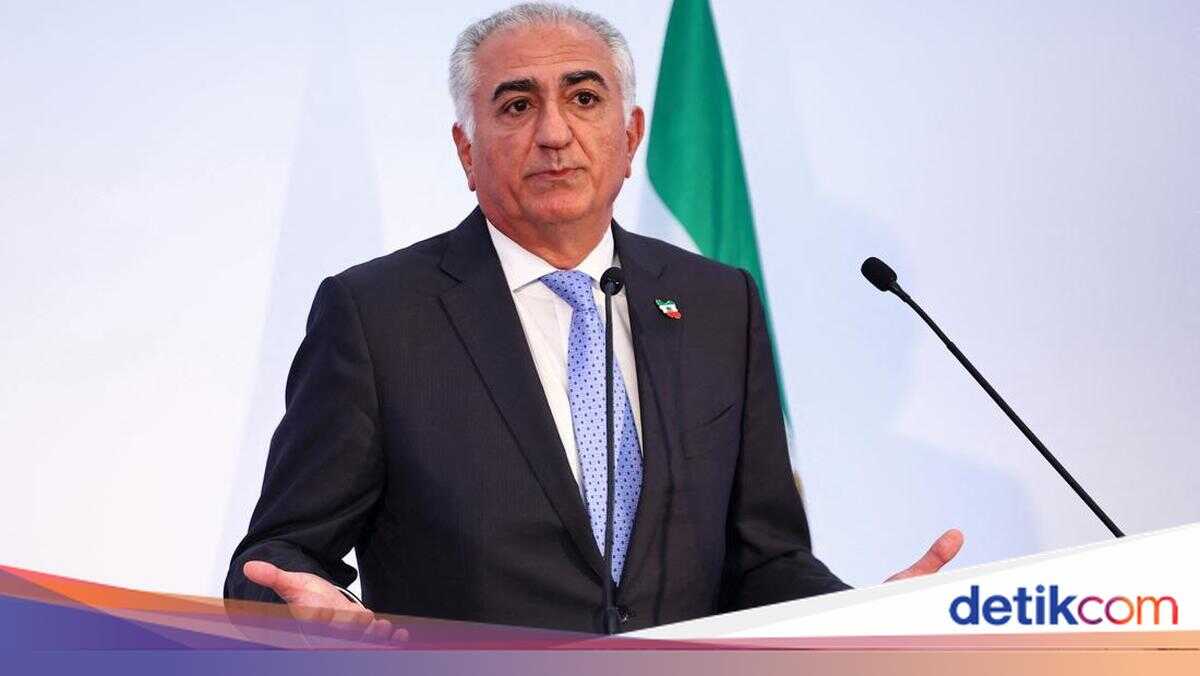
The crown prince and descendant of Iran’s last shah, Reza Pahlavi, who has been exiled and whose daughter resides in Los Angeles, United States, has spoken out following the death of Iran’s supreme leader, Ayatollah Ali Khamenei. They are urging the Iranian people to prepare themselves.
According to the New York Post and based on Reza Pahlavi’s official X account, on Sunday (1/3/2026), Pahlavi, who has lived in the US since the 1979 revolution, reacted to reports that Khamenei had died following US and Israeli airstrikes against Iran.
“Zahhak the bloodthirsty (the evil king in Iranian mythology) of our era, the murderer of tens of thousands of Iran’s bravest sons and daughters, has been erased from the pages of history. With his death, the Islamic Republic has effectively ended and will soon be discarded into the dustbin of history,” he wrote on X.
Pahlavi stated that any effort by the regime to appoint a successor to Khamenei would “inevitably fail”. He said they would lack legitimacy and were implicated in the crimes of this regime.
The exiled crown prince also warned Iran’s military, security, and police forces not to support the regime. He called on Iran’s security apparatus to join the people to help ensure a stable Iranian transition towards a free and prosperous future.
He stated that the death marked “a major national celebration” for Iran. He called on Iranian citizens to remain vigilant.
“The time for massive and decisive presence in the streets is very near. Together, united and steadfast, we will secure final victory, and we will celebrate Iranian independence throughout our homeland created by Ahura. Long live Iran!” he wrote.
For context, Khamenei took over leadership in Iran in 1989 following the death of Ayatollah Ruhollah Khomeini, the charismatic leader who had led the Islamic revolution a decade earlier. Although Khomeini was the ideological force behind the revolution that ended Pahlavi’s monarchical rule, it was Khamenei who shaped the military and paramilitary apparatus that formed Iran’s defence against its enemies and gave it influence extending far beyond its borders.
Before becoming supreme leader, he led Iran as president through a bloody war with Iraq in the 1980s. The protracted conflict, combined with a sense of isolation among many Iranians because Western nations supported Iraqi leader Saddam Hussein, deepened Khamenei’s distrust of the West in general, and the United States specifically.
Khamenei taught jurisprudence and public theological interpretation classes, which also enabled him to reach an increasingly wide audience, particularly young students who were becoming disappointed with the monarchy. Iran’s monarchy at that time had been restored to absolute power following a coup orchestrated by MI6 and the CIA in 1953, which toppled the democratically elected Prime Minister Mohammad Mosaddegh after he attempted to nationalise Iran’s oil industry.
As a political activist, Khamenei was repeatedly arrested by the Shah’s secret police (SAVAK) and sentenced to exile in the remote city of Iranshahr in southeastern Iran, but returned to participate in the 1978 protests that led to the end of Pahlavi’s rule.