
Revolution Transforms America: From Oil Importer to World Oil King
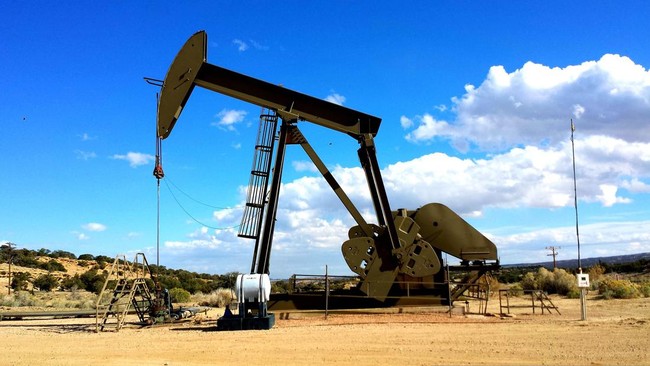
The United States (US) has experienced a major transformation in the energy sector. The country, once known as the world’s largest oil importer, has now reversed course to become a net exporter, a structural shift that is altering the global energy map. The latest data from the Energy Information Administration (EIA) shows that since 2020, the US has consistently exported more oil than it imports, with the gap widening to around 2.8 million barrels per day by 2025. From Import Dependence to Export Dominance For several decades, particularly since the 1970s oil crisis, the US was heavily reliant on oil imports to meet its domestic needs. This dependence made the US economy vulnerable to global geopolitical turbulence. However, this trend began to change dramatically from the late 2000s. US domestic oil production surged, especially following technological revolutions in the energy sector. The peak came in 2020, when the US officially became a net exporter of oil and petroleum products, reversing a decades-long import trend. Key Drivers: Shale Oil Revolution and Trade Policies This major change was supported by two main factors: the shale oil revolution and more lenient export policies. The shale oil revolution refers to the surge in US crude production due to the use of hydraulic fracturing (fracking) and horizontal drilling technologies to extract oil from shale rock formations. Thanks to this revolution, US domestic oil production has risen sharply since the early 2010s. Meanwhile, more lenient export policies began with the lifting of the crude oil export ban in 2015 by the US government. This policy opened the way for US producers to sell oil directly to global markets. As a result, US oil exports have surged dramatically, reportedly increasing by around 800% over the last two decades. Impact on the Global Energy Market The United States’ transformation from importer to oil exporter has brought significant implications for the global energy market. The increase in US exports adds to the world’s oil supply, helping to dampen price surges. At the same time, this shift is altering the market power balance, where OPEC countries now face a stronger new competitor. The US’s geopolitical position has also strengthened, with energy becoming a key instrument of strategic diplomacy. Domestically, the export boom has improved the energy trade balance and driven economic growth, particularly in oil-producing regions. Who Are the Buyers of US Oil? The United States (US) is increasingly solidifying its position as one of the world’s largest energy exporters. In 2025, nearly 4 billion barrels of US oil were shipped to various countries. This illustrates the US’s critical role in global energy trade. Interestingly, the largest buyer of US oil is not an economic giant like China or Japan, but a European country. Based on data from the U.S. Energy Information Administration (EIA) compiled by Visual Capitalist, the Netherlands became the largest importer of US oil in 2025. The Netherlands Tops the List The Netherlands holds the top position with imports of around 419 million barrels of US oil in 2025. This increase was driven by surging European energy demand following reduced supplies from Russia since the 2022 invasion of Ukraine. Much of this oil enters through the Port of Rotterdam, one of the world’s largest energy hubs. This port serves as a processing and distribution point for various European countries. Below the Netherlands, several Latin American countries are also major buyers of US oil, including Mexico, Brazil, the Republic of Chile, and Ecuador. Mexico ranks second as one of the largest consumers of US oil. Canada, geographically located in North America, also holds a top position with imports of around 324 million barrels in 2025, a slight increase from the previous year. Interestingly, despite having large oil reserves, Canada still imports oil from the US. This is due to limitations in refinery capacity and suboptimal pipeline infrastructure, particularly for transporting oil from west to east. Asian countries are also important buyers of US oil, such as South Korea, India, and China. However, in 2025, there was a major shift in energy trade patterns in the region. China’s imports of US oil fell by around 81 million barrels, dropping the country to sixth place on the list of top buyers from third the previous year. This decline was influenced by increased purchases of discounted oil from sanctioned countries like Iran, Venezuela, and Russia. Meanwhile, Indonesia ranks 18th with total imports of up to 57 million barrels, accounting for about 1.5% of total US oil exports in 2025.