
Reviving Our 'Living Room'
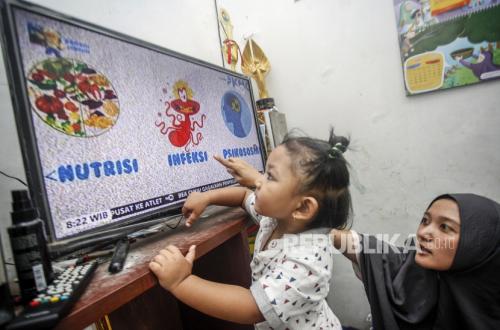
Every 1 April, Indonesia commemorates National Broadcasting Day (HPN). In 2026, the 93rd anniversary of national broadcasting is not merely an annual ceremony, but a crucial moment for deep reflection: amidst the siege of social media algorithms and the flood of digital information, how far do we still position television and radio as the “compass” for family information and entertainment?
The designation of 1 April as National Broadcasting Day has strong historical roots in the spirit of nationalism. Referring to various historical literature, this date was chosen to commemorate the establishment of the Solosche Radio Vereeniging (SRV) on 1 April 1933 in Solo, Central Java.
The SRV, initiated by Mangkunegoro VII, was the first radio station owned by the Indonesian nation (indigenous people). Unlike Dutch-owned radio stations, the SRV became a tool for cultural struggle and nationalism through its broadcasts. Through Presidential Decree No. 9 of 2019, the government officially designated this date as National Broadcasting Day, while affirming that broadcasting is a vital instrument in maintaining sovereignty and enlightening the nation’s life.
Relevance in the “Post-Truth” Era: Back to TV and Radio?
Today, we live in an era where information spreads at the speed of light, but often without filters. Hoaxes and misinformation on social media frequently create polarisation. This is where television and radio play a key role as references for verified information.
Broadcasting institutions operate under strict legal corridors, namely Law No. 32 of 2002 on Broadcasting as well as the Broadcasting Code of Conduct and Broadcast Programme Standards (P3SPS). Every content that airs has undergone a layered editorial process and supervision. Encouraging the public to return to watching television and listening to radio is not a step backwards, but a smart step to obtain accurate, balanced, and responsible information.
From an entertainment perspective, television and radio offer a collective experience that is hard to replace by individual gadget screens. Watching television together with family in the living room or listening to radio while stuck in traffic creates warm social and emotional bonds.
Prospects for Indonesian Broadcasting: Adaptation and Quality
Looking to the future, the world of Indonesian broadcasting is at a promising crossroads. Following the migration from analogue to digital television broadcasting (ASO), the next challenge is content diversification. Digitalisation is not just about clearer pictures or cleaner sound, but about more specific and quality diverse content.
Therefore, the future broadcasting industry will greatly depend on three things:
First, media convergence: the ability of broadcasting institutions to be present on various platforms without losing their identity as credible mass media.
Second, locality of content: content that highlights local wisdom will become a unique attraction not possessed by global streaming platforms.
Third, media literacy: a savvy society will demand quality broadcasts, thus spurring broadcasting institutions to continue innovating.
In 2027, the Indonesian broadcasting industry is projected to grow to Rp 109.6 trillion, driven by digitalisation through the Komdigi 2025-2029 strategy such as 5G broadcasting and Integrated Broadcast-Broadband (IBB). Radio and TV must adapt to digital convergence, multi-platform content, and expansion to 3T regions (disadvantaged, frontier, outermost) to remain relevant. This bright prospect promises new revenue for the industry while maintaining its social role, provided that local content innovation and advertising business can be optimised.
Conclusion
In welcoming National Broadcasting Day, let us revive our “living room” by consuming television and radio together with family and loved ones. Make broadcasting media a companion in daily life, a trusted information filter, and a window to see a broader Indonesia. For from those air frequencies, the voice of national unity and education can continue to be echoed. May the broadcasting industry in the homeland remain empowered amid the era of technological disruption that significantly changes the media landscape. Happy National Broadcasting Day 2026.