
Revitalisation of 16,000 Schools Absorbs 238,000 Workers
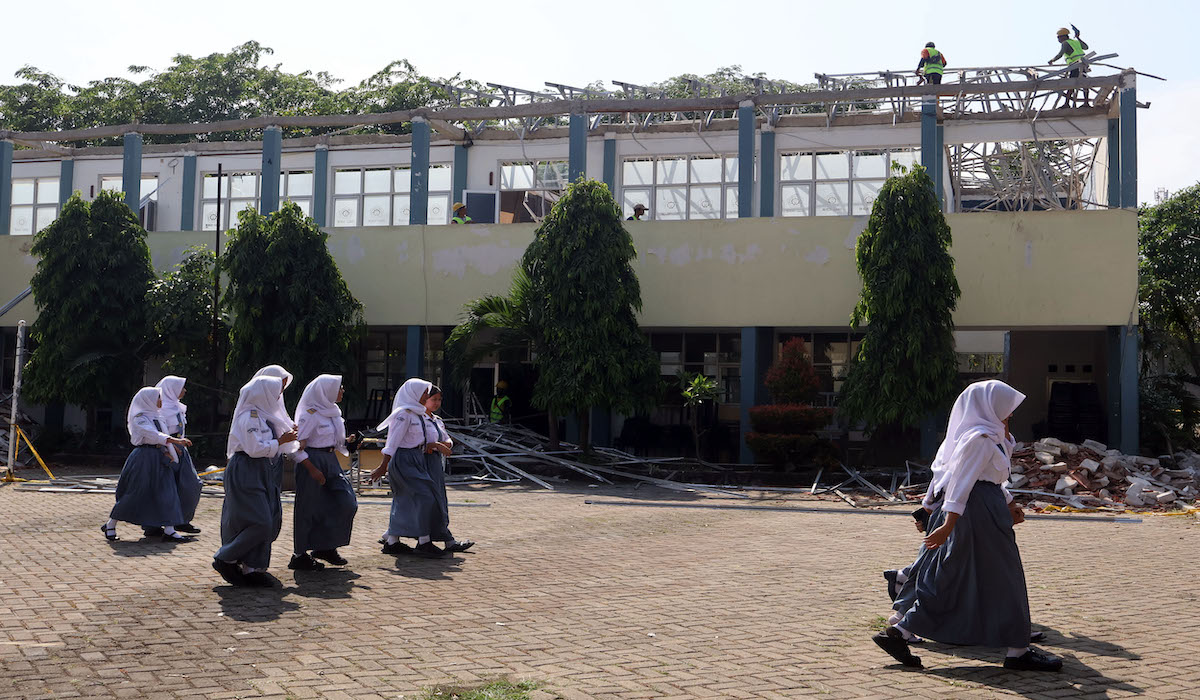
Presidential Chief of Staff Muhammad Qodari stated that the government’s school revitalisation programme goes beyond merely repairing school buildings; it aims to generate broad economic impacts at the community level. The programme is designed as a long-term investment and a catalyst for local economies.
In 2025, the programme targets 16,167 schools, an increase from the initial plan of 10,000 following an expansion. By 11 March 2026, 16,062 schools have been completed, while 105 others are still in the process of finalisation.
For 2026, the government has allocated a budget of Rp14.1 trillion with a target of 11,744 educational units. However, the government plans to expand the scope to 60,000 schools, with an additional budget proposal of Rp89.5 trillion still in process.
“So, who says it’s insufficient? In fact, it’s increasing,” Qodari said in Jakarta on Wednesday (25/3).
Behind the physical construction, the government is changing the implementation approach through a self-managed scheme at the school level, bypassing local governments. This scheme opens up job opportunities for surrounding communities, from construction workers to logistics providers.
The impact is felt directly on the ground. Qodari mentioned that on average, one school project involves around 22 local workers. With a total of 16,000 projects in 2025, the number of workers absorbed reaches 238,131 people, covering various professions from engineers to support staff.
In addition, the programme also mobilises around 58,000 micro, small, and medium enterprises (MSMEs), including sectors such as building materials, consumption, transportation, and other supporting services.
“This means the programme not only builds the physical aspect but also the local economy,” Qodari said.