
Revisiting Submarine Warfare: Lessons from Iran's Experience
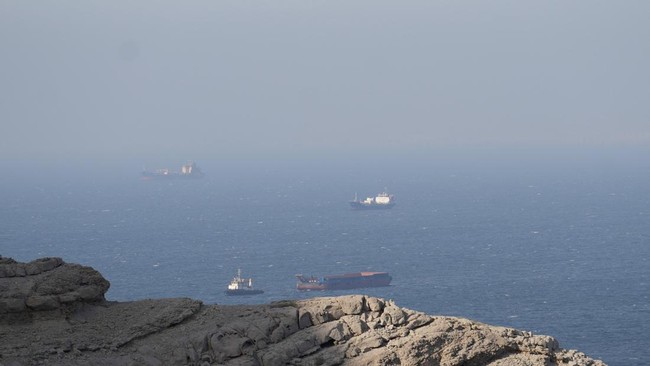
War does not wait for analysts. The conflict in the Persian Gulf continues, and it remains uncertain whether the Strait of Hormuz will remain open in the coming weeks. Nevertheless, the evolving dynamics are already providing important lessons on naval warfare. One of them relates to submarine warfare, particularly submarine operations, which is becoming increasingly relevant for a country like Indonesia that is modernising its military capabilities. Iran is one of the main submarine operators in the region at the start of the conflict, as well as one of the world’s largest users of midget submarines, with around 15 to 20 active Ghadir-class units. This platform is part of Iran’s anti-access/area denial (A2/AD) doctrine and is designed to support Tehran’s strategy in restricting access to the Persian Gulf and the Strait of Hormuz. However, in practice, its operational performance has not met expectations. There have been no confirmed interceptions or access denials, and no ships—civilian or military—have been successfully damaged by these midget submarines. On the contrary, media reports indicate that several, or possibly all, of the Ghadir-class units have been damaged or sunk since the start of hostilities. Interestingly, Iran’s effectiveness has not come from midget submarines, but rather from the use of Unmanned Underwater Vehicles (UUV), Unmanned Surface Vehicles (USV), maritime IEDs, sea mines, and fast attack boats. For example, when Iran began targeting civilian ships and tankers, it used UUVs, not midget submarines. On the other hand, the destructive power of conventional submarines was clearly demonstrated when the USS Charlotte, a Los Angeles-class submarine, sank the IRIS Dena Moudge-class frigate with two Mk.48 torpedoes off the coast of Sri Lanka. This experience raises an important question: what are midget submarines actually used for? In practice, the main function of midget submarines lies in the domain of special operations. It is here that this platform provides significant added value, although its nature is limited and highly specific. Midget submarines can be used for the infiltration and extraction of combat divers, short-term intelligence gathering, and the laying of mines in narrow coastal areas. This aligns with how countries like Qatar, Turkey, and Italy utilise such platforms. At the same time, many navies prefer to develop Swimmer Delivery Vehicles (SDV) that can be mounted on submarines, as they offer advantages such as longer range and the ability to provide fire support from the parent submarine if needed. Therefore, midget submarines cannot replace conventional submarine fleets. This platform can support special forces, but it is not a primary asset in submarine warfare. North Korea (DPRK), as one of the world’s largest midget submarine operators, is often cited as an example. In 2010, a midget submarine—likely a Yono-class—is suspected of firing the torpedo that sank the South Korean Navy corvette Cheonan. Although this incident is often used as an argument to demonstrate the relevance of midget submarines, the platform is not the optimal choice for building an effective A2/AD strategy, as seen in Iran’s experience. Interestingly, the DPRK is estimated to operate around 70 midget submarine units. However, the effectiveness of this platform is highly dependent on the geographical context. North Korea operates in a relatively narrow and semi-enclosed coastal environment, with an area of about 253,000 km², and faces one main adversary in a relatively linear maritime boundary. Under such conditions, midget submarines can still be considered appropriate. In contrast, Indonesia’s maritime domain is 32 times larger, encompassing three important global chokepoints, and faces threats from various directions. What is effective for North Korea is not necessarily relevant to Indonesia’s archipelagic context. Indonesia itself does not start from scratch. The Scorpène Evolved programme, whose construction has begun at PT PAL Surabaya, will give the Indonesian Navy full-strike submarine capabilities—becoming the backbone of the national underwater force. On the other hand, the local KSOT programme offers an approach more aligned with the lessons from the Persian Gulf: autonomous platforms capable of conducting disruption missions in coastal areas, as UUVs did effectively in the conflict, at a much lower cost than manned platforms. In this architecture—Scorpène as the conventional backbone and KSOT as the asymmetric layer—the strategic rationale for developing midget submarines is very limited. If Jakarta still considers it, a highly specific operational concept must first be formulated. The lessons from the Persian Gulf show that the answer is a very limited role.