
Revisions to the KPK Law in the Jokowi Era Confuse Experts in Yaqut's Pre-trial
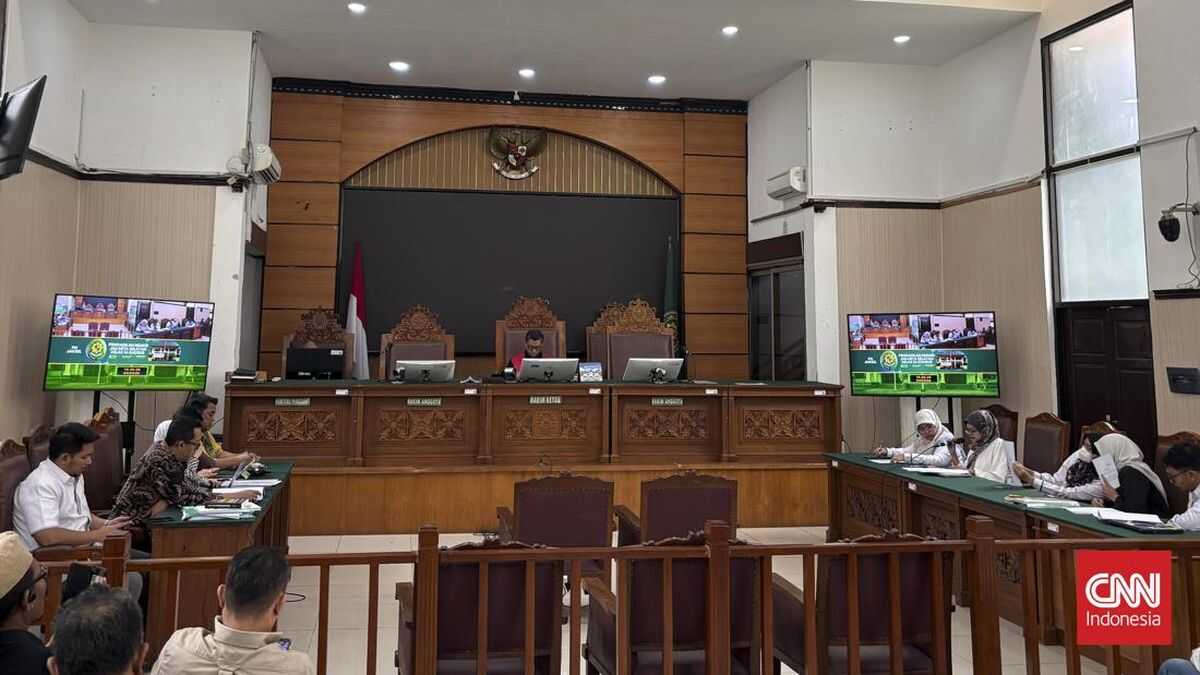
Oce Madril, a lecturer at the Faculty of Law of Universitas Gadjah Mada (UGM), said it was difficult to interpret the position of the leadership of the Corruption Eradication Commission (KPK) under the regime of the new Law Number 19 of 2019 on the KPK. Under the Act, the KPK leadership is no longer an investigator or prosecutor. This differs from the previous KPK Law Number 30 of 2002, which regulated otherwise. The position and powers of the KPK leadership have become one of the points raised by the legal representatives of former Indonesian Minister of Religious Affairs Yaqut Cholil Qoumas, who filed a pretrial challenge to his status as a suspect in the alleged corruption case over the additional hajj quota. ‘With regard to Article 21 of the KPK Law, paragraph 4 states that the KPK leadership is collective and collegial. If, as the expert previously stated, the KPK leadership is not named as an Investigator and Public Prosecutor under Law 19/2019, unlike the previous law, how will the implementation and powers of the leadership, which by law is said to be collective and collegial in the exercise of the institutional powers referred to in Article 6, be carried out?’ asked the KPK Legal Bureau in the Oemar Seno Adji courtroom of the South Jakarta District Court, on Thursday (5 March). ‘Yes, that’s the difficulty,’ replied Oce, as an expert witness. Oce explained that he is among those who criticised the changes to the KPK Law. According to him, the 2002 Law was already ideal because it used an exceptionally strong Academic Draft. Nevertheless, he noted that as an institution the KPK leadership has general authority to conduct investigations and prosecutions. However, the work is carried out by Investigators and Public Prosecutors. The KPK Legal Bureau then referred to Article 39(2) of the KPK Law which states that investigations, prosecutions, and indictments as referred to in paragraph 1 are carried out on orders and act for and on behalf of the KPK. ‘If indeed the KPK leadership according to the expert is no longer an Investigator under the new law, investigations, prosecutions and indictments as referred to in Article 39(2) are carried out on whose orders?’ asked the KPK Legal Bureau. ‘Orders of the leadership. You may order to carry out investigations, you may order prosecutions, but who carries out the investigations? It cannot be the KPK leadership any longer; it must be the investigators,’ replied Oce. The KPK Legal Bureau then pressed Oce on the authority of the KPK leadership to issue a Sprindik (Investigation Warrant). ‘Earlier, Article 39(2) states that investigations and prosecutions are by order. You stated that the leadership can order the carrying out of investigations and prosecutions,’ the KPK Legal Bureau said. ‘Yes,’ cut Oce. ‘Now, I asked if indeed it is possible to order, then the expert also interprets and agrees that the KPK leadership can issue a Sprindik to order its investigators to carry out investigations,’ continued the KPK Legal Bureau. ‘This is a new question, the earlier question was global. Can the KPK leadership order in the exercise of its powers? Yes. If there are additional questions, can he issue Sprindik? This is a specialist question,’ said Oce. ‘But this is a legal technical issue; I do not understand the legal technicalities. We will look at the Sprindik if present. Please review the rules. But the answer is this: if Sprindik is the authority of the investigator, then it is the investigator who issues it. Just like earlier, the authority to issue a suspect determination lies with the Investigator, therefore the Investigator,’ added Oce. Yaqut filed a pre-trial on Tuesday, 10 February 2026. The application was registered under case number: 19/Pid.Pra/2026/PN JKT.SEL. Yaqut aims to test the process of determining a suspect in the case of alleged corruption relating to the additional hajj quota carried out by the KPK. Yaqut’s legal representative asked Judge Sulistyo Muhammad Dwi Putro to invalidate three Sprindik documents that the KPK used as the basis to bring his client to trial for the alleged corruption of the additional hajj quota. The three letters are: Sprin.Dik/61/DIK.00/01/08/2025 dated 8 August 2025; Sprin.Dik/61A.2025/DIK.00/01/11/2025 dated 21 November 2025; and Sprin.Dik/01/Dik.00/01/ 01/2026 dated 8 January 2026. One of the points raised by Yaqut’s legal counsel is that the KPK lacks authority to conduct investigations or to determine a suspect. According to the National Audit Board (BPK), the state is said to have suffered losses amounting to Rp622,090,207,166.41 (Rp622 billion) from the alleged corruption of the additional hajj quota for the 2023 and 2024 administrations. (fra/ryn/fra)[Video CNN]