
Revealed: Why Iran Shifted from Sunni to Shia Islam
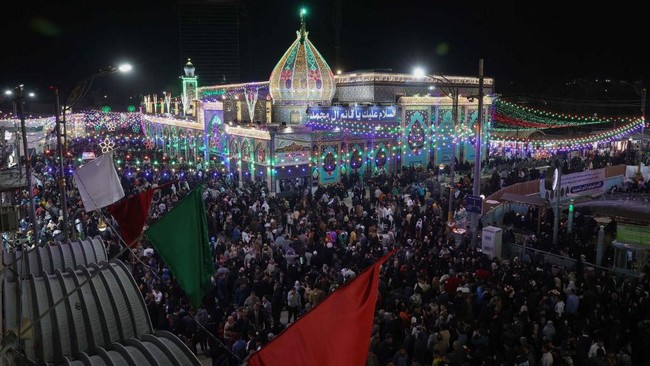
Iran is known as the world’s largest centre of Shia Islam, with more than 90% of its population adhering to the Twelver Shia school of Islamic jurisprudence. However, throughout its history, the region formerly known as Persia has not always followed the Shia faith. In the early period following Islam’s introduction, the majority of Iranians actually followed the Sunni school of Islamic law.
Islam arrived in the Persian region in 636 CE after Arab forces under the caliphate of Umar ibn al-Khattab conquered the Persian Empire. From that point onwards, the Persian population, which had previously been predominantly Zoroastrian, gradually embraced Islam. During this initial period, the majority of Muslims in the Persian region followed the Sunni school, which was dominant throughout the Islamic world at the time.
A significant change became apparent during Mongol rule in Persia in the 13th century. One of the Mongol rulers in the region, Öljeitü, initially adhered to various beliefs before eventually converting to Islam. The Mongols initially followed the Sunni school but later switched to the Shia school after being influenced by a prominent Shia scholar, Allamah Al-Hilli.
According to the 2015 research paper “Shiism and Politics: A Study of the Islamic Republic of Iran”, this decision represented one of the important turning points that opened the path for Shia expansion in the Persian region. Nevertheless, the widespread dissemination of Shiaism did not truly occur until several centuries later.
The most significant change took place in the early 16th century when Shah Ismail I established the Safavid Dynasty in 1501. He established the Twelver Shia school as the official state religion. This policy was not merely a religious decision but also a political strategy to strengthen Persian identity and distinguish it from the major Sunni powers in the region, particularly the Ottoman Empire.
The Safavid government then actively promoted Shia teachings throughout society through various state policies, including religious education, scholarly preaching, and political measures supporting the dissemination of the school. Within approximately two centuries, the majority of the Persian population had converted to Shiaism.
Although the Safavid Dynasty eventually collapsed in the 18th century and Iran experienced various changes in power, Shia identity remained deeply entrenched in the social life of its people. This school of Islamic law continued to constitute an important part of Iran’s cultural and political structure.
Shia influence strengthened further following the major revolution of 1979, led by the Shia scholar Ruhollah Khomeini. The revolution overthrew the monarchical government led by Mohammad Reza Pahlavi and transformed Iran into an Islamic Republic.
Since then, Iran has formally adopted Twelver Shiaism as the basis of state ideology. To the present day, Shia teachings have become not only the belief system of the majority population, but also influence Iran’s political system, legal framework, and governmental structure.