
Revealed: The 2 Main Problems Behind Agrinas' Import of Indian Pickup Trucks
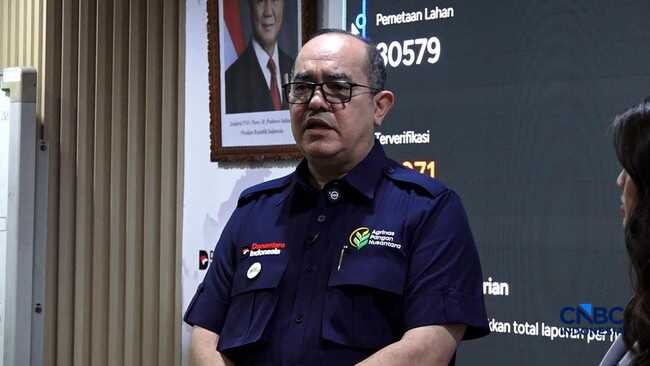
Jakarta — The decision to import 105,000 operational vehicles for the Koperasi Desa Merah Putih (Red-White Village Cooperative) has sparked considerable controversy. Whilst the management of PT Agrinas Pangan Nusantara (Agrinas) claims the decision will generate efficiency savings of tens of trillions of rupiah, domestic industry observers contend that the policy risks damaging local automotive manufacturers.
Chief Executive Joao Angelo De Sousa Mota stated that the procurement of vehicles from India followed unsuccessful negotiations with local producers, particularly regarding price and production capacity. The total of 105,000 vehicles to be imported comprises 35,000 4x4 pickups from Mahindra & Mahindra and 70,000 units from Tata Motors, split equally between 35,000 pickups and 35,000 six-wheeled trucks.
“With this procurement of equipment and infrastructure, Agrinas Pangan can achieve efficiency savings of Rp46.5 trillion,” stated Joao in remarks to the media on Wednesday (25 February 2026).
Agrinas had invited several national automotive manufacturers to participate in qualification and negotiation processes, including major groups such as Astra, Isuzu, Mitsubishi, and Hino.
Supply and Price Negotiations as Primary Issues
However, supply capacity was deemed far below requirements. Isuzu was reported capable of supplying only 900 units, whilst Toyota through its Hilux model could provide approximately 800 units in April-May 2026, and Mitsubishi L300 was said to have production capability of around 750 units per month. Hino initially offered only 120 units per month before eventually increasing to a total of 10,000 units following lobbying with its Japanese principal.
In total, from the negotiation process, local producers were reported capable of meeting only approximately 45,000 units. The breakdown includes Mitsubishi Fuso at 20,600 units, Foton Aumark at 13,500 units, Hino at 10,000 units, and Isuzu Canter at 900 units. This production capacity limitation, combined with pricing concerns, prompted the decision to import.
“The main issue is that we are purchasing in large volumes. So we are offering bulk purchases; we are buying in large quantities. We should be offered more economical pricing, more cost-effective pricing that meets the budget we have prepared,” explained Joao.
He claimed that local manufacturers continued to calculate price per unit and did not offer special pricing schemes for large-volume purchases.
“But until the very end, we were not given or afforded the opportunity to provide special pricing, so we were forced to import from abroad,” he said.
Agrinas also cited the absence of domestic production of 4x4 single-cabin pickups that meet programme requirements. These vehicles will be used for operations of the Red-White Village Cooperative currently being developed by the government.
The company has secured Rp200 trillion in funding from banks that are members of the Association of State-Owned Banks (Himbara) for the development of cooperative outlets and procurement of equipment and infrastructure. To date, approximately Rp90 trillion has been utilised, including for vehicle procurement.
Joao rejected claims that the import policy fails to support the domestic industry. He emphasised that the entire procurement process was conducted openly and with full documentation.
“The savings we achieve we return to the state. Because the money we use is state budget funds and public money. So we will return it completely,” he said.