
Revealed: Iran's Attack Data Shows 83% Targeted at Arab States - Gulf Countries Cry Out
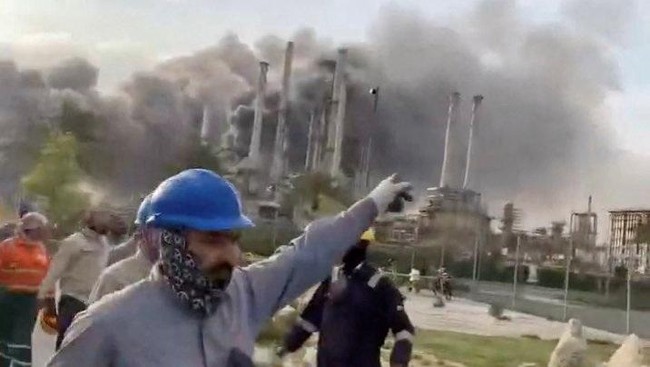
Jakarta, CNBC Indonesia - Gulf Cooperation Council (GCC) countries have become the primary targets of Iran’s retaliatory violence in the war with the US and Israel that erupted late last month. Although not involved in the conflict, all six GCC member states were bombarded with attacks targeting civilian infrastructure on Friday (1/3/2026).
A report from the Washington-based Stimson Center on Wednesday stated that the conflict has escalated into a horrific war unwanted by any GCC member. Instead of attacking US military bases, Iran’s barrage of strikes has primarily hit public facilities and economic centres.
On the first day, Iranian missiles and interception debris struck Dubai airport, the Burj Al-Arab hotel, Jebel Ali port, and the man-made Palm Jumeirah island. Iran fired a total of 137 missiles and 209 drones at the United Arab Emirates (UAE) to damage the region’s security reputation for investors and tourists.
Other countries such as Saudi Arabia, Bahrain, and Qatar have also not been spared from attacks since the conflict began. Although Iran claims to be targeting only US military sites, in reality, Saudi Arabia’s Ras Tanura oil refinery, Aramco facilities, and Shaybah oil field have also been hit.
The Saudi Ministry of Defence confirmed that many drones heading to Riyadh were intercepted. A Jordanian resident in Riyadh described the tense atmosphere to AFP on Friday (28/2/2026).
“I had just stepped out with my son when we suddenly heard an explosion. People around us looked to the sky, trying to understand what was happening. This is not something you expect in Riyadh,” said the resident.
Oman has also become a victim despite previously actively mediating peace talks between Iran and the US. Since Tuesday (3/3/2026), Oman’s oil infrastructure and civilian facilities have been hit by airstrikes.
The latest data shows a massive imbalance in attack targets. Since 28 February, GCC countries have received 4,391 drone and missile attacks, or 83% of the total shots, while Israel has been targeted by only 930 attacks, or about 17%.
Director of the Council for Arab-British Understanding, Chris Doyle, described Iran’s claim of targeting only US military bases as a big lie.
“It is very clear that Iran has targeted important parts of civilian infrastructure. So it is not credible to make such claims,” Doyle told Arab News.
Doyle believes Iran’s strategy is to make the war feel extremely painful for the US so that it quickly seeks an exit strategy and returns to the negotiating table. By opening a wide military front in 12 countries, Iran forces the US and its allies to incur very expensive defence costs.
“It is a reasonable assumption that partly because the UAE is very close to Israel, has normalised relations, and now has very deep ties, Iran sees it as a preferred target,” said Doyle.
In agreement, Director at the New Lines Institute, Caroline Rose, said Tehran’s strategy aims to undermine regional security to pressure the GCC to distance itself from Israel. However, this move could potentially trigger greater military escalation from Arab countries.
“However, this is a strategy that is likely to backfire, as countries like Saudi Arabia have cancelled policies allowing US forces to operate from their territory and some are considering joining the war,” Rose revealed.
On Wednesday, the UN Human Rights Council, along with the GCC and Jordan, passed a resolution condemning Iran’s actions and demanding compensation for damages and loss of life. In a joint statement, the Gulf countries affirmed their full right to self-defence.
“We also reaffirm our full and inherent right to defend ourselves against these criminal attacks in accordance with Article 51 of the UN Charter, which guarantees the right of states to self-defence, either individually or collectively, in the event of aggression, and our right to take all necessary measures to preserve our sovereignty, security, and stability,” the statement read.