
Revealed: Hungary Draws Closer to Russia, Threatening to Split the European Union
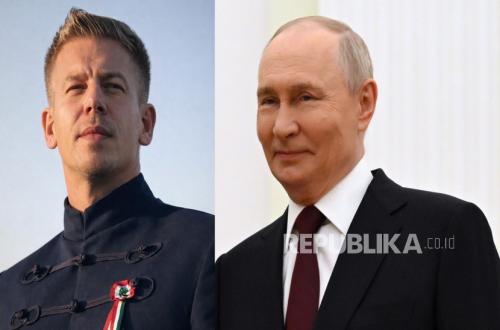
REPUBLIKA.CO.ID, JAKARTA — Amid the European Union’s harsh rhetoric against Moscow following the Ukraine war, Hungary is instead taking a different path, one that is quieter but increasingly distant from the mainstream in Brussels. What appears today is not a sudden change, but a continuation of the foundation of relations built since the era of Viktor Orbán. Since returning to power in 2010, Orbán has steered Hungary towards what he calls “illiberal democracy”, an approach that emphasises national sovereignty and pragmatism. Within this framework, Russia is not viewed solely as an ideological rival, but as a strategic partner, particularly in the energy sector. Illiberal democracy itself refers to a political system that retains formal democratic mechanisms such as elections, but does not fully adopt Western liberal values like extensive press freedom, institutional independence, and maximum protection for the opposition. In this model, the state plays a more dominant role, while political stability and national interests are placed above individual freedoms. In other words, democracy continues to function, but is controlled within a more centralised framework oriented towards state power. Orbán uses this term for a reason. He sees Western liberal democracy as a model that, in his view, is beginning to lose effectiveness in addressing global crises, from migration and economic pressures to national identity. By championing “illiberal democracy”, Orbán seeks to assert that Hungary needs a firmer system, more protective of domestic interests, and more flexible in forging foreign relations, including with Russia. In this context, the term also serves as a political statement: that Hungary does not fully wish to submit to the European Union’s ideological standards. Media outlets like the Financial Times note that Hungary’s energy dependence on Russia is a key factor shaping its foreign policy. In one of its reports, the FT emphasises that “Budapest has consistently resisted EU pressure to fully sever energy ties with Moscow,” or Budapest has consistently rejected the European Union’s pressure to completely cut energy ties with Russia.