
Returning to Work After Eid, Kang DS Boosts Regional Revenue and Investigates Bandung Regency Assets in Arcamanik
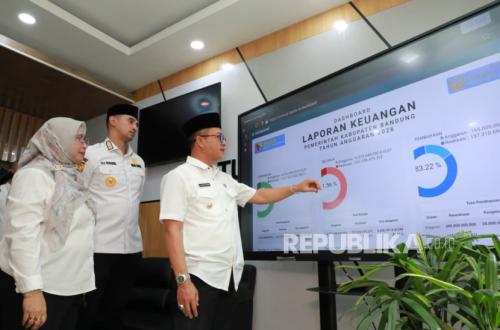
On the first day back at work after the Eid al-Fitr holiday and collective leave on 1 Syawal 1447 H, Wednesday (25/3/2026), Bandung Regent Dadang Supriatna, accompanied by Deputy Regent Ali Syakieb and Regional Secretary Cakra Amiyana, carried out a surprise inspection (sidak) to the Office of the Regional Revenue Agency (Bapenda) and the Regional Finance and Assets Agency (BKAD) of Bandung Regency at the Regency Government Complex, Jalan Al Fathu, Soreang.
During the inspection, the Regent received a briefing on the achievements of Locally Generated Revenue (PAD). To date, PAD from taxes and levies has reached approximately Rp 1.2 trillion out of a target of Rp 6.2 trillion.
In addition, transfers from the central government to the region are recorded at around Rp 700 billion. The increase in tourism activities during the Eid holiday is also seen as contributing to regional revenue.
“We hope and are optimistic about carrying out development in Bandung Regency to the maximum,” he said.
He added that Bandung Regency Government targets an allocation of around Rp 300 billion from PAD for infrastructure development, particularly supporting national strategic programmes, such as access roads to tourist attractions, the Free Nutritious Meals Kitchen (MBG), and strengthening the Red White Village Cooperatives.
The Regent, familiarly called Kang DS, also expressed appreciation to taxpayers who have contributed to regional development through compliance in paying taxes and levies.
“I hope Bapenda continues to optimise and maximise the increase in regional revenue for the sustainability of development in Bandung Regency,” said Kang DS.
During the inspection at Bapenda, the entourage was welcomed by the Head of Bapenda, Erwan Kusumah Hermawan, along with his staff. Meanwhile, at BKAD, the group was received by the Head of BKAD, Yana Rosmiana, together with relevant officials.
At BKAD, Kang DS highlighted the importance of accurate regional asset data collection, especially for land and building assets numbering in the thousands of locations.
“If there is dry land or abandoned plots, it would be good to utilise them for planting vegetables like carrots, tomatoes, chillies, and others to support the MBG programme,” he said.
In addition, Kang DS also questioned the status of land assets owned by Bandung Regency Government in the Arcamanik area, Kota Bandung, which has now developed into a residential area, golf course, and horse racing track.
“I will ask the West Java Provincial Government regarding the status of the 67.5 hectares of land owned by Bandung Regency that was previously entrusted. If there has been a land swap process or otherwise, I want to know the documents and the details,” said Kang DS.
Based on information, the land area in the Arcamanik region that was originally recorded at around 100 hectares is now left with approximately 76.5 hectares. With the achievements and potential available, Kang DS is optimistic that development in Bandung Regency will continue to run well, as long as the regional fiscal condition remains maintained and stable.