
Return Flow from Sumatra to Java Surges, Ferry Services Orderly and Smooth
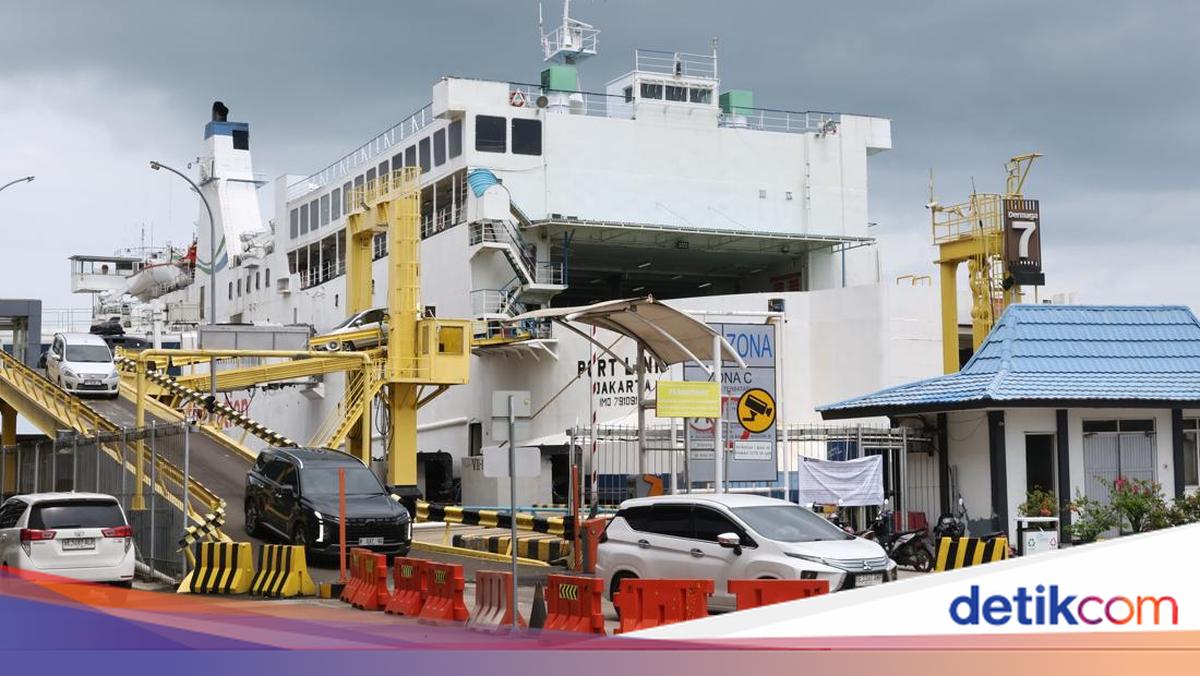
The movement of the Lebaran 2026 return flow from Sumatra to Java is beginning to form and showing a significant upward trend. PT ASDP Indonesia Ferry (Persero) projects that the peak return flow will occur on Tuesday (24/3) and Wednesday (25/3), in line with increasing public mobility after the Lebaran holiday.
Since H-Day, Sunday (22/3), traffic at Bakauheni Port has started to bustle, both for foot passengers and vehicles. Despite the surge, ferry services continue to run smoothly, orderly, and under control thanks to thorough operational preparedness and cross-stakeholder coordination.
ASDP’s President Director, Heru Widodo, stated that the current traffic increase serves as an initial indicator of the return flow phase beginning.
“The movement that is starting to increase indicates that the return flow trend is underway. We continue to ensure service readiness, both operationally and in facilities, to anticipate the surge during the peak period,” said Heru in a written statement on Monday (23/3/2026).
From the field perspective, the General Manager of ASDP’s Bakauheni Branch, Partogi Tamba, assured that operations are running optimally through the implementation of adaptive traffic control scenarios. The vehicle diversion scheme during the return flow period has also begun to be applied.
The flow to Java is served through Bakauheni Port for foot passengers as well as vehicles in groups I, II, III, IVA, VA, and VIA.
Meanwhile, vehicles in groups IVB, VB, and VIB, which are exempt from operational restrictions, are diverted through BBJ Muara Pilu Port. Trucks in group VIB with three axles, VII, VIII, and IX, which are still under restriction, are directed to wait in buffer zones or several toll rest areas to maintain smooth traffic flow.
“Vehicle flow is still within service capacity limits. The arrival pattern is quite even, so the ship loading and unloading process runs quickly without significant obstacles,” explained Partogi.
He added that pier service management is conducted flexibly through a multi-pier scheme, both for foot passengers and vehicles, to keep distribution even and service rhythm stable amid rising volume.
Meanwhile, ASDP’s Corporate Secretary, Windy Andale, advised service users to plan their trips earlier to avoid piling up during the peak return flow period.
“Ensure you have purchased tickets through Ferizy before arriving at the port. Currently, there are no ticket sales at the port, so all service users must purchase independently through official channels,” Windy emphasised.
Traffic Increases, Services Remain Controlled
Based on data from the Bakauheni Post during the 24 hours on H-Day, there were 146 ship trips with a total of 51,751 passengers, an increase of 30.5% compared to last year. The total vehicles reached 14,094 units, a significant rise of 45.3%.
The most striking increase was in motorcycles, reaching 5,248 units or up 59.4%, followed by four-wheeled vehicles at 7,407 units or up 27.9%. Meanwhile, logistics vehicles were recorded at 1,202 units, surging 189.6%, and buses at 237 units or increasing 19.7%.
Cumulatively from H-10 to H-Day, the number of passengers from Sumatra to Java reached 480,613 people, up 5.8%, with a total of 102,031 vehicles, growing 11.5%.
In contrast, traffic from Java to Sumatra through Merak, Ciwandan, and BBJ Bojonegara Ports on H-Day recorded 53,594 passengers, down 4.3%, with 13,383 vehicles, decreasing 5.7%. However, cumulatively, the movement still shows a positive trend, with total passengers reaching 952,458 people or up 1%, and vehicles at 253,049 units or increasing 5.6%.
On the other hand, Transport Minister Dudy Purwagandhi emphasised that return flow management must be carried out adaptively and responsively to field dynamics, including through service capacity optimisation and strengthening of buffer zones.
With operational readiness, strengthened digitalisation of services through Ferizy, and synergy among all parties, ferry services on the Sumatra-Java route are expected to continue running smoothly, safely, and under control until the peak period is passed.