
Retno Marsudi: Water Management Must Be Cross-Sectoral
Water is not an isolated issue, but a connector and enabler for many sectors
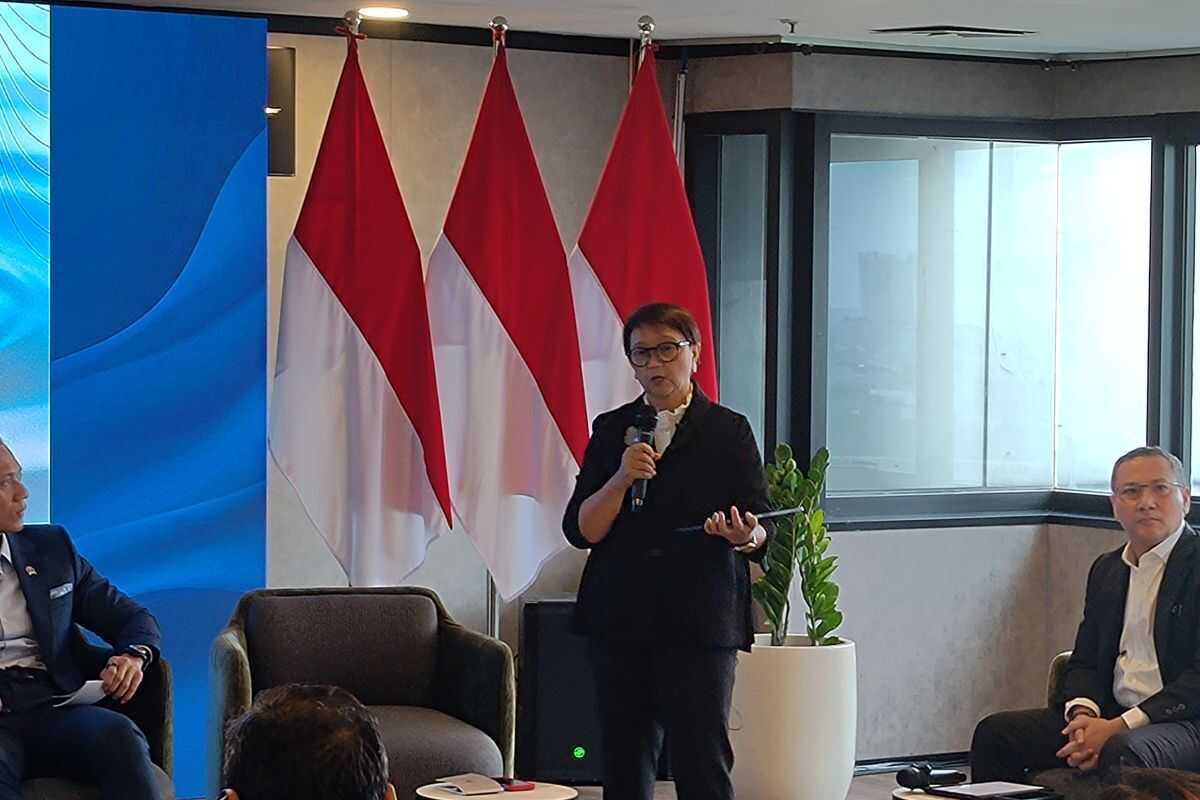
Jakarta (ANTARA) – The UN Secretary-General’s Special Envoy for Water Issues, Retno Marsudi, has emphasised that water management must move away from narrow sectoral approaches, as water is a connector and a vital component for various sectors of life and development.
“Water is never an isolated issue, but a connector and enabler for many sectors,” Retno said at the “Water Town Hall Meeting” held by the Coordinating Ministry for Infrastructure and Regional Development in Jakarta on Tuesday.
Retno explained that water resource management is directly related to sectors such as agriculture, health, energy, and industry.
She noted that the agricultural sector consumes approximately 72 per cent of the world’s freshwater, while, from a health perspective, around 1,000 children under the age of five die every day due to contaminated water and inadequate sanitation.
In the industrial sector, Retno highlighted the increasing demand for water as the digital economy grows, particularly for data centres.
According to her, one megawatt of IT load, or the electrical capacity used by servers and digital devices with evaporative cooling systems, can require 1.5 to 3 million litres of water per month.
“Water is a key factor for the future of the economy, including the data centre industry, so its management must be designed in an integrated manner from the outset,” she said.
Retno also underlined the global challenges in providing access to water and sanitation. Currently, around 2.2 billion people worldwide do not have access to safe drinking water, while 3.5 billion people do not have access to adequate sanitation services.
“With such significant challenges, we can no longer work in a fragmented manner. The water crisis cannot be solved in isolation,” Retno said.
She believes that the “Water Town Hall Meeting” is an important first step in strengthening cross-sectoral coordination, in line with the Indonesian government’s efforts to promote collaboration between policymakers, academics, businesses, and civil society.
This integrated approach is also a global concern in the lead-up to the UN Water Conference, scheduled to take place in November in the United Arab Emirates, with an emphasis on an agenda that is more focused on concrete action rather than just normative commitments.
“Strong coordination is needed to ensure that water issues are viewed comprehensively, not only from a technical perspective, but also from social, economic, and sustainable development perspectives,” she said.
The event was also attended by Coordinating Minister for Infrastructure and Regional Development Agus Harimurti Yudhoyono (AHY), Head of the National Research and Innovation Agency (BRIN), Arif Satria, and Head of the Regional Infrastructure Development Agency of the Ministry of Public Works, Bob Arthur Lombogia.
On the same occasion, AHY stated that the government is strengthening cross-sectoral coordination in water management as part of Asta Cita, particularly the pillar of self-sufficiency in food, energy, and water.
“Water is a fundamental and essential issue. Its management cannot be done in a piecemeal manner or by only one ministry, because water is needed for human life, food security, energy, industry, and economic growth,” said AHY.
He mentioned that the government is preparing strategic policies and interventions that include the gradual expansion of access to piped clean water, increased efficiency in water use in the agricultural and industrial sectors, and the strengthening of policies to control water damage and reduce the risk of hydrometeorological disasters in densely populated areas.