
Results of the 2026 Idul Fitri Isbat Session and Latest MABIMS Criteria: Requirements for the Crescent Moon in the 2026 Isbat Session
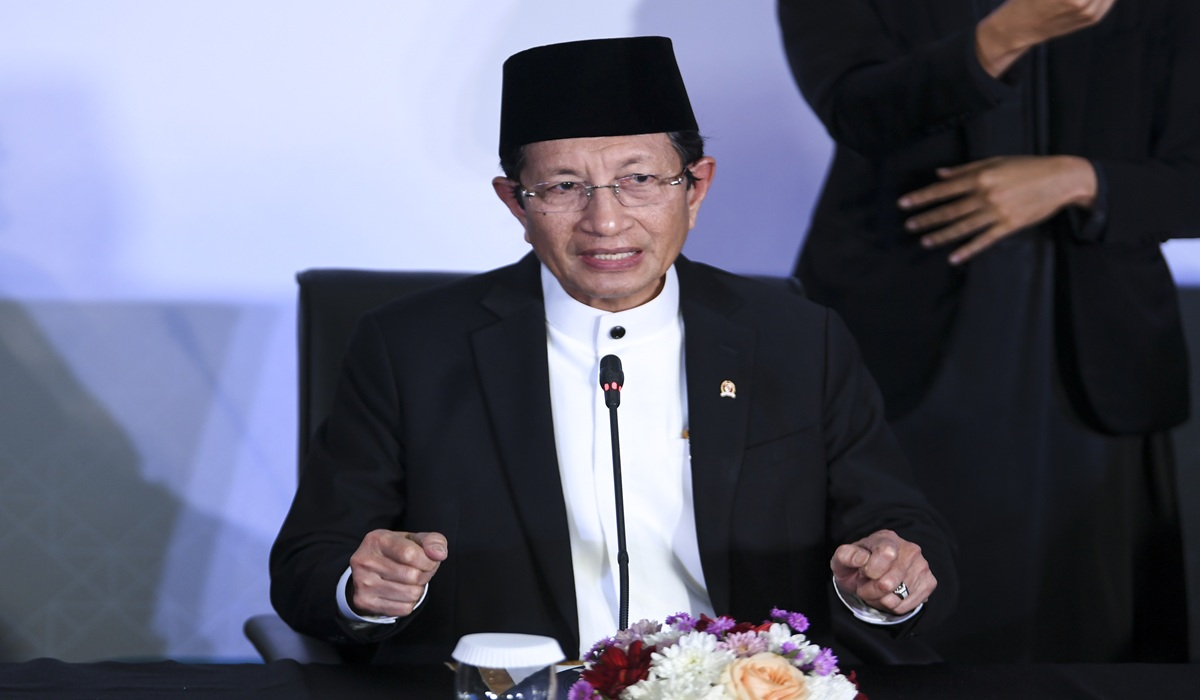
The Ministry of Religious Affairs has announced the results of the Idul Fitri 2026 Isbat session. The determination of the start of the Hijriah month in Indonesia, particularly for Ramadan, Syawal, and Zulhijah, now adheres to stricter scientific standards. Since 2022, the Indonesian Government through the Ministry of Religious Affairs has officially adopted new criteria agreed upon by the Ministers of Religious Affairs from Brunei Darussalam, Indonesia, Malaysia, and Singapore (MABIMS).
These criteria serve as the primary parameter in the Isbat session results to determine whether field reports of crescent moon sightings (rukyatul hilal) are scientifically acceptable.
MABIMS is a regional cooperation forum aimed at harmonising Islamic affairs in Southeast Asia. One of its key achievements is the unification of the Hijriah calendar through the Imkanur Rukyat criteria (possibility of the crescent being visible).
Under the latest standards applicable in 2026, the crescent is declared to meet the requirements if:
The Isbat session combines two methods: Hisab (calculation) and Rukyat (observation). The MABIMS criteria act as a scientific bridge between the two:
If field officers report seeing the crescent, but its astronomical position is still below 3 degrees or elongation below 6.4 degrees, the report will be rigorously reviewed. This is done to avoid misidentification of other celestial bodies as the crescent.
If hisab data indicates that the crescent’s position does not meet the MABIMS criteria across all regions of Indonesia, and rukyat results are also nil, the Isbat session will typically decide on Istikmal, completing the current month to 30 days.
The use of the 3-degree and 6.4-degree elongation standards is based on extensive global research on crescent visibility. With these higher standards, the potential for differences in the start of the month due to observation errors can be minimised, providing stronger certainty for Muslim worship.
Why might the government’s results differ from Muhammadiyah’s?
Muhammadiyah uses the Wujudul Hilal method (as long as the moon is above the horizon), whereas the Government uses MABIMS criteria requiring the crescent to be sufficiently high for physical visibility.
What if the crescent is already at 3 degrees but the weather is cloudy?
In such conditions, reports from various monitoring points across Indonesia will be collected. If none succeed in seeing the crescent due to weather constraints, the final decision will be made in a closed session based on the principle of caution (ihtiyat).
Based on the session results, the Government has set Hari Raya Idul Fitri 1 Syawal 1447 Hijriah to fall on Saturday, 21 March 2026.
The Indonesian Ulema Council (MUI) in 2004 stated that the authority to announce the start of Ramadan and Eid al-Fitr lies with the ulil amri, or in Indonesia, the Ministry of Religious Affairs.
The Government has officially set Idul Fitri 1447 H to fall on Saturday, 21 March 2026. The decision was taken through the Isbat session using the istikmal method of 30 days.
The Meteorology, Climatology, and Geophysics Agency (BMKG) Region IV Makassar, along with the Regional Office of the Ministry of Religious Affairs and several related agencies, conducted monitoring of the 1 Syawal 1447 H crescent.