
Restructuring the Paradigm of Asset Forfeiture from a Constitutional Perspective
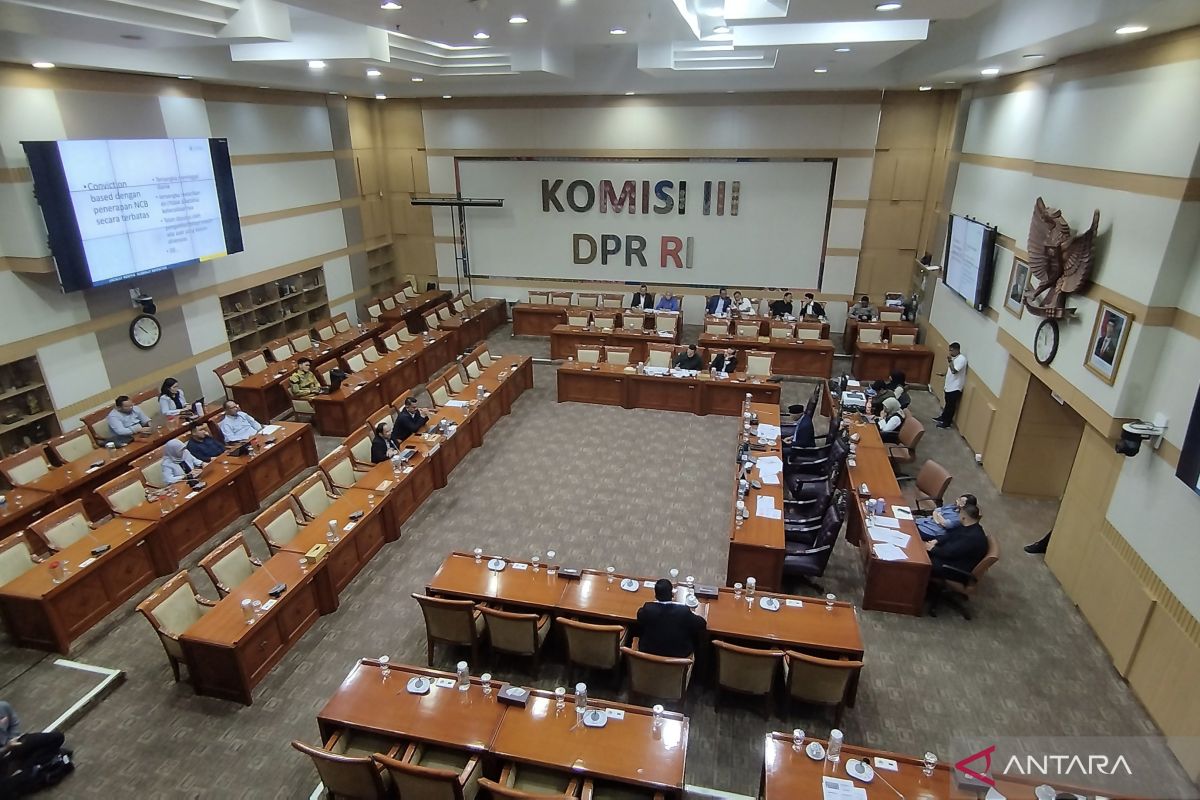
The need for specific regulations governing asset forfeiture outside conventional criminal mechanisms has become an inevitability. Jakarta (ANTARA) - Asset forfeiture in Indonesia’s criminal justice system is conceptually dominated by a conviction-based forfeiture (CBF) approach based on personal liability. Asset forfeiture can only be carried out after a criminal decision with final legal force. In this framework, asset forfeiture is positioned as an additional penalty attached to the criminal decision, thus entirely dependent on the success of proving the offender’s guilt in court to the standard of beyond reasonable doubt. In practice, this approach faces serious structural limitations. There are various conditions that prevent in personam-based asset forfeiture from being effectively enforced, often referred to in literature as the fugitive loophole. These conditions include: the offender dying before the trial process is completed; the offender fleeing or their identity being unknown; insufficient evidence for prosecution; statute of limitations; and situations where assets have been transferred to third parties. Even in certain cases, the offender’s political or economic power hinders law enforcement processes. In such situations, even if assets suspected to originate from criminal acts have been found, the state lacks effective instruments to seize them due to the absence of a criminal decision. Indeed, Indonesia’s positive legal system already contains the embryo of a non-conviction based (NCB) mechanism, but its regulation is scattered and not integrated. In this context, the idea of adopting a non-conviction based forfeiture (NCBF) mechanism as a standalone regime becomes relevant and urgent. Unlike CBF, this approach places the asset as the primary object, where what is assessed is the “tainted” status of the asset, not the subjective fault of its owner. Thus, the state can seize assets as long as it can be proven that they are more likely than not derived from criminal acts, without having to wait for criminal proof against the offender. However, it is important to emphasise that adopting NCBF does not mean shifting the fundamental principle of criminal law, namely geen straf zonder schuld (no penalty without fault - RED). CBF must still be maintained as the primary instrument in enforcing criminal accountability based on fault. On the contrary, NCBF serves as a complementary instrument that fills the gap when criminal mechanisms are ineffective. Thus, both must be placed in a complementary relationship within an integrated legal architecture. In this framework, the shift from follow the suspect to follow the money is not merely a technical change, but a paradigm transformation in understanding the purpose of law enforcement. Asset forfeiture is no longer viewed solely as a consequence of punishment, but as a legal policy instrument oriented towards restoring state losses (asset recovery). Therefore, the need for specific regulations governing asset forfeiture outside conventional criminal mechanisms has become an inevitability, so that the law can address the complexity of modern economic crimes that are increasingly sophisticated and cross-jurisdictional. Maintaining balance