
Restructuring Hajj Justice: From Long Queues to Certainty and Preparedness
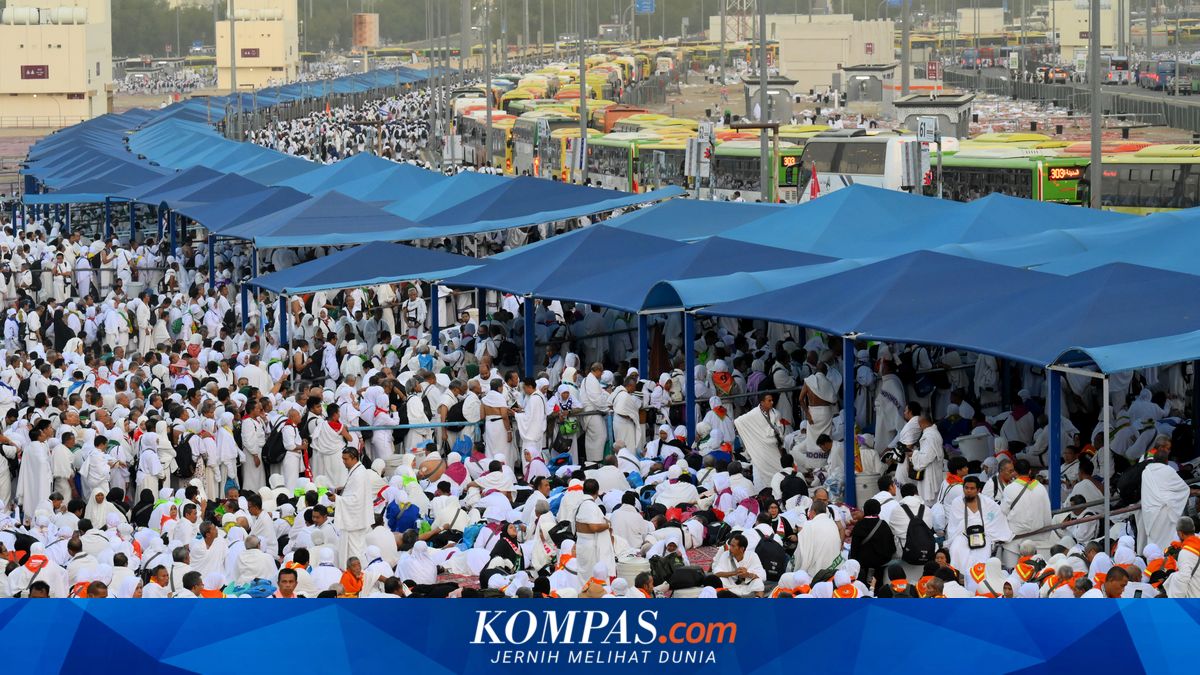
The article by Deputy Minister of Hajj, Dahnil Anzar Simanjuntak, published on Kompas.com on 11 April 2026, deserves appreciation for highlighting a long-standing issue that has been too readily accepted as normal, though it is inherently problematic: the Hajj waiting lists stretching to several decades.
In public perception, this situation has even been embraced as something reasonable, as if it were an inevitable consequence of the large number of Muslims in Indonesia.
However, upon more critical examination, such lengthy queues reveal a tension between the actual demands of worship and a system that inherently delays it.
Amid the government’s current push to reduce the longest waiting period from around 48 years to about 26 years starting in 2026, this issue warrants reading not merely as an administrative matter, but as one of justice, governance, and even the very meaning of istitha’ah itself.
Because when the gap between readiness and departure is too wide, what is at stake is not only the system’s efficiency, but also the integrity of the Hajj worship’s meaning.
It is high time we honestly admit that Hajj queues lasting two to three decades are not a healthy state for the worship service system.
With a waiting list reaching about 5.7 million people, we face a situation where worship that should be performed in a state of capability is instead forced to submit to a logic of extremely prolonged waiting.
In this context, Dahnil Anzar Simanjuntak’s critique is highly relevant: the system must not be allowed to reduce worship to merely a matter of quota numbers.
This issue can no longer be tolerated as merely a technical consequence. Long queues reflect an imbalance between demand and capacity that is not matched by adequate policy innovations.
The state seems to merely manage the accumulation rather than addressing the root problems. As a result, the system runs administratively but loses sensitivity to the substantial dimension of the worship itself.
Many prospective pilgrims register while still healthy and productive, hoping to perform the worship in the best condition.
However, in reality, they only get their turn when they are much older, even in non-ideal health conditions.
In such situations, worship that should be conducted with full readiness instead takes place under limitations.
A deeper impact is the shift in the meaning of istitha’ah. In fiqh, istitha’ah is actual, encompassing physical, financial, mental, and security capabilities at the time of performing the worship.
However, in the practice of a long-queue system, istitha’ah risks being reduced to an administrative formality that is sufficiently proven at the time of registration. Readiness, which should be the core, is displaced by a semblance of certainty in the system.
If this condition is allowed to continue, we will not only face technical issues in organisation, but also a crisis of meaning in the performance of Hajj worship.
Therefore, courage is needed to restructure the system more fundamentally, so that Hajj worship is no longer trapped in the logic of long queues, but returns to its main principle: performed in a capable, worthy, and dignified condition.
Thus, the government’s steps through the Ministry of Hajj and Umrah should be read as an effort to correct long-standing distortions, not merely as momentary controversy.
What is being done is not a reactive response to polemics, but part of the awareness that the existing system has indeed required fundamental improvement.
In this perspective, Hajj reform must be positioned as a long-term process that demands consistency, not merely instant policies that are populist.
President Prabowo Subianto, in a briefing on 8 April 2026, emphasised the need for comprehensive improvements in Hajj organisation, including efforts to lower Hajj costs by around Rp 2 million and shorten the waiting period.
This affirmation shows that Hajj reform does not stand alone, but is part of the state’s strategic agenda to enhance public service quality based on justice and efficiency.
In other words, Hajj is no longer viewed as an annual routine, but as a sector requiring serious policy intervention.
In that framework, the establishment of the Ministry of Hajj and Umrah must be understood as an important institutional step.
It opens space for more focused, integrated, and accountable management, while ending the policy fragmentation that has often occurred.
The presence of this dedicated ministry signals that the state wants to deliver more professional governance, with stronger planning and execution capacity.
Nevertheless, the challenges ahead are not light. The Ministry of Hajj and Umrah must not stop as an administrative operator merely carrying out routines, but must emerge as the engine of institutional transformation.
It is demanded to formulate policy innovations, overhaul the system comprehensively, and ensure that every reform step is truly oriented towards justice, transparency, and the welfare of pilgrims.
The “war ticket” discourse put forward by Minister of Hajj and Umrah Mochamad Irfan Yusuf has indeed sparked polemics.