
Restrictions on Subsidised Fuel to Safeguard Public Services and Logistics Flow
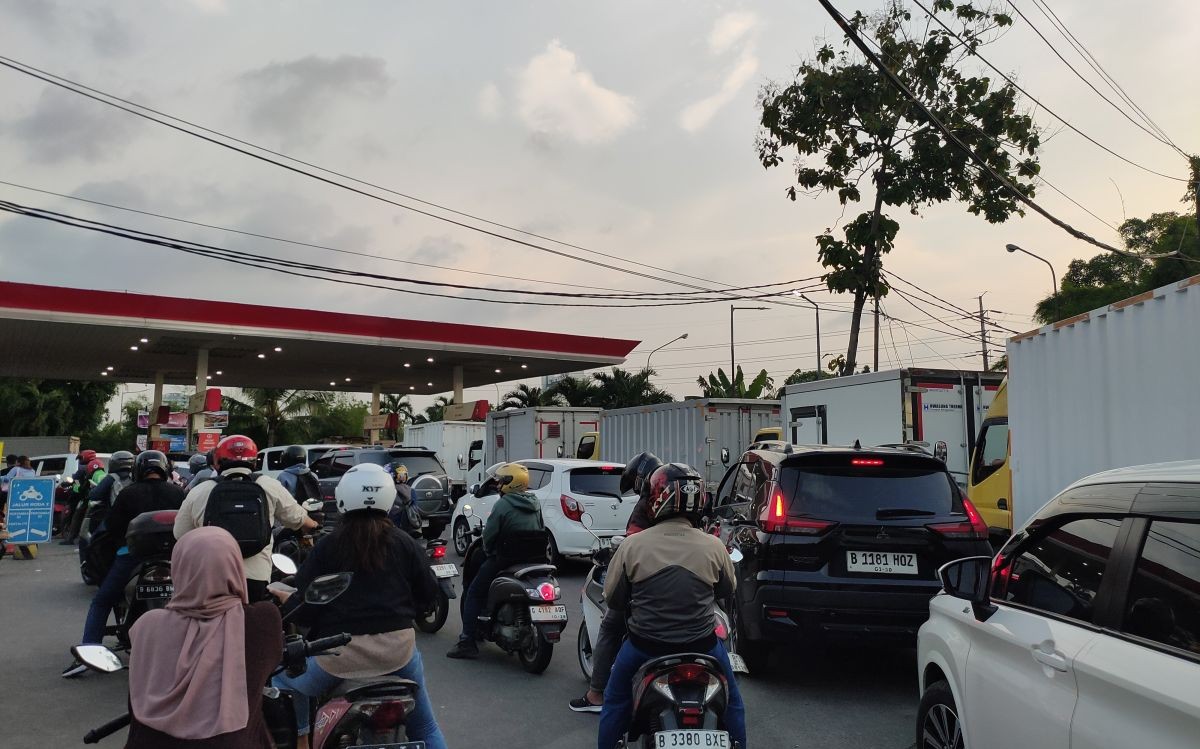
Business circles are calling on the government to ensure clarity in implementing the policy on restricting subsidised fuel purchases to prevent disruptions to distribution activities and business operations in the field. Chair of the Indonesian Employers Association, Shinta Widjaja Kamdani, stated that in principle, the 50-litre daily restriction on subsidised fuel purchases is not aimed at public vehicles, whether for passenger or goods transport.
“In the government’s explanation, the subsidised fuel restriction is indeed directed to ensure that public service activities, distribution, and goods logistics are not disrupted,” she said when contacted on Wednesday (1/4).
However, she reminded that the business world needs to pay attention to how the policy is technically translated in the field. This is because there is often a difference between policy narratives and operational practices.
“In the implementation of policies like this, there are often differences in understanding, particularly regarding the definition of vehicles in the exception category, the design of the exception mechanism, to technical arrangements at the petrol station level,” Shinta explained.
She emphasised that this issue is crucial because not all business activities use vehicles that are administratively classified as public transport. Many business actors, including SMEs, rely on their own fleets for distribution or daily operations.
“This also includes inter-regional goods transport that uses subsidised diesel. In this context, clarity on definitions and technical implementation is key to avoiding obstacles in the field,” she said.
In addition, the business world is also anticipating potential operational frictions if the policy implementation in the field does not run smoothly. For example, long queues at petrol stations, vehicle build-ups, to limitations in access to subsidised fuel.
“If this happens, the impact could be felt in the smooth distribution and potentially add to logistics costs. In the end, this situation can affect production costs and drive indirect price increases,” she elaborated.
Nevertheless, Apindo stated that it can understand the government’s objective in controlling subsidies to make them more targeted. However, Shinta stressed the importance of synchronisation between policy and technical implementation in the field.
“We hope that the policy narrative conveyed aligns with the written and applicable regulations in the field, so that the goal of targeted subsidies is still achieved without disrupting productivity and the smooth flow of economic logistics activities,” she concluded.
The subsidised fuel restrictions are seen not merely as a technical step to control consumption, but as an early signal from the government in facing potential global energy supply pressures.
IESR: Government Assurances on Fuel Availability Need to Be Accompanied by Data Transparency
Pertamina, through Pertamina Patra Niaga, has affirmed that in line with government directives, there will be no adjustments to fuel oil (BBM) prices, whether non-subsidised or subsidised.