
Restore Connectivity as Task Force Focuses on Repairing Functional Roads and Bridges
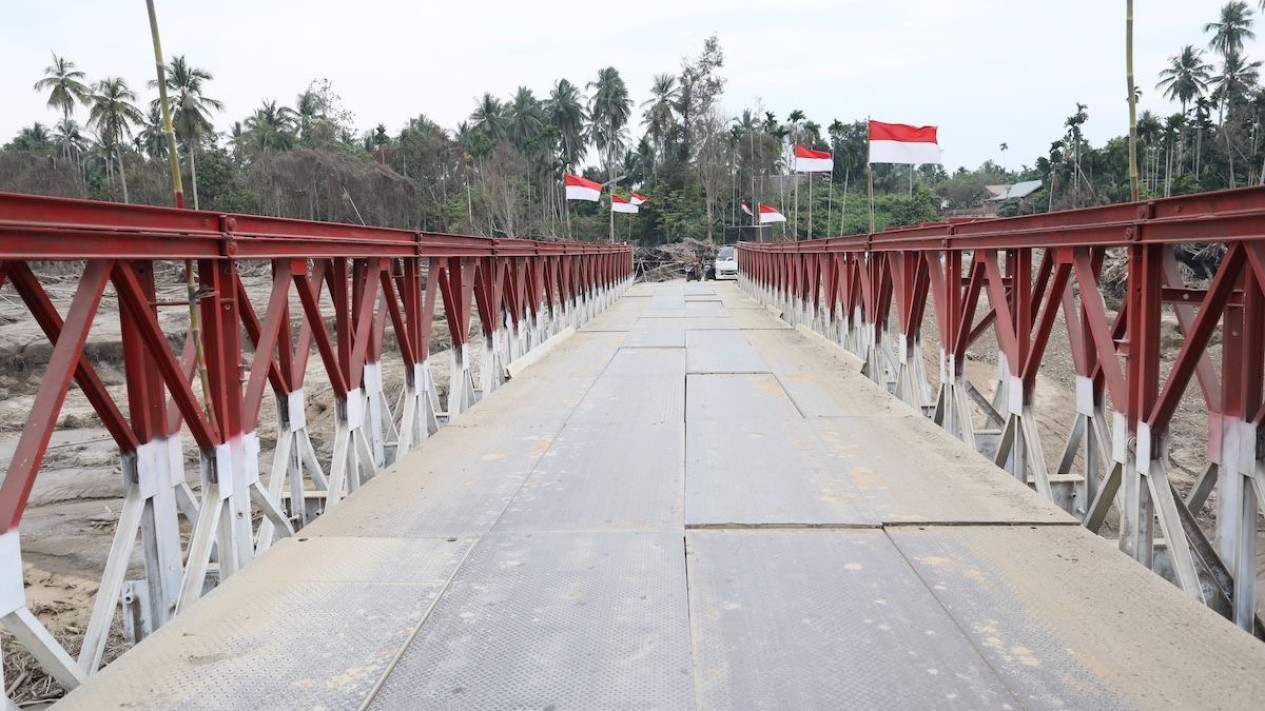
Jakarta – The Head of the Task Force for Acceleration of Rehabilitation and Reconstruction (PRR) Following Disasters in Sumatra, Muhammad Tito Karnavian, has stated that efforts to restore regional connectivity in disaster-affected areas of Aceh, North Sumatra, and West Sumatra are now focused on repairing roads and bridges that remain functional or temporary in nature.
This initiative represents a continuation of basic infrastructure recovery that has generally demonstrated significant progress across various affected regions. As transport networks continue to improve, public mobility and logistics distribution are gradually returning to normal operations.
According to Tito, the majority of national roads and provincial roads in the affected areas are now passable, enabling normal public activity to resume. “Functionally, operations are relatively normal. National and provincial roads are now usable, with only one section in Lokop towards Blangkejeren remaining affected,” Tito stated in Banda Aceh, Aceh, on Friday, 6 March 2026.
Based on PRR Task Force data as of 10 March 2026, a cumulative total of 2,520 local road sections were affected by disasters across the three provinces, with 2,277 sections having returned to functional status, representing approximately 90 per cent recovery. Meanwhile, on the national road network, all affected sections have fully returned to function at 100 per cent, thereby restoring primary inter-regional connectivity.
Regarding bridge infrastructure, of 1,180 local bridges affected, 790 have returned to functional status, representing approximately 67 per cent recovery. All sections of the national bridge network have also fully returned to function.
Beyond road and bridge repairs, restoration of basic services including electricity and communications networks has progressed extensively across affected areas. For villages not yet fully electrified, the government is distributing generator sets to ensure that residents’ basic needs continue to be met.
As infrastructure access improves, community economic activity is also gradually resuming. Markets previously disrupted by flooding and infrastructure damage are progressively reopening.
Nevertheless, Tito emphasised that the government remains committed to prioritising the reconstruction of several connecting infrastructure facilities currently operating on a temporary basis, particularly emergency bridges constructed during the emergency response phase. “In recovery operations, what will be made permanent are the bridges, followed by roads that are currently functioning on a temporary basis,” he stated.