
Response to Customs Case: Barong Group Cigarette Entrepreneur Declares Panca-Ampera
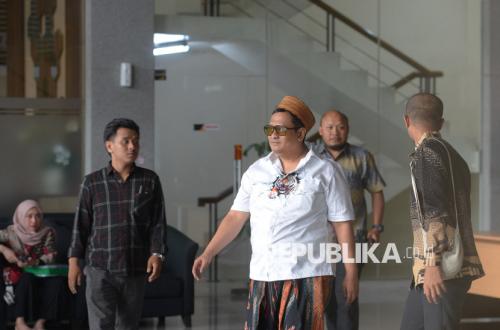
JAKARTA – The owner of Bandar Rokok Nusantara Global Group (Barong Group), HRM Khalilur R Abdullah Sahlawiy, also known as Gus Lilur, has responded to the legal actions regarding illegal cigarettes and alleged excise stamp deviations. Gus Lilur expressed concern over the criminalisation of local cigarette entrepreneurs.
Therefore, Gus Lilur has declared the Five Mandates of Madura-Nusantara Tobacco Farmers, or Panca Ampera. According to Gus Lilur, these five points represent the reflections of the challenges long faced by tobacco farmers and small-scale cigarette business actors in Indonesia.
“This is not merely an aspiration. This is a voice from below. The voice of farmers, labourers, and small business actors who have long been the foundation of the national tobacco industry,” said Gus Lilur in his statement on Monday (13/4/2026).
The first point is to stop the criminalisation of indigenous cigarette entrepreneurs. Gus Lilur emphasised that law enforcement must be carried out fairly and proportionately. He observed that in practice on the ground, there is often an approach that equates small-scale business actors with larger violation networks.
“Indigenous cigarette entrepreneurs, especially on a small and medium enterprise (UMKM) scale, must not be positioned as enemies. They are part of the people’s economy. If there are violations, the context must be considered. Criminalisation must not occur against those who are actually struggling to survive,” said Gus Lilur.
Lilur mentioned that many small business actors are trapped in an unfriendly system, from high excise costs to regulatory complexity.
Second, stop illegal cigarettes. Gus Lilur stressed that illegal cigarette practices must be halted. According to him, illegal cigarettes not only harm the state in terms of revenue but also damage a healthy industry ecosystem.
“Illegal cigarettes must be firmly addressed. This is important to maintain fairness in the industry. But enforcement must be on target, not weakening growing legal business actors,” said Gus Lilur.
Gus Lilur emphasised that solutions to illegal cigarettes are not sufficient with enforcement alone, but must be followed by systemic improvements so that business actors have a more affordable legal pathway.
Third, issue special excise for people’s cigarettes. Lilur advocated for a special policy in the excise system for the people’s cigarette industry. Gus Lilur assessed that the current excise scheme does not fully favour small business actors. The high tariff structure becomes an obstacle for UMKM to develop legally.
“We need a special excise scheme for people’s cigarettes. This is important so that small business actors can enter the official system without being burdened by unrealistic costs,” said Lilur.
Fourth, succeed the Madura Tobacco Special Economic Zone (KEK). Gus Lilur proposed accelerating the realisation of the Madura Tobacco Special Economic Zone (KEK) as a long-term solution. According to him, the Madura Tobacco KEK will be a strategic instrument to increase the added value of tobacco, strengthen industrial downstreaming, and create an integrated industry ecosystem from upstream to downstream.
“The Madura Tobacco KEK is not just an economic project. This is a way out to build a fair and sustainable tobacco industry,” said Lilur.
Fifth, Lilur hopes the Indonesian government supports Indonesian tobacco farmers. Lilur urged policies that favour tobacco farmers as the main actors in the industry chain. Gus Lilur stated that farmers have long been in the weakest position due to price fluctuations, market uncertainty, and minimal protection.
“Millions of tobacco farmers are the foundation of this industry. If they are not prosperous, the entire industry chain will be fragile. The state must be present to ensure they receive fair prices and business certainty,” said Lilur.
Lilur stated that the welfare of farmers must be the primary goal of every policy in the tobacco sector. He considers these five points as policy directions that need to be seriously considered by the government.
“If we want a strong Indonesian tobacco industry, we must start from the bottom—from the farmers, from the people’s business actors. They must not continue to be the weakest party in a system that should protect them,” said Lilur.
It is known that the investigation currently being conducted by the Corruption Eradication Commission (KPK) is directed at allegations of excise stamp misuse in East Java. The tracing covers patterns of fund flows and the involvement of several business actors in practices alleged to have occurred systematically.
Several names of small and medium-scale cigarette entrepreneurs in the East Java region have reportedly entered the radar of case deepening. Among them are entrepreneurs in Pamekasan, Malang, to Sumenep.