
Responding to Public Criticism, BPS DIY: Desil Changes Still Possible
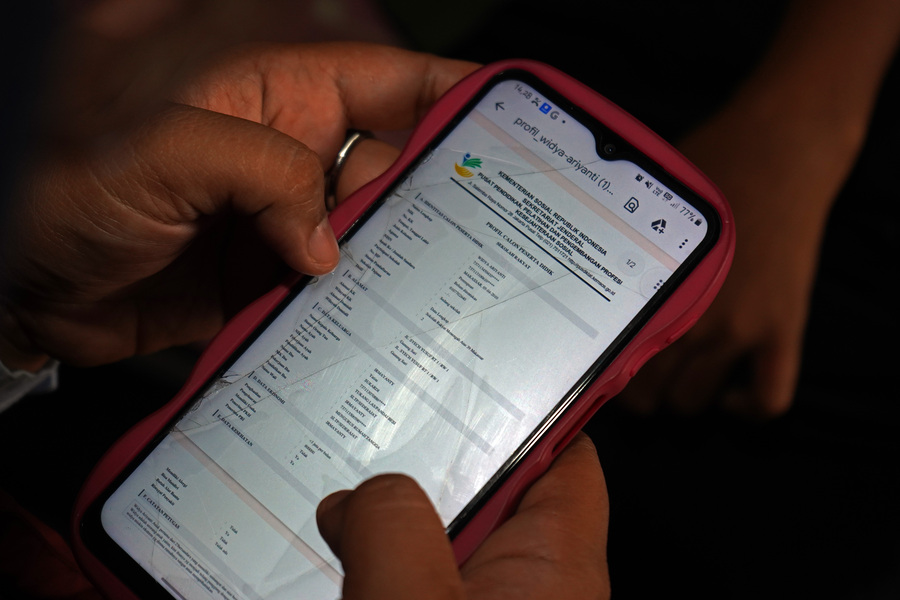
Changes to decile status in the National Socio-Economic Single Data (DTSEN) are very possible through a re-verification process in the field. This was conveyed by the Acting Head of the Central Statistics Agency (BPS) for the Special Region of Yogyakarta (DIY), Endang Tri Wahyuningsih, on Monday (24/6).
She was responding to journalists’ questions about a becak (pedicab) driver named Timbul who was classified in Decile 9, whereas previously Timbul had been in deciles 1–2.
She explained that after factual verification, Timbul was recorded as having three household members, working as a motorised becak (bentor) driver, owning a small chicken farming business, and occupying his own house.
“Decile changes are still possible if verification results find conditions that do not match previous data,” she explained.
Endang explained that the preparation of DTSEN involves many stages and data sources, so the verification process is not carried out to find fault with any particular party.
“DTSEN is a system for recording people, and the process of filling it in also involves people. In addition, the Proxy Means Test (PMT) method used is a model that has limitations,” said Endang.
To anticipate sampling errors and non-sampling errors (NSE), BPS continues to accelerate verification to guarantee data quality and accuracy. This process requires active public participation as well as cross-agency synergy.
Members of the public who find discrepancies between decile data and actual economic conditions are urged to report through the official channels that have been provided. The verification results will serve as the basis for updating data so that social assistance is accurately targeted.
She explained that the DIY Regional Government together with BPS continue to refine measures for handling the dynamics of decile changes in the DTSEN. This effort is being made so that the distribution of social assistance (bansos) and health contributions remains accurately targeted without harming poor residents whose conditions have not improved.
To that end, Endang emphasised the importance of strong consolidation and coordination between BPS, regional governments, and related agencies to strengthen understanding of DTSEN.
“No party needs to be positioned as right or wrong. What needs to be built is good coordination and consolidation,” she stressed.
BPS is committed to continuing to socialise and explain the DTSEN concept to all stakeholders. If decile changes are found that do not match factual conditions in the field, the issue can be followed up through a tiered verification and data updating mechanism.
Through this synergy, the DIY Regional Government and BPS are optimistic that they can guarantee the accuracy of beneficiary data so that social assistance distribution in DIY runs more fairly and accurately.
The Head of the DIY Social Service, Suyarno, explained that decile changes refer to Minister of Social Affairs Decree (Kepmensos) Number 22. Under this regulation, social assistance is specifically intended for residents in deciles 1–4, while health contribution assistance covers residents up to decile 5. Responding to the potential cessation of assistance for residents whose decile has risen, his office is choosing to be cautious.
“The Social Service must respond wisely and not immediately stop assistance for families whose decile has risen. Internally, a scheme is being discussed so that families whose decile has risen but whose real conditions have not changed can still receive social assistance,” Suyarno stressed.
He added that the best solution is still being formulated.