
Resource Nationalism Intoxicated by the One-Window Export Regime
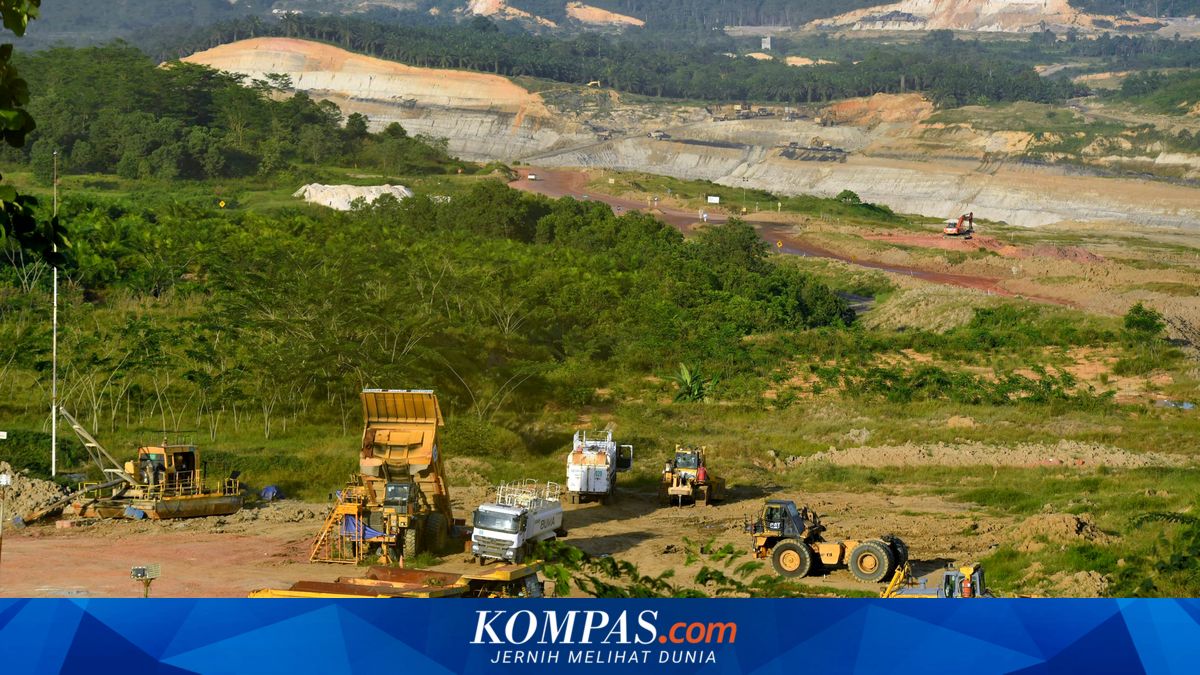
Volatility in the Indonesian stock market that battered the Indonesia Stock Exchange on 19 May 2026 underscored the deepening crisis of confidence in the direction of national economic policy playing out in the market. The fall of the Jakarta Composite Index by more than 3 percent in a single trading session, sparked by rumours of forming a special body or a one-window export aggregator for commodities, whether acknowledged or not, ultimately exposed fundamental vulnerabilities in Indonesia’s current political-economic structure. The issue is highly sensitive as it seeks to overhaul the long-standing liberal trade regime, where holders of Mining Business Licence (IUP) have historically enjoyed full autonomy to negotiate directly with international buyers. The transformation towards absolute state control through the national aggregator mechanism reflects a paradigm shift from regulator to market participant, a move that, in theory, carries risks of allocative inefficiency and significant price distortion. Thus on 19 May 2026, the financial market was shaken by news of a draft regulation requiring all natural resources companies to sell their products to a state-owned special body before export to global markets. This body was planned to act as the primary gateway or national export aggregator. The coal and palm oil sectors were named as the initial targets, while strategic minerals such as nickel and tin were placed on the radar for subsequent evaluation. Thereafter, the uncertainty was compounded by the absence of clear clarifications from the trade and energy authorities. The Trade Minister said he had only just heard of the news, while the Directorate General of Minerals and Coal stressed that it did not know of any proposal to form a new body. Yet the market remained negative because it assesses that in Indonesia’s political-economic system radical discourse often appears as trial balloons before it is formalised suddenly through ministerial-level regulations. My critical analysis of the government’s motives indicates a strong push on fiscal measures and control of foreign exchange. There are main reasons underlying the one-window trade policy discourse, namely an emphasis on under-invoicing practices, optimising state revenue through windfall tax, and strengthening control over export proceeds. The government consistently suspects foreign exchange leakage via practices of reporting transaction values lower than international market prices to minimise royalties and export taxes. With a one-window mechanism, the state through the aggregator would have full access to the price structure, thereby forcibly removing information asymmetry between businesses and the government. A second motive is pragmatic — the need to fund subsidies in the expanding state budget (APBN). This windfall tax is designed to absorb the surplus profits earned by companies when global commodity prices surge due to external factors. The one-window mechanism would ease this tax deduction up front before revenues flow to exporters. A third set of commodities, such as nickel, coal, and tin, have very different market characteristics, so a one-window intervention would yield different economic ripples. Nickel has become the face of Indonesia’s resource nationalism with successful downstreaming that increased the value of export‑processed products to Rp 520 trillion in 2023. However, this success has been accompanied by a European Union WTO challenge regarding a ban on nickel ore exports. In other words, the one-window policy can be interpreted as a strategy to avoid accusations of export prohibitions by shifting to a State Trading Enterprise arrangement, which is technically permissible under GATT provisions as long as it operates on commercial considerations.