
Researchers Find Doomsday Signs Now Visible in Cheese
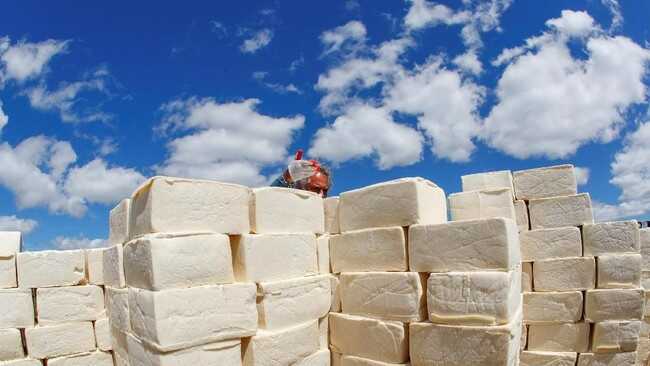
Jakarta, CNBC Indonesia - Cheese has become one of the evidences of the doomsday signs of climate change becoming increasingly worrying. The dairy base for cheese, cow’s milk, is affected by this crisis.
The findings come from a study conducted in 2021 at Université Clermont Auvergne in France. They found that cow’s milk quality differed from usual.
According to the researchers, the taste of cow’s milk changed because the feed the animals consume has changed as well. The animals were fed supplementary feeds such as maize and concentrates.
This happened because the grass that cows usually graze on has experienced drought. In the end, it reduced the amount of grass available for cows to eat.
With the change in feed, the milk’s nutritional content changed, ultimately affecting the taste of the cheese.
“If climate change continues as it is now, we will feel it in the taste of our cheese,” said Matthieu Bouchon, the lead researcher of the study to Science News.
The study compared two groups of cows. The first group was fed grass-based feed and the other group with supplementary feed.
The observations on the maize-fed cows produced milk of similar volume and lower methane emissions. Meanwhile, the milk produced was less creamy and rich compared with grass-fed cows.
Cows that eat grass also have more omega-3 fatty acids and lactic acid. These constituents are important for heart health and the digestive system.
The phenomenon has been observed in many regions, from Europe to Brazil. For example, a Brazilian dairy farmer named Gustavo Abijaodi explained that the milk content in the region declined due to climate change.
“We face many problems with the protein and fat content in the milk because of high temperatures,” Abijaodi said. “If we can stabilise the heat impact, cows will produce milk that is better and more nutritious.”
Climate change that causes extreme heat also alters cows’ feeding patterns. Cows eat less than usual.
The reduced intake of feed lowers their resilience. Cows are also more susceptible to disease.
“This process could lead to a reduction in immunity, making the animals more susceptible to disease,” he explained.