
Researchers Discover Freon Alternative, AC and Fridges Prepare for Change
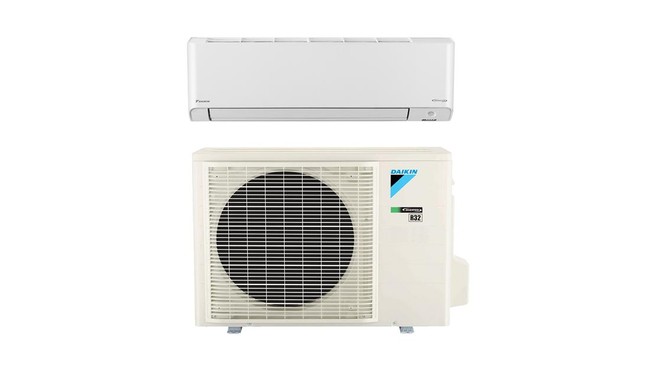
Jakarta, CNBC Indonesia - Scientists have discovered a new room cooling technology innovation to replace the use of harmful chemicals such as hydrofluorocarbons (HFC) or freon. According to an IFL Science report, traditional cooling mechanisms generally rely on transferring heat from inside the room with the aid of a special heat-absorbing liquid.
That liquid changes phase into gas and is then circulated in a closed system, before being condensed back into liquid form so the cooling process can repeat continuously.
Researchers from Lawrence Berkeley National Laboratory at the University of California, Berkeley, have developed a new method for absorbing and transferring heat energy.
The model they use harnesses the way energy is stored and released when materials change form, for example, like when ice turns into water.
If the room temperature rises, the ice melts. At the same time, the melting ice absorbs heat from its surroundings, thus cooling the room.
To find an alternative to the cooling process, researchers focused on finding a way to “melt ice” without raising the temperature. The method discovered involves adding particles containing energy known as ions.
The melting process using these ion particles is exemplified by the use of salt to prevent ice formation on roads during winter in four-season countries. This phase change cycle is called the ionocaloric cycle.
“There has been no successful alternative solution that creates cold, works efficiently, meets safety aspects, and has no negative environmental impact. We think the ionocaloric cycle has potential,” said Drew Lilley from Lawrence Berkeley National Laboratory.
The research team has tested a salt made using iodine and sodium to melt ethylene carbonate. The liquid produced utilises carbon dioxide and is also used in lithium-ion batteries. This means the production process is not only zero-emission but negative-emission.
In those tests, the temperature changed by up to 25 degrees Celsius with just a “charge” of 1 volt.
Now, researchers are creating a practical system that can be applied commercially. One of their developments is finding the most effective “salt” for drawing heat from the room. In 2025, researchers found that the most efficient salt is a nitrate-based salt.