
Researchers Confirm Mangrove Trees in Ngurah Rai Forest Park Died Due to Diesel Contamination
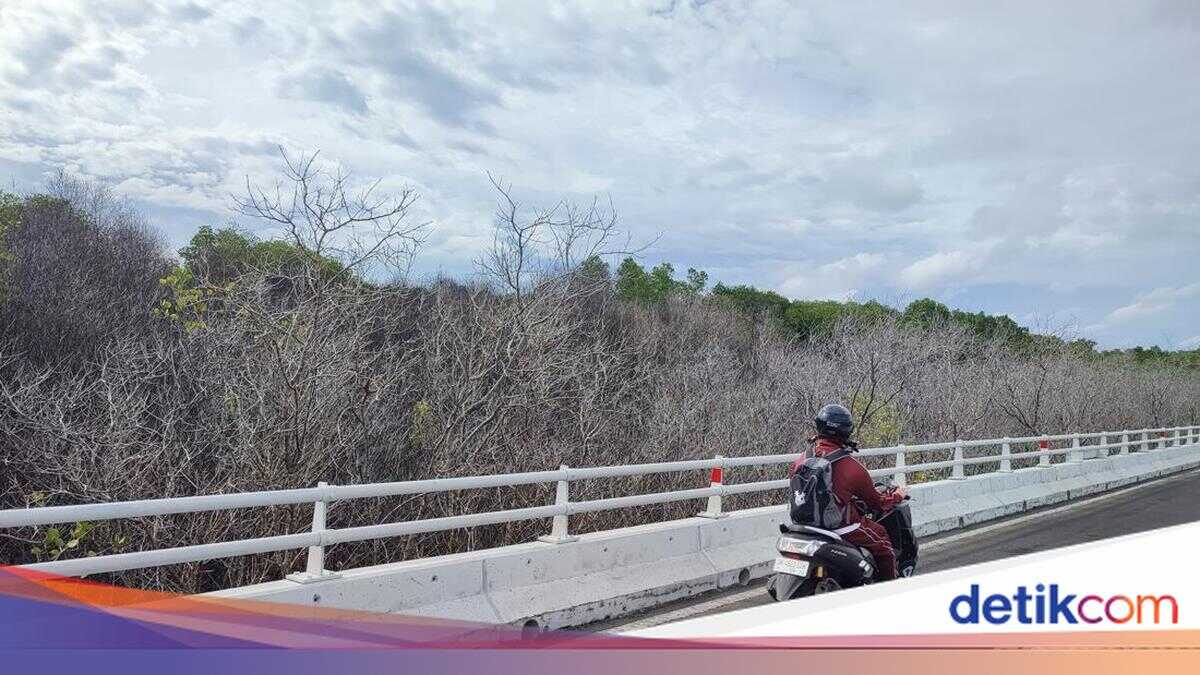
A team of researchers from the Agriculture Faculty of Udayana University (Unud) confirmed that hundreds of mangrove trees west of the Bali Mandara toll road entrance in the Ngurah Rai Forest Park area, Badung, Bali, died due to contamination from oil, particularly diesel.
The findings are detailed in a research report titled “Exposure to the Results of Gas Chromatography-Mass Spectrometry (GC-MS) Analysis of Sediment and Water Samples in the Rhizosphere Area of Mangrove Plants Owned by KSOP Pelindo,” which was published on February 26, 2026. This study was conducted by a team of plant health researchers from Unud, coordinated by Dewa Gede Wiryawan Selangga.
Selangga explained that laboratory tests showed that the soil around the mangrove roots was contaminated with oil waste, primarily diesel.
“Based on GC-MS analysis, soil samples from the mangrove area tested positive for oil waste, mainly diesel,” Selangga said in the research report, Thursday (February 26, 2026).
The tests were conducted from February 24-26, 2026, on soil, water, and sediment samples using the Gas Chromatography-Mass Spectrometry (GC-MS) method. The results showed that 41 of the 45 volatile compounds detected were hydrocarbons commonly found in fuels, particularly with a carbon atom range of C15-C24, strongly indicating diesel contamination.
According to Selangga, the diesel entering the soil pores causes the mangrove roots to be covered in an oil layer and exposed to toxic compounds. The aromatic content in diesel can damage plant cells, disrupt nutrient absorption, and eventually kill the plants within weeks.
“The oil that settles in the soil will continue to damage the root system. Within a certain period, the plants will not be able to survive because the function of the roots and plant tissues is disrupted,” Selangga concluded.
Meanwhile, no hydrocarbon compounds were found in the water samples because the oil had settled and accumulated in the soil. The affected mangroves are located in the western area of the Bali Mandara toll road entrance, specifically in the area owned by KSOP and PT Pelabuhan Indonesia (Pelindo). Visually, the contaminated plants show symptoms of yellowing leaves, turning brown, and then falling off, accompanied by damage to the stems and roots.
Previously, member of Commission III of the Indonesian House of Representatives, I Nyoman Parta, revealed the condition of the damaged and dead mangrove plants, which he suspected was caused by a fuel pipeline leak in the area.
Parta requested an explanation from the relevant parties regarding the condition, including Pelindo and Jasa Marga. According to him, in November 2025, there was maintenance activity on the fuel pipeline in the distribution route from Benoa Port to the Pertamina Pesanggaran Depot, Denpasar.
“I suspect this is not a natural death; further investigation is needed. However, initial information suggests that there may have been a leak in the fuel pipeline owned by Pertamina or another company operating in this area,” said Parta.
Meanwhile, Area Manager Communication, Relations & CSR Jatimbalinus Pertamina Patra Niaga, Ahad Rahedi, stated that Pertamina would conduct further investigation into operational activities in the past few months. Based on visual inspections in the field, he said that no oil layers or strong fuel odors were found around the area where the mangroves died.
“Pertamina Patra Niaga through the Sanggaran Fuel Terminal will carry out a review of the chronology of operational activities over the past few months, especially related to pipeline work in the Benoa area,” said Ahad Rahedi, Saturday (February 21, 2026).