
Research Shows Free Nutritious Meal Programme Changes Children's Eating Habits for Better Health
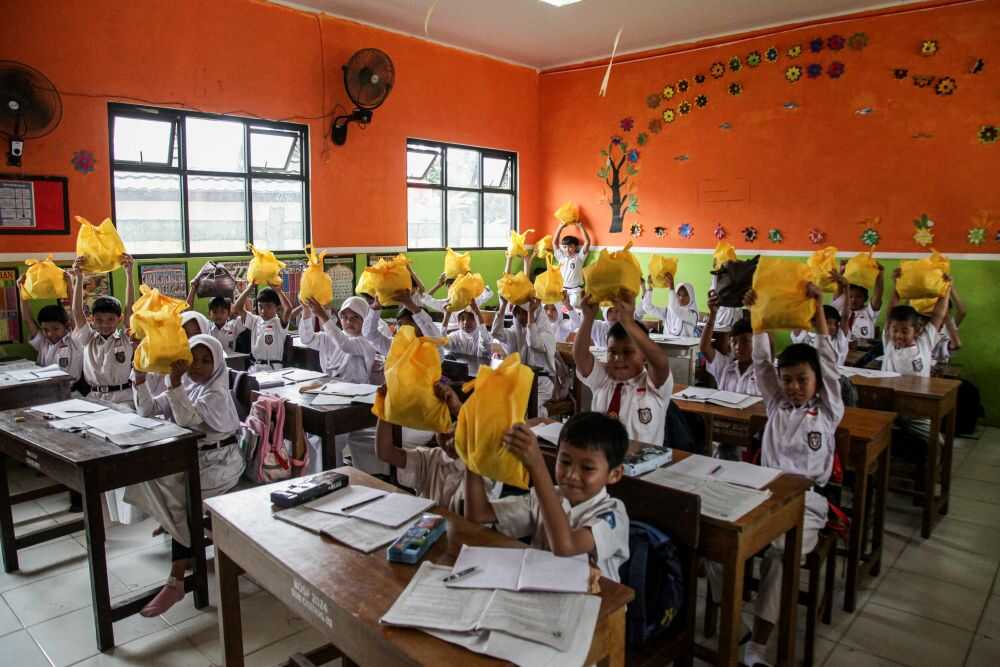
The Free Nutritious Meal (MBG) programme, which has been operating for one year, is assessed to have brought positive changes to children’s eating habits. Research conducted by the Research Institute of Socio-Economic Development (RISED) demonstrates that the majority of parents have experienced improvements in their children’s food consumption patterns following participation in the programme.
RISED Director M. Fajar Rachmadi stated that a survey involving approximately 1,800 parents found that 80 percent of respondents reported their children consuming nutritious food more regularly since the introduction of MBG.
“One key finding from our in-depth questioning of MBG recipient student parents is their awareness that parents bear responsibility for meeting their children’s nutritional and developmental needs. The presence of MBG actually provides families with peace of mind when their children are at school,” Fajar explained.
He added that 55 percent of parents reported their children becoming less selective about food after participating in the MBG programme. Furthermore, 81 percent of parents from disadvantaged families expressed support for the programme’s continuation.
“Notably, when children receive meals at school, parents also feel secure. This sense of security arises because the parents we surveyed are confident that their children are receiving regular nutritious meals through the MBG programme,” Fajar said.
According to him, the survey results provide a factual picture of the programme’s daily micro-level impact. The programme has frequently faced criticism on social media regarding nutritional quality. However, research findings indicate positive effects on children’s eating habits.
Dr Andi Khomeini Takdir, a specialist in internal medicine, held similar views. He assessed that the regular provision of nutritious meals has the potential to establish healthy eating patterns in children as they become accustomed to varied menus.
“In my view, MBG is a programme with good intentions. I can understand President Prabowo Subianto’s intention in initiating MBG because I think the idea is excellent,” Dr Andi stated.
He added that nutritional issues are not limited to low-income communities. “It is not only in the economically disadvantaged classes; there are also people in middle or even quite high economic classes who sometimes consume food that is not healthy,” he said.
Positive findings were also documented by the University of Indonesia’s Sociology Laboratory (LabSosio UI). In its evaluation, 66.4 percent of students reported greater enthusiasm for attending lessons following the introduction of MBG. The programme also achieved a perception score of 4.30 in fulfilling nutritious food requirements, particularly for children from low socio-economic groups.
The Head of State Primary School 24 Rufei, Sorong City, Sientje Martentji Ajomi, acknowledged changes in student behaviour at school since the programme began. “Children are more actively asking questions and cheerier throughout the day,” she said.
The findings from various research initiatives demonstrate that MBG impacts not only nutritional fulfilment but also influences children’s eating habits and learning enthusiasm in schools.