
Research reveals AI could trigger fresh employment recession; office workers at risk
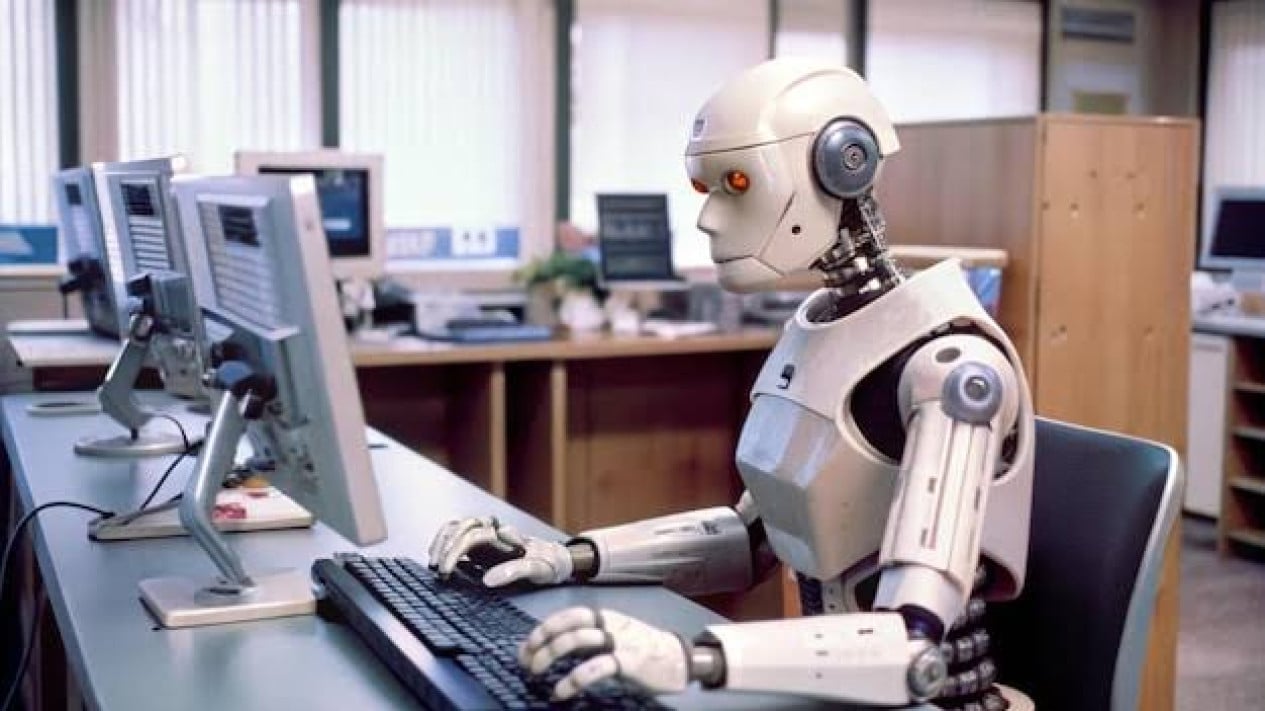
Jakarta – The rapid development of artificial intelligence (AI) technology is increasingly affecting various employment sectors. Recent studies demonstrate that AI capabilities now extend beyond simple technical tasks to encompassing professional roles such as financial analysts, lawyers, and programmers.
US-based AI company Anthropic recently released research mapping which occupations face potential replacement by artificial intelligence technology. In a report titled ‘Labour market impacts of AI: A new measure and early evidence’, researchers Maxim Massenkoff and Peter McCrory found that current AI adoption remains far below the technology’s actual capabilities.
Theoretically, AI can perform the majority of tasks in business and finance, management, computer science, mathematics, law, and administrative office work. However, in practice, AI workplace adoption remains significantly smaller than technological capabilities would allow.
The research utilised usage data from the Claude AI model, developed by Anthropic, to measure how the technology is used in professional activities.
Highly educated workers most at risk
One important finding is that the group facing greatest risk is not manual labourers, but highly educated professional workers. Researchers discovered that job categories most exposed to AI have characteristics differing from common perceptions. This group is 16 per cent more likely to be female, earns 47 per cent higher average income, and is nearly four times more likely to possess a postgraduate degree compared to job categories least exposed to AI.
Professions such as lawyers, financial analysts, and software developers rank among positions with the highest AI exposure. Meanwhile, roles including computer programmers, customer service officers, and data entry operators are also considered highly vulnerable to AI automation.
Conversely, occupations requiring physical presence—such as chefs, mechanics, bartenders, and dishwashers—remain largely unaffected by current AI technology.