
Rereading the Amsal Sitepu Case from the Perspective of Substantive Justice
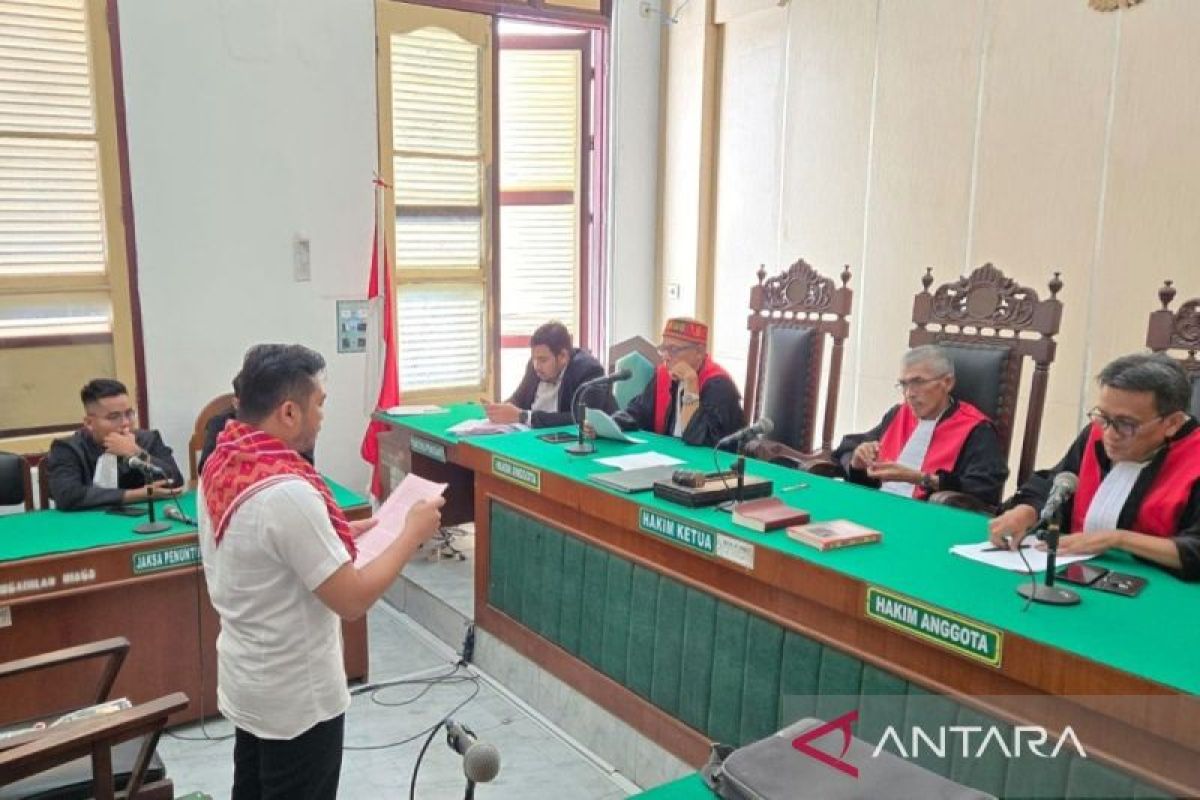
The case involving Amsal Christy Sitepu originated from a project to produce village profile videos in Karo Regency, North Sumatra, from 2020 to 2022. Through his company, Amsal offered video production services to several village governments at approximately Rp30 million per village. The offers were agreed upon, the work was carried out, the results were delivered, and payments were made in accordance with the contracts. During the trial, several village heads even expressed satisfaction with the work results and acknowledged their benefits for promoting village potentials. The matter changed when an inspectorate audit assessed a discrepancy between the submitted costs and the auditors’ calculations. Several creative work components, such as concepts, ideas, editing, and equipment usage, were deemed to have no value and calculated at zero rupiah. From this construction, a claim of state financial loss emerged, which became the basis for designating Amsal as a suspect and defendant in a corruption criminal case. Trial facts showed that the work had been completed, there were no objections from the village parties, and no issues were found in budget usage during previous examinations. However, the legal process continued, placing Amsal under the threat of imprisonment. This situation drew public attention, leading Commission III of the Indonesian House of Representatives to hold a General Hearing. The House highlighted the law enforcement apparatus’s perspective in assessing creative work without considering its characteristics that lack standard pricing benchmarks, and reminded of the importance of delivering substantive justice in law enforcement. In this regard, the Amsal Sitepu case is no longer merely an individual matter but reflects a broader issue related to how the law views and treats the creative profession. Considering State Losses in Creative Work In corruption criminal law, state financial loss is an important element that must be proven carefully and proportionally. In the Amsal Sitepu case, the assessment of state loss hinges on the difference between the contract value and the auditors’ calculations, including the valuation of several creative work components, such as ideas, concepts, and production processes, which were deemed to have no value. This approach reveals a difference in perspectives on understanding the characteristics of creative services. Unlike goods procurement, which relatively has standard prices, creative services tend to be dynamic and do not always have fixed benchmarks. The value of a work often encompasses the process, expertise, experience, and work risks that cannot entirely be measured quantitatively. On the other hand, trial facts also show that the work was completed, accepted by the village parties, and did not raise objections during implementation. This becomes an important part in viewing the full context of the event, especially in assessing whether there is state loss as meant in criminal law. This case demonstrates the importance of caution in assessing the element of state loss, particularly when dealing with sectors that have special characteristics, such as the creative industry. A more contextual and proportional approach is relevant so that law enforcement remains aligned with the principles of justice and provides certainty for various professions, including creative economy actors. Ultimum remedium