
Request for Coral Rubble Ends in Soil, Pasar Rebo Residents' Road Access Becomes Slippery
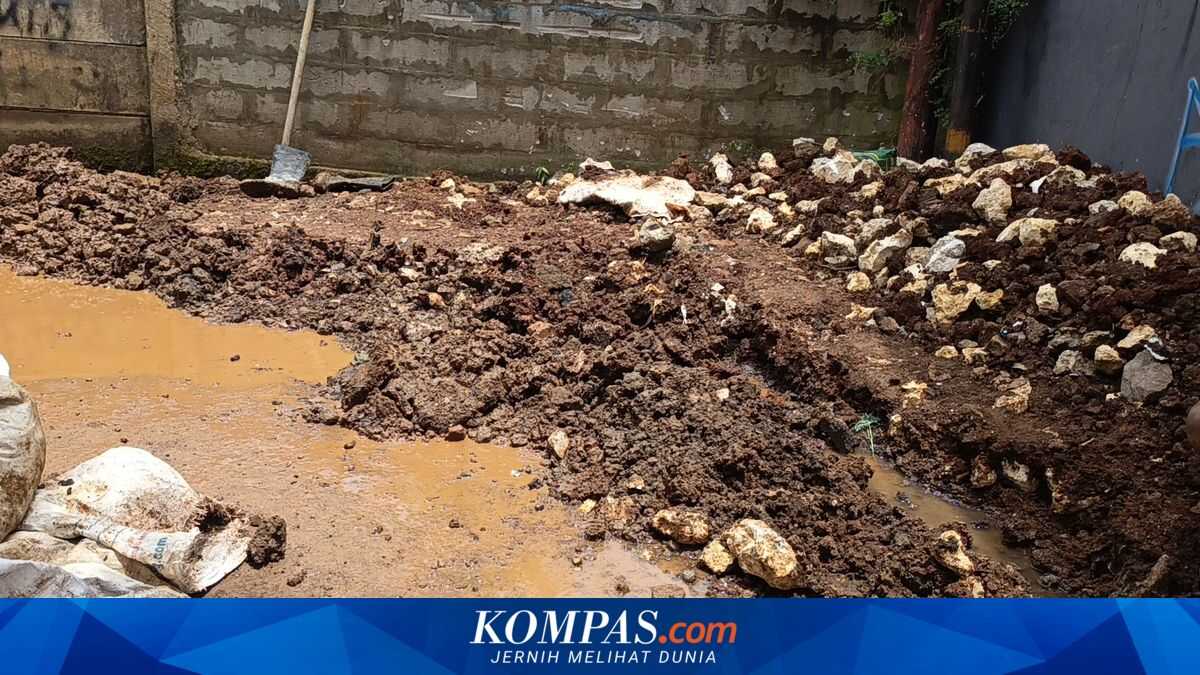
JAKARTA, KOMPAS.com - The road access in the Gedong area, Pasar Rebo, East Jakarta, was temporarily blocked by a mound of soil and became slippery. The condition went viral on social media.
It was later revealed that the soil was an infill material requested by residents, but a misunderstanding occurred with PAM Jaya regarding the type of material required.
In a video uploaded by the Instagram account @lintascondetupdate, the road is seen piled high with red soil about 20–30 centimetres tall and waterlogged.
‘So when it rains, the location is said to be slippery and quite dangerous for passing motorists,’ read the caption of the Instagram account @lintascondetupdate.
Based on Kompas.com’s observations at the location on Wednesday, 4 March 2026, the soil is now being hauled away by the PPSU (Public Works and Infrastructure Handling) team, the sub-district Bina Marga, and PAM Jaya personnel.
The soil blocking part of the road is placed into sacks to be moved so that residents’ access returns to normal.
The slippery and muddy road condition due to the waterlogging forces residents to walk slowly to avoid slipping.
The head of RT 07/03 Gedong Sub-district, Sumarno, explained that the mound of soil originated when residents asked for debris from PAM project workers to raise the road height so it wouldn’t flood easily.
‘What they threw away yesterday turned out to be too much soil. So when it’s laid down here, it becomes more and more, and when it rains it becomes muddier,’ he said.
He added that this happened due to a miscommunication between residents and the project team.
‘First, the residents asked for coral stone fragments from the excavation, but what was brought here was mainly soil,’ he explained.
He added that the mound had been there for about two weeks before it went viral on social media.
‘Two weeks, perhaps. It started with little bits being placed here, and only later was it spread out. After it was spread, when it rained, it got more slippery and a real mess,’ he said.