
Report to Mr. Trump: America Loses Rp331.43 Trillion
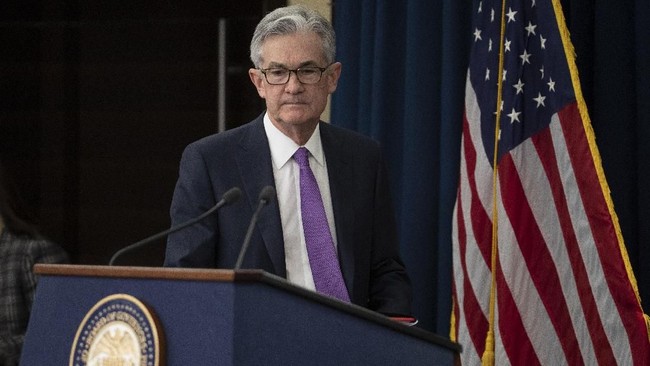
Jakarta, CNBC Indonesia - The US Federal Reserve (The Fed) has again reported losses throughout 2025.
In the audited financial report released on Wednesday (25/3/2026), The Fed recorded a total comprehensive loss of US$19.6 billion for 2025, equivalent to Rp331.43 trillion (assuming an exchange rate of Rp16,910/US$1).
Although it still failed to post a profit, the figure is far smaller than the losses experienced in previous years, namely US$77.5 billion in 2024 and US$114.6 billion in 2023. The last time The Fed recorded a profit was in 2022, when the central bank transferred a surplus of US$76 billion to the US government. That amount was also lower than the US$109 billion remittance in 2021.
The Fed’s Losses Begin to Shrink
The shrinking of The Fed’s losses occurred alongside a reduction in the central bank’s balance sheet and a decline in interest payment burdens. In 2025, The Fed reported interest expenses of US$12.1 billion, a drastic decrease from US$68 billion in 2024.
This situation is inseparable from the interest rate cuts that began in 2024. Those reductions brought The Fed’s benchmark rate down from its peak of around 5.25%-5.5% to 3.5%-3.75% at present.
The Fed’s losses arose because the income from its bond holdings and financial services was once significantly outweighed by the interest it had to pay to financial institutions. When the benchmark rate was still high, the costs borne by The Fed also swelled.
Originating from Pandemic-Era Policies
The root of this problem stems from aggressive monetary policies during the Covid-19 pandemic. At that time, The Fed purchased large quantities of US government bonds and housing credit-based debt instruments to stabilise financial markets and boost the economy. At the same time, the benchmark interest rate was pushed close to zero.
For years, this model allowed The Fed to generate substantial income. Under the rules, after covering operational costs, the excess income was remitted to the US Department of the Treasury.
However, the situation changed when inflation surged and The Fed began aggressively raising interest rates in 2022. The rate hikes increased the costs The Fed paid to financial institutions, eventually surpassing income from bonds and its financial services.
Starting to Improve, But the Road is Still Long
Although it still records annual losses, recent movements indicate that The Fed’s financial position is beginning to improve. The US central bank records losses under an accounting mechanism called deferred asset. This means the losses are recorded as deferred assets that must be covered first before The Fed can resume remitting profits to the government.
Currently, The Fed’s deferred asset value stands at US$245 billion. Recent months’ movements show that The Fed has actually returned to generating profits, albeit very thinly. However, many analysts believe it will take years for the entire deferred asset to be fully depleted.
The Fed itself emphasises that its profits or losses do not affect its ability to implement US monetary policy.
Once a Political Issue
The Fed’s losses were once caught up in US political tensions. The issue arose amid scrutiny of the swelling costs of renovating The Fed’s headquarters in Washington last year, which became one of the flashpoints between the central bank and the administration of President Donald Trump. Even the US Department of Justice launched a criminal investigation related to the matter.
Beyond that, The Fed’s losses also sparked pushes in Congress to change The Fed’s interest rate control instruments. In theory, such a move could reduce The Fed’s interest payments to financial institutions.
However, senior Fed officials and many private sector analysts warned that changes to those instruments risk triggering major disruptions in financial markets. In the end, the push appears to have subsided.
Looking ahead, the direction of The Fed’s policies could also shift if Kevin Warsh is indeed appointed to replace Jerome Powell, whose term as Fed Chair ends in May.
Warsh is known to favour a smaller Fed balance sheet. Within The Fed itself, discussions are emerging that regulatory changes reducing financial institutions’ liquidity needs could make the central bank’s footprint in the market smaller.
As a note, The Fed is under sharp scrutiny because US President Donald Trump continues to press The Fed to lower interest rates. Trump has also shaken its independence, including by urging Powell to step down.