
Renal Cancer: A Silent Enemy Often Detected Too Late
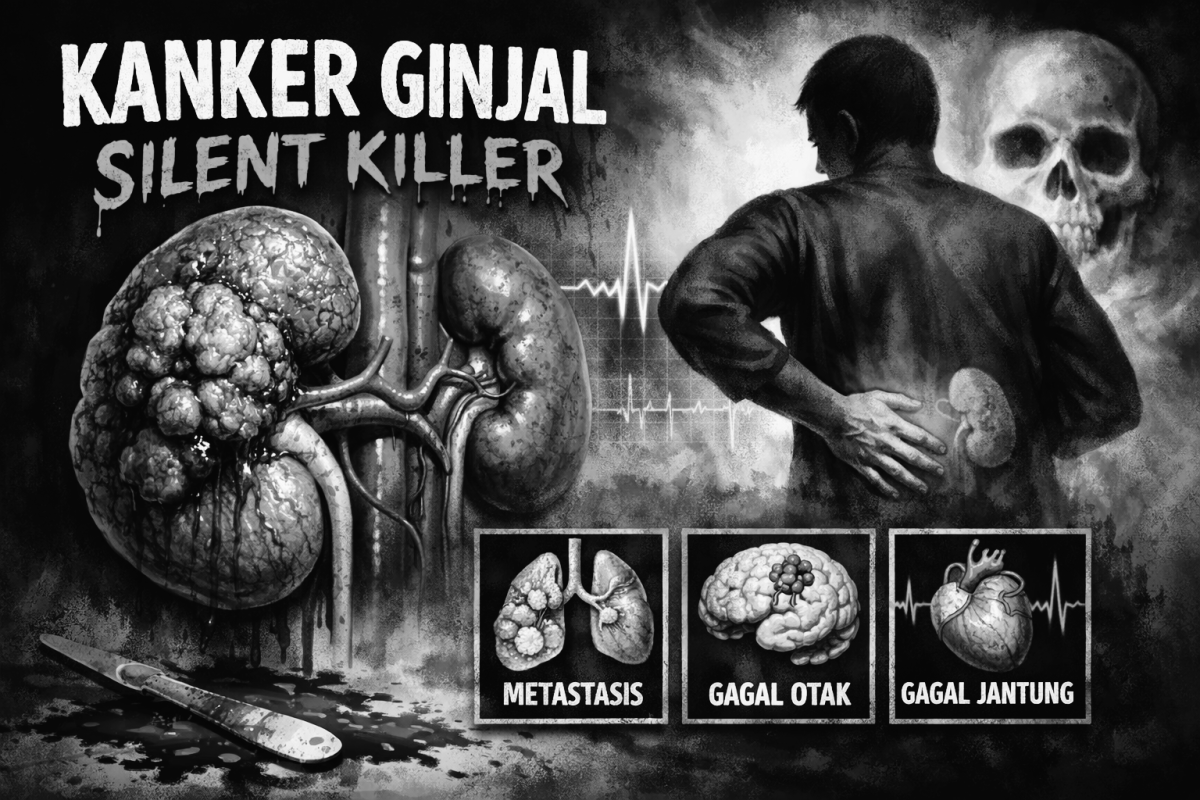
Renal cancer reminds us that health often deteriorates not from a single major incident, but from small warning signs ignored over time.
We often assume that serious diseases always announce themselves loudly. Severe pain, physical weakness, or symptoms that make someone immediately aware something is wrong. The reality is frequently quite different. Some diseases develop silently, without many complaints, only to be discovered when they have already progressed significantly. Renal cancer is one of the clearest examples of a disease that operates covertly.
The death of Vidi Aldiano following years of battling renal cancer is not merely sad news, but also a mirror reflecting the fragile reality of the human body. The news reminds many people that cancer is not always visible from the outside. A person may appear healthy, continue working, remain active, and live life as normal. Yet within their body, a biological process is slowly occurring undetected.
Renal cancer is often called a “silent disease” that develops quietly. Many new cases are discovered accidentally, for instance when someone undergoes ultrasound or CT scan for another health issue. It is at such moments that doctors discover a mass or tumour in the kidney.
Put simply, renal cancer most often originates from small cells in the kidney that filter blood and help form urine. The most common type is called renal cell carcinoma. This is the type most frequently found in medical practice.
The first thing the public must understand is that renal cancer is not a rare disease that appears without any cause whatsoever. There are several risk factors consistently identified. The three most important are smoking, obesity, and hypertension. Additionally, chronic kidney disease, long-term dialysis, exposure to certain chemicals, and genetic factors can also play a role in some people. This is important because the public often associates cancer only with hereditary factors. Yet with renal cancer, the influence of lifestyle and metabolic disorders is substantial.
Why can obesity and hypertension be linked to renal cancer? Because the human body is one interconnected system. Excess weight is not merely a matter of appearance. Adipose tissue actively produces various biological signals that affect inflammation, hormones, insulin metabolism, and oxidative stress.