
Removal of Small Credit Records Not Sufficient: These Are the Obstacles to MBR Home Loans
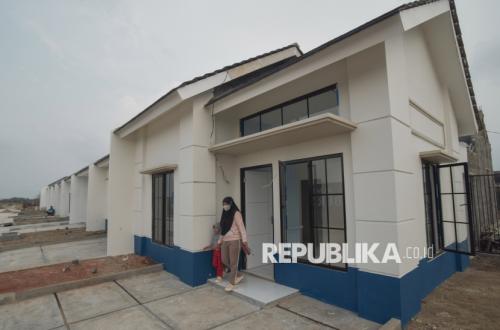
The Financial Services Authority (OJK) has recently introduced a new policy not to record credits below Rp1 million in the Financial Information Services System (SLIK). The aim is to ease access to subsidised housing credit for low-income households (MBR), as support for the implementation of the priority programme to provide 3 million homes. However, observers assess that this policy is not sufficiently effective.
“In my view, the OJK’s policy response will not be enough to encourage MBR access to subsidised mortgages. It is true that those with credit records below Rp1 million are clearly the primary target MBR recipients of subsidised mortgages. However, the obstacles for MBR in accessing subsidised mortgages do not only come from credit records in SLIK, but also largely from income adequacy requirements barriers, where banks generally set a standard of instalments at least 30 per cent of monthly income,” said Director of Next Policy Yusuf Wibisono to Republika on Thursday (16/4/2026).
According to Yusuf, these obstacles are more significantly faced by MBR working in the informal sector, such as day labourers, farmers, fishermen, and micro-businesses. He stated that MBR in the informal sector more often cannot access subsidised mortgages due to the absence of formal data on their income.
“Thus, the removal of credit records below Rp1 million will not automatically increase MBR access to subsidised mortgages. As long as formal requirements from banks are still applied rigidly, MBR will still have difficulty accessing subsidised mortgages, especially MBR in the informal sector,” he explained.
Furthermore, Yusuf continued, the removal of credit records below Rp1 million from SLIK has the potential to make banks increase prudence requirements in credit assessment. This is because credit records below Rp1 million actually indicate weak repayment ability from debtors. This group is the one most avoided by banks because they have high credit risk.
“Removing credit records below Rp1 million from SLIK, in my opinion, has the potential to damage market discipline, in that those with bad credit records can escape credit assessment. The market mechanism could also be damaged because credit records in SLIK are a market signal for banks about the credibility of prospective debtors,” he said.
Substantive Policy
Furthermore, Yusuf conveyed several ideas for substantive policies that could be implemented. Among them is forgiving bad debts for the lowest class MBR, after assessment that the bad debt is not due to moral hazard. This is a form of affirmative policy for the poor group.
“A more substantive policy is to lower mortgage interest rates. Mortgage interest rates in Indonesia are the highest in the region, around 10–12 per cent. In other regional countries, mortgage interest rates are only around 3–5 per cent. With subsidised mortgages, it is true that MBR are only charged a fixed interest rate of 5 per cent, and this significantly reduces the burden on MBR. However, the size of the subsidy borne and the limitations of the state budget mean that recipients of subsidised mortgages are always limited,” he explained.