
Remembering Faridah Utami: Frontline Handler of Violence Cases
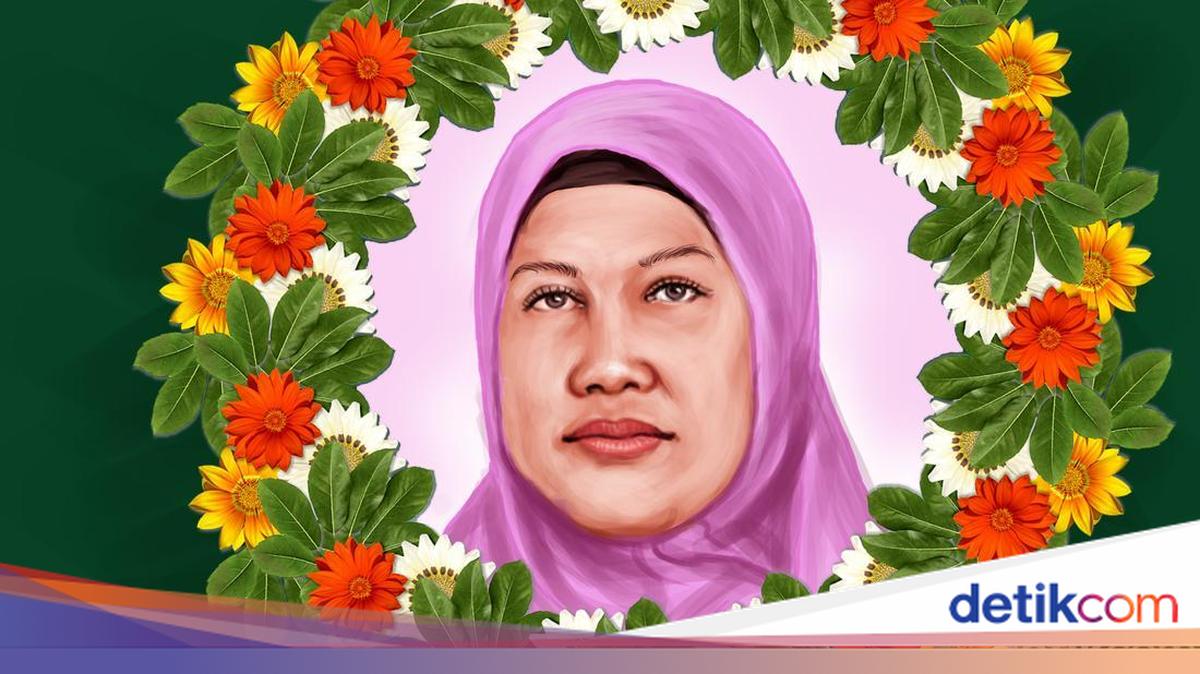
At RSUP Nasional dr Cipto Mangunkusumo Indonesia (RSCM), Faridah worked at the Integrated Crisis Centre (PKT), a unit that handles cases of violence against women and children. She was responsible for conducting initial assessments and directly interacting with victims.
“Mrs Faridah also helped to encourage these victims and, for instance, if they were reluctant to talk, Mrs Faridah would reassure and calm the patients to make them willing to share their experiences,” said Vania Paramitha, one of the participants in the Specialist Doctor Education Programme (PPDS) in Forensics at RSCM, to detikX.
In the eyes of the PPDS participants, Faridah was a maternal and sincere figure. Her friendliness blended with her role as a field mentor. Although not a formal teaching doctor, Faridah taught many crucial practical aspects.
“Every day she was cheerful, always welcoming us. She was also one of our teachers, as she taught us a lot about the patient handling procedures, and what we should do after completing the examination,” said Vania.
One of the most valuable lessons Faridah instilled, according to Vania, was empathy. Especially when dealing with violence victims. Additionally, she was known for her skill in managing difficult situations and maintaining calm during services. These skills were taught through direct practice.
“We learned a lot from her, from how to ask questions, how to respond, and how to be a good listener. We truly learned that from her,” she continued.
Daily interactions with Faridah also left a deep impression.
“Her friendliness is what stuck with us the most. If we were confused about what to do, she would happily respond,” Vania recalled.
During the residency education process, Faridah guided without making her juniors feel judged. When giving corrections, for example, Faridah chose a gentle and considerate approach.
“If, for instance, we were interviewing a patient and then Mrs Faridah corrected us, it wouldn’t be during the interview with the patient, but later she would give input. It would be better in the future to do it like this, or ‘ask it like this’,” she said.
Not only as a senior specialist doctor, Faridah was also recognised as a place to share.
“If we talked about personal problems, issues at home, something unrelated to education, she would listen. She would listen and give advice, not as our teacher, but as a parent too,” she said.
Vania learned of Faridah’s passing from news broadcasts. Initially, she did not know that Faridah was among the victims. Faridah’s body was laid to rest at RSCM in the afternoon before being taken to her final resting place in her hometown.
“That afternoon-evening it was laid to rest at RSCM before being taken to Boyolali. That’s when we all gathered there with Mrs Faridah’s family,” said Vania.
Not only Vania. Ira Pattihahuan, a PPDS participant in Forensic and Medico-legal Medicine who began her education in 2023, also remembered Faridah’s role in her daily life. Ira’s encounters with Faridah started from the beginning of her duty shifts. From then on, Faridah became one of the figures guiding her in the field with full patience.
“Mrs Faridah is like a real-life book, right there in front of your eyes. She is the true embodiment of empathy, kindness, compassion. Mrs Faridah is complete, like an angel, if we say so,” Ira told detikX.
In daily practice, Faridah’s abilities and experience were clearly evident, especially when handling child victims. Ira recalled how Faridah dealt with child victims of sexual violence who arrived with various responses—fussy, silent, scared, or just crying. Faridah’s approach never forced them.
“People in that condition can’t be forced to talk, right. So she really gave them time to calm down,” said Ira.
She described how Faridah would hug, soothe, and use toys to help the children talk.
“Then how Mrs Faridah would take a toy and give it to the child, like that. So kind.”
For adult victims, that approach remained evident.
“So, ‘It’s okay, we’re all here to help you,’ something like that,” she said.
Amid work pressures, Faridah also showed simple but memorable care. Ira remembered one moment when she was exhausted after handling many cases. At that time, Faridah offered food.
“Then Mrs Faridah said, ‘Come on, Doctor, I have some packed lunch, eat first,’ like that.”
She described situations where one call involved two to three victims at once. In those busy and high-pressure work conditions, Faridah’s role became even more apparent. Faridah’s long experience at PKT made her quick to take over coordination.
Residents and passengers placed flower bouquets and prayed at East Bekasi Station.
“If we were chaotic and confused, Mrs Faridah would immediately say, ‘Doctor, do it this way, this way, then I’ll do this, this, this.’”
“If there was no Mrs Faridah, it might have taken us much longer to handle the cases. It would be pitiful for the victims if the service took too long,” Ira revealed.
In guiding, Faridah was not known for harsh corrections. Instead, she gave space and support. That approach made the PPDS participants feel protected.
“But she was the type to say, ‘It’s okay… the Doctor has done their best.’”
That kindness, according to Ira, was felt across professions in the hospital. She remembered the moment when Faridah’s body was bathed at RSCM.
“Everyone really came,” she said. “Everyone… everyone said, ‘We really lost her.’”
The news of Faridah’s passing came suddenly to Ira. She had contacted Faridah on Monday, but it remained incomplete.