
Remarkable! Indigenous Indonesian Fruit Said to Combat Apocalypse—Sought After by Europeans
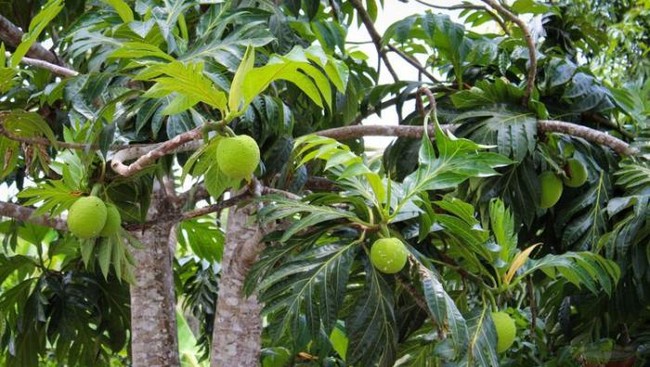
Indonesia possesses numerous indigenous fruit varieties. Tropical fruits from Indonesia that are popular globally include durian and rambutan. However, beyond these two fruits, there exists another native Indonesian fruit that is highly renowned and sought after worldwide: breadfruit (sukun).
The popularity of breadfruit is inseparable from European imagination regarding the highly beneficial fruit. For centuries, European society harboured fantasies about “a fruit superior to all other fruits” because of its remarkable properties. However, this fantasy remained suppressed because such a fruit was difficult to find in Europe’s cold climate. Eventually, when ocean exploration commenced, Europeans were astonished to discover the fruit they had envisioned.
More remarkably, the fruit was native to Indonesia. In the vast region spanning 10,603 kilometres known as the Nusantara Archipelago, breadfruit thrives. Historical records document that breadfruit was readily found throughout the Nusantara region and several Pacific nations. Reliefs at Borobudur Temple depict breadfruit as one of the staple food resources for the inhabitants.
Nevertheless, the first European interaction with the fruit, scientifically known as Artocarpus altilis, occurred in the 17th century. By that time, breadfruit had already spread to the Pacific Islands through cultivation by immigrants over thousands of years.
The first European to discover it was English explorer William Dampier. During his visit to Guam in 1686, Dampier observed a unique fruit not found in Europe. Dampier described the fruit as originating from a large tree and, when cut open, contained no seeds or anything inside. “Thus, we named it breadfruit,” wrote William Dampier in A New Voyage Round the World (1697).
The naming of breadfruit occurred because the fruit resembled toasted bread. When the fruit is cut open, the skin peeled away, and the flesh roasted over fire, it tastes like toasted bread. According to Dampier, breadfruit was extremely delicious and could combat hunger and food crises, as well as scurvy.
When Dampier returned, notes regarding breadfruit became the subject of conversation. Europeans were immediately curious about the fruit. However, their curiosity remained confined to their imagination, as it was difficult for them to travel to taste it or bring breadfruit seeds home.
Not only Dampier’s testimony, but Dutch scholar Rumphius also made similar claims. In his notes in Herbarium Amboinense (1741), Rumphius described the fruit as miraculous because it had the potential to become a highly nutritious and versatile food. The fruit could save people during hunger and when food supplies were scarce.
However, various testimonies about breadfruit remained merely imagination for most people regarding a highly beneficial fruit. Eventually, the aspiration to bring breadfruit to Europe was realised by James Cook. In 1775, Cook requested botanist Joseph Banks to research breadfruit so it could be brought to many English colonial territories.
In the 2019 study “Grows Us Our Daily Bread: A Review of Breadfruit Cultivation in Traditional and Contemporary Systems,” it is noted that Banks was convinced of breadfruit’s high nutritional value. Therefore, he petitioned English King George III to permit breadfruit cultivation in English colonies as food for slaves.
In short, Banks’s request was approved by the English King. Subsequently, he brought breadfruit seeds and planted them in English colonies. Initially planted in the Caribbean and Central America, it was later cultivated in other English colonies. Gradually, other European nations also dispersed breadfruit seeds to their colonial territories.
From this point, breadfruit trees spread to Africa and Asia, and were consumed not only by Europeans but by people worldwide.
Beneficial Properties and Salvation from “Apocalypse”
Initially, the high nutrition of breadfruit was based solely on empirical testimony, with no clinical laboratory evidence. Classical records described breadfruit as extremely nutritious and high in nutrients because it was filling and disease-preventing.
Initially consumed only by slaves, breadfruit was gradually consumed by Europeans and people worldwide. Over time, modern clinical records confirmed the empirical observations of centuries past.
The United States Department of Health revealed that breadfruit contains substantial amounts of vitamin C, potassium, and magnesium. Additionally, the fruit is high in fibre, low in fat and sugar.
More remarkably, breadfruit is also described by various research studies as a superfood. This designation emerged not only because breadfruit is a highly nutritious plant, but also because it fruits quickly, requires minimal maintenance, withstands extreme weather, and is highly adaptable.
At this juncture, the breadfruit tree is regarded as a solution to combat the food “apocalypse” currently afflicting the Earth as a result of climate crisis. For this reason, breadfruit is easily cultivated outside its native habitat in Indonesia. Unsurprisingly, breadfruit trees are now found not only in Indonesia but are readily discovered in many places across the world.