
Religious Affairs Minister Views Empowerment of Community Funds as Solution for MUI Building
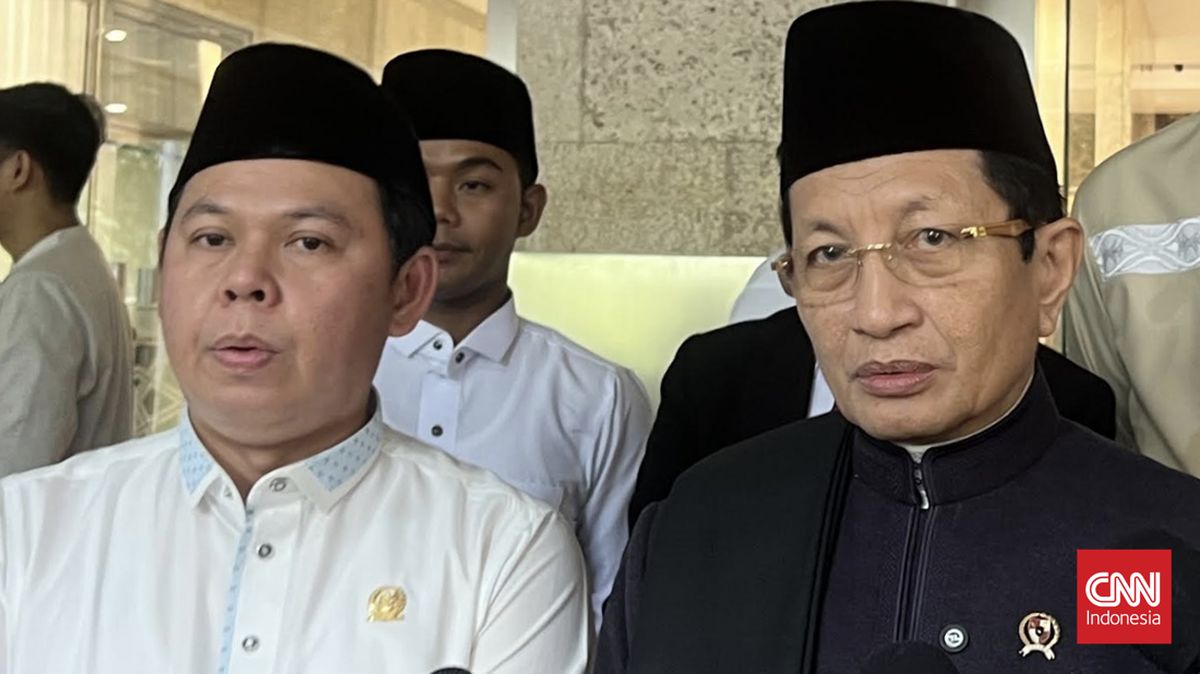
Religious Affairs Minister (Menag) Nasaruddin Umar has highlighted the importance of optimising community funds as one solution to strengthen societal welfare, including the construction of religious facilities such as the Indonesian Ulema Council (MUI) building.
He made this statement while responding to questions about the continuation of the MUI building construction after Eid al-Fitr prayers at Istiqlal Mosque, Jakarta, on Saturday (21/3).
He explained that the government, through President Prabowo Subianto, is proposing the establishment of an institution for empowering community funds.
“Actually, the President is proposing an institution for empowering community funds, which will organise all the community savings that have so far been ineffective,” said Nasaruddin.
He mentioned various sources of community funds, including waqf, zakat, infak, sedekah, grants, bequests, and other forms of contributions that have not been managed optimally so far.
According to him, if all this potential can be organised well, its value will be enormous.
“There are about 27 sources of community funds. If we can organise them well, the funds will be extraordinary,” he said.
Nasaruddin even likened this potential to a ‘sleeping giant’ that has not been maximised.
“I often term it as a sleeping giant. If we can manage it well, I think the basic needs of the community can be fulfilled from the community funds themselves,” he said.
He assessed that so far, state budgets such as taxes have been more used for infrastructure development. Meanwhile, basic community needs, in his view, can be supported by more structured management of community funds.
Furthermore, Nasaruddin emphasised that the potential of religious funds does not only come from the Muslim community, but also from various other religious communities.
“Not only in Islam, but also in Catholicism there is a lot of charity, as well as in Christianity, Hinduism, Buddhism,” he said.
Therefore, he encouraged religious institutions to be managed professionally so that they can solve community problems independently.
“If we organise this well, from above there is government assistance, from below there is the economic strength of the community. With that, insyaallah absolute poverty will not exist in Indonesia,” said Nasaruddin.
He added that religious values such as sedekah and amal jariah become moral forces that encourage society to share selflessly.
“If it’s a religious matter, how can one deceive oneself,” he said.
At the end of his statement, Nasaruddin hoped that this step could be realised soon and provide real impact for society.
“We pray that hopefully the best can be realised as soon as possible,” he concluded.