
Religious Affairs Minister stresses Idul Adha is not merely a ritual but a time for mutual sharing
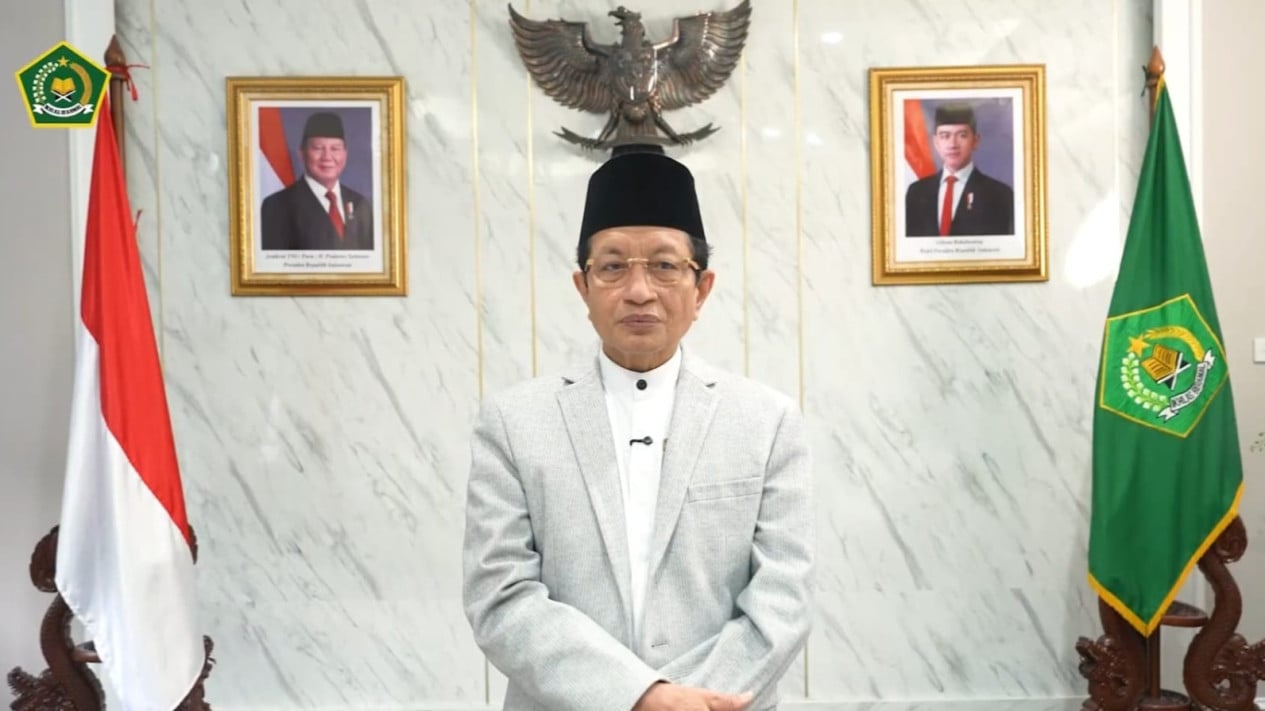
Religious Affairs Minister Nasaruddin Umar has stressed that the essence of Idul Adha is not merely performing religious rituals but a time for mutual sharing, ensuring all segments of society can experience happiness and equal access to nutrition. The minister noted that not all animals entrusted to Istiqlal Mosque for the 1447 AH Idul Adha occasion are from Muslims. There are three categories: sacrificial animals, dam (compensation), and social assistance.
‘Idul Adha is synonymous with a month of sharing. We hope through this occasion, everyone can access animal-based nutrition, whether through sacrificial rituals or social assistance schemes, such as those implemented at Istiqlal Mosque,’ the minister stated in Jakarta on Wednesday, 27 May 2026.
He added that the spirit of sharing comes not only from Muslims but also non-Muslim communities. Among the dozens of animals received at Istiqlal, some are donations from the general public and other religious institutions, including Jakarta Cathedral Church.
‘Many of our non-Muslim friends also donate animals for sacrifice. In fact, nearly half of the total animals come from the general public, whose intentions may not align with Islamic sacrificial law. We greatly appreciate this tolerance and social concern,’ the minister said.
He noted that while Islamic law mandates sacrifice for financially capable Muslims, the participation of non-Muslims demonstrates high social awareness to assist others amid rising demand for sacrificial meat.
To accommodate the various forms of donations, the minister explained that Istiqlal has implemented three management schemes. The first is the conventional sacrificial animal management, which is intended as obligatory or voluntary sacrifice under Islamic law for Muslims.
The second scheme manages dam (compensation) for Hajj pilgrims in Saudi Arabia, enabling them to fulfil their obligations in Indonesia, a step deemed to have greater practical impact for local communities.
The third scheme focuses on social assistance or Corporate Social Responsibility (CSR) to accommodate contributions from companies and non-Muslim individuals as social charity to bolster meat supply quotas.