
Religious Affairs Minister Nasaruddin Requests Additional Rp24.8 Trillion Budget, For What?
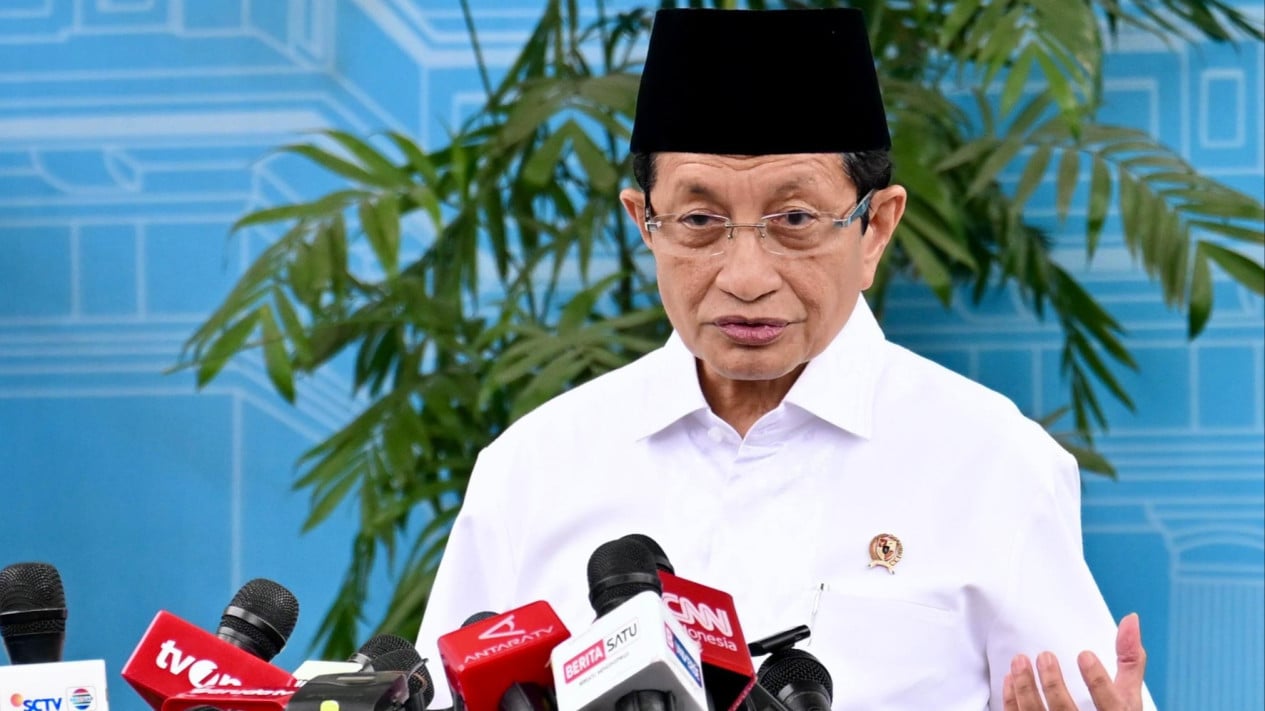
Religious Affairs Minister Nasaruddin Umar has proposed an additional budget of Rp24.8 trillion for 2026. This budget will be focused on efforts to promote equality in the quality of religious education in Indonesia.
“This budget proposal is our endeavour to ensure there is no longer any disparity between madrasahs and public schools,” said Nasaruddin in his statement on Sunday, 5 April 2026.
He detailed that the additional budget proposal will be allocated to several strategic programmes, including Revitalisation of Educational Units at Rp13.7 trillion, Digitalisation of Learning at Rp10.9 trillion.
Additionally, Free Textbook Assistance at Rp159 billion, and Garuda Transformation Elite Schools at Rp22.9 billion.
“The government must be present and provide equal attention. There must be no differential treatment between education in public schools and religious schools. Everything must be equal, because this concerns the rights of the nation’s children for their future,” he stated.
One of the main focuses of this proposal is the urgent improvement of facilities and infrastructure (Sarpras). The Rp13.7 trillion revitalisation budget is planned to target 7,131 educational institutions, consisting of 6,973 madrasahs, 128 Christian schools, 13 Catholic schools, 9 Hindu schools, and 8 Buddhist schools.
The Minister highlighted the condition of madrasah buildings, many of which still require serious repairs. According to him, the quality of Sarpras reflects the state’s commitment to religious education.
Another issue highlighted by the Minister is the Free Nutritious Meal (MBG) programme. Currently, the reach of MBG in madrasahs and pesantrens is only 10-12 percent, far behind public schools which are projected to soon reach 80 percent.
“However, considering the economic conditions, children in madrasahs and santri in pesantrens greatly need this support. We hope the coverage is increased,” said the Minister.
He added that pesantrens have the most ready ecosystem for implementing the MBG programme.
“In pesantrens, there are almost no health risk cases related to food, because they are accustomed to independent kitchen patterns and communal eating. This is a very safe and effective model,” he said.
The Minister hopes this budget proposal can be understood and approved to accelerate the improvement of Indonesia’s human resources through superior and inclusive religious education pathways.