
Religious Affairs Minister Emphasises That Zakat Must Only Be Used for the Eight Designated Recipients
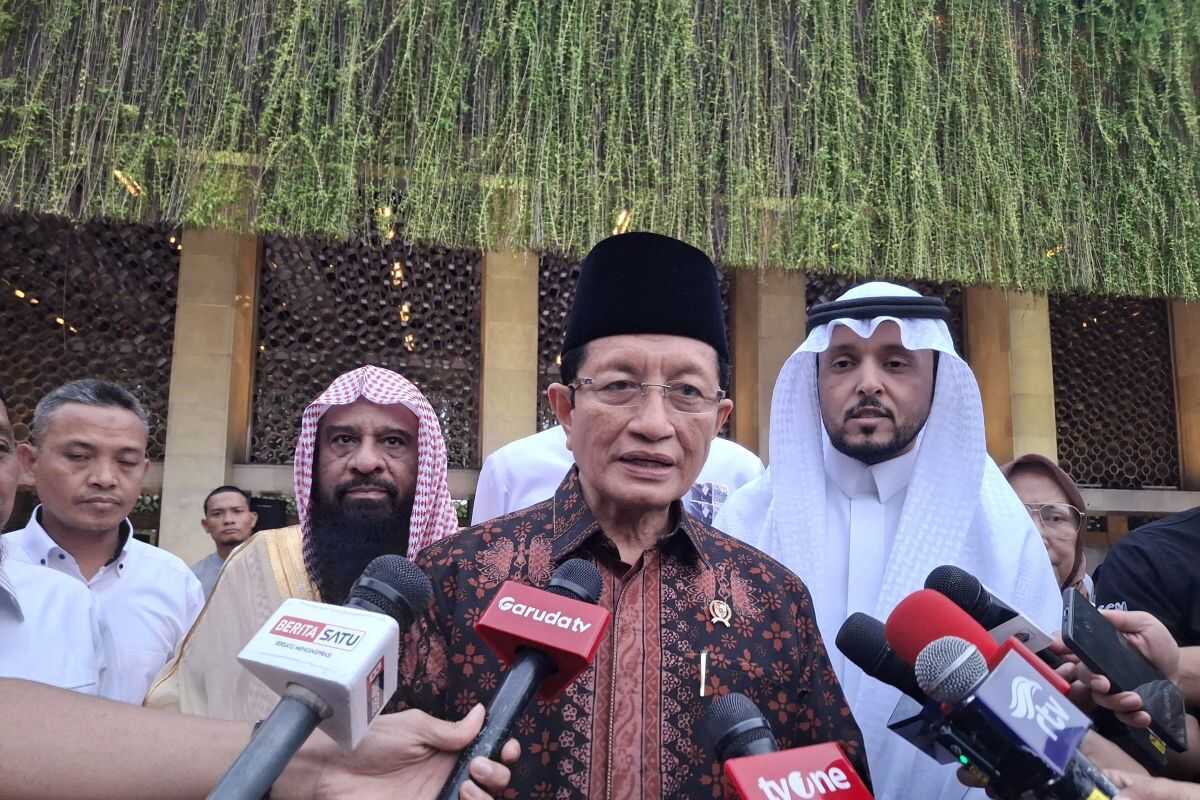
Jakarta (ANTARA) - Minister of Religious Affairs, Nasaruddin Umar, has affirmed that Zakat must not be used or allocated outside the provisions for the eight designated recipient groups (asnaf) as stipulated in the Quran.
This statement was made to counter disinformation claiming that the Ministry of Religious Affairs is maximising Zakat funds for the Free Nutritious Meal program.
“Zakat must not be used outside of its designated recipients. It is important that Zakat is not given to those who are not eligible. This is a matter of Islamic law,” said the Minister in Jakarta on Wednesday.
The Minister stated that Zakat has strict Islamic regulations and must not be used outside the established recipient groups. He referred to the verse in Surah At-Taubah, verse 60, which explains the eight groups (asnaf) who are eligible to receive Zakat.
These include: amil (officials who, in accordance with the regulations, are appointed as managers of Zakat), muallaf (new converts to Islam), riqab (slaves), gharimin (those in debt), fii sabilillah (those who strive in the way of Allah), and ibnu sabil (travellers).
“I think that is very important. Zakat should be given as stipulated in the asnaf. I think that is very important. Do not give Zakat to those who are not entitled,” said the Minister.
Previously, the Head of the Bureau of Public Relations and Public Communication of the Ministry of Religious Affairs, Thobib Al Asyhar, also affirmed that there are currently no policies regarding the distribution of Zakat that are linked to the Free Nutritious Meal program.
According to Thobib, Article 25 of Law No. 23 of 2011 concerning the Management of Zakat, stipulates that Zakat must be distributed to mustahik (eligible recipients) in accordance with Islamic law.
Mustahik are those who are eligible to receive Zakat. Meanwhile, Article 26 states that the distribution of Zakat, as referred to in Article 25, is carried out based on a priority scale, paying attention to the principles of equality, justice, and regionality.
“Zakat is a trust from the community that must be safeguarded and distributed in accordance with Islamic law. The rights of mustahik are a priority in every policy regarding the management of Zakat funds,” he said.
Thobib also affirmed that the management of Zakat is carried out professionally, transparently, and accountably through official institutions that are supervised and audited regularly, both through the National Zakat Agency (Baznas) and Zakat Management Institutions (LAZ).