
Regulatory Threats Place Tobacco Industry in Precarious Position
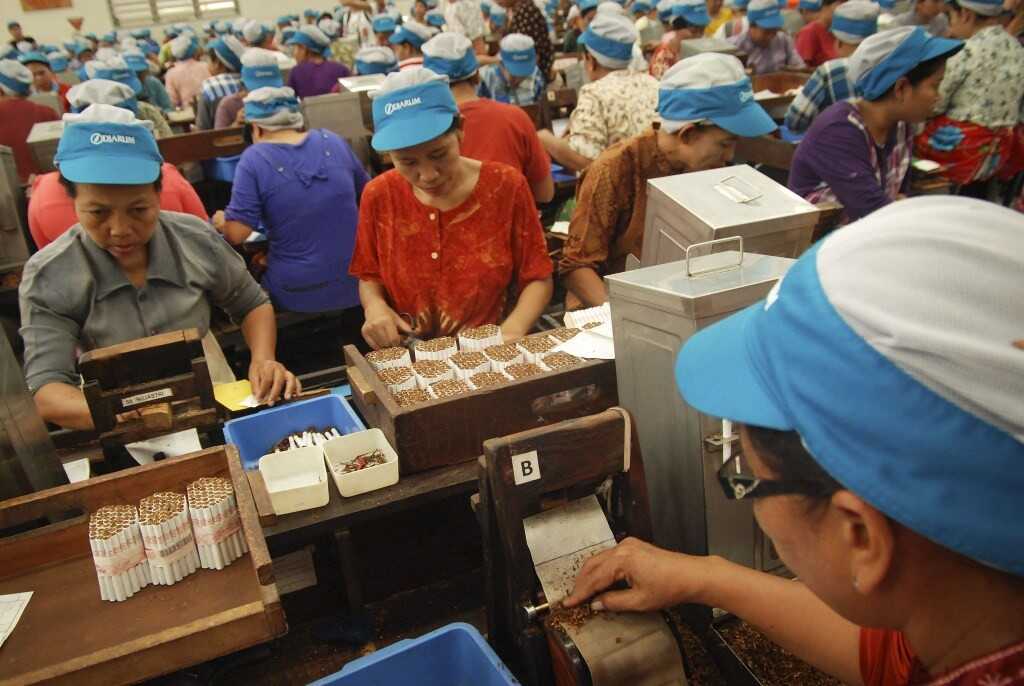
Amid excise tax contributions reaching hundreds of trillions of rupiah and the involvement of millions of workers, the tobacco industry faces increasingly complex policy pressures. A series of regulations, ranging from excise tax increases to planned restrictions on tar and nicotine content, plain packaging proposals, and sales limitations, are viewed by industry players and farmers as potentially constraining production and domestic raw material absorption.
The issue emerged at an Agricultural Press Forum (Forwatan) discussion titled “Maintaining Quality and Sustainability of the Tobacco Industry” at the Ministry of Agriculture on Thursday, 26 February, which highlighted the need for balance between public health interests and economic sustainability of the tobacco sector.
Yudi Wahyudi, Head of Annual Crops at the Directorate General of Plantations, Ministry of Agriculture, emphasised that tobacco is far more than an ordinary commodity. Beyond generating foreign exchange, the sector serves as a driver of rural economy.
“In terms of state revenue, tobacco excise contributions can reach approximately 280 trillion rupiah. This is an enormous figure. Tobacco is a crop for rural farming communities, not merely a matter of foreign exchange, but also an economic driver for villages from upstream to downstream operations,” Yudi stated.
He outlined the impacts of existing regulations surrounding tobacco, including pressure for packaging standardisation (plain packaging) and restrictions on tar and nicotine content currently under discussion, which would significantly affect farmer productivity absorption.
Based on 2025 projections, the tobacco planting area is estimated to approach 200,000 hectares with production of nearly 300,000 tonnes. However, current average productivity has declined to approximately 1.3 tonnes per hectare.
“If we continue to blame the climate, in my opinion that is unfair. Over the past two years, illicit cigarettes have proliferated, and this has impacted raw material absorption. Some tobacco purchases have indeed declined. So this is not solely a matter of weather,” he asserted.
Ministry of Agriculture data shows that tobacco production hubs remain concentrated on Java. Central Java has approximately 50,000 hectares with production of 56,000 tonnes, whilst West Java has 8,600 hectares with production of around 8,000 tonnes. Nationally, there are approximately 571,257 farming families engaged in tobacco cultivation. If one family consists of four people, then around 4 million people depend directly on this sector, potentially reaching 6 million when calculating the entire supply chain from upstream to downstream.
Given the vital importance of tobacco production in Indonesia, the government is attempting to boost output to ensure the industry remains viable and sustainable. Setiari Marwanto, Head of the Plantation Research Centre at BRIN, noted that such efforts are not straightforward.
“However, this is not easy because there are numerous challenges, ranging from sub-optimal productivity to counterproductive policies related to public health. On one hand, we wish to enhance the competitiveness of national tobacco, but on the other hand, there is regulatory pressure that limits operational space for both industry and farmers,” he said.
Responding to concerns about impacts of restrictions on tar and nicotine content, Setiari assessed that such regulatory pressure would be difficult to implement.
“We are not yet prepared for the low tar and nicotine content being currently promoted. Under current conditions, none of our local tobacco varieties have levels below 1 percent. They are distributed across Temanggung, Jember, and Banyuwangi,” he noted.
Consequently, BRIN is maximising focus on strategies to accelerate local tobacco production through plant breeding aimed at improving resistance to weather anomalies and disease outbreaks.
“We at BRIN focus on developing varieties adaptive to climate change. The future challenge is not merely market-related, but also how these plants can survive amid increasingly unpredictable weather conditions,” he said.
He explained that his team has developed tobacco varieties with resistance to La Niña weather anomalies that could cause flooding.
“Our research aims to obtain tobacco strains or varieties tolerant to high soil moisture stress whilst maintaining good quality dried leaf shreds. So it is not simply about flood resistance, but also ensuring quality meets industry standards,” he clarified.
He emphasised that tobacco quality acceptable to markets must meet several parameters.
“Markets require tobacco with specific aroma content, appropriate leaf thickness, and good elasticity. So plant breeding must not focus solely on resilience, but also on quality characteristics preferred by consumers,” he said.
Conversely, various regulations issued by technical ministries, both from industrial and health perspectives, have generated concern among industry and farming communities. According to Mudi, General Secretary of the Indonesian Tobacco Farmers Association (APT), sales restrictions, plain cigarette packaging initiatives, and plans to restrict nicotine and tar content could directly impact raw material absorption.
“Our tobacco varieties have average nicotine content of 3 to 8 milligrams. Varieties with content below 1 milligram are very rare and generally come from abroad. If these restrictions are implemented without thorough assessment, factories could switch to imports,” he stated.
He highlighted impacts of regulations stemming from Government Regulation Number 28 of 2024. “If the plan to restrict tar and nicotine content is enacted, 90 percent of our tobacco could go unabsorbed. Farmers cannot plant, factories cannot produce. This could be a devastating blow to our tobacco industry,” he explained.
He cautioned that amid excise contributions reaching hundreds of trillions of rupiah and millions of people’s dependence on this sector, policies must be formulated carefully to avoid severing economic chains.