
Regions Compete to Turn Waste into Energy
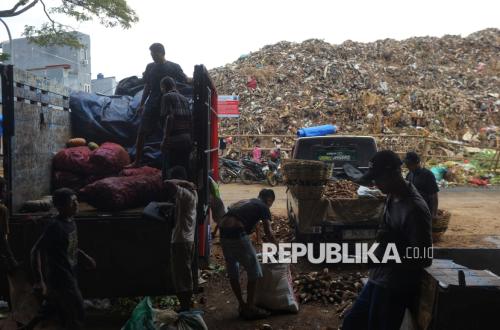
REPUBLIKA.CO.ID, JAKARTA – The problem of urban waste is increasingly mounting and demands solutions that are no longer piecemeal. From Palembang to Banjarmasin, even Jakarta and Lebak Regency, local governments are now moving in unison, shifting approaches from mere collection and disposal towards energy-based and circular economy management.
In Palembang, the daily waste burden has reached around 1,260 tonnes. The city government acknowledges that not all of this volume is handled optimally, with processing capacity ranging from 900 to 1,000 tonnes per day. This situation is driving a strategic change, from the old pattern reliant on final disposal sites towards educating on waste sorting at the source.
Palembang’s Mayor Ratu Dewa emphasises that changing societal paradigms is key. Waste is no longer viewed merely as refuse, but as a resource with economic value if properly sorted. One strengthened instrument is the role of community waste banks at the neighbourhood level, particularly for managing inorganic waste such as plastics and paper.
At the same time, Palembang is preparing technology-based solutions. The construction of a Waste-to-Energy Power Plant (PLTSa) in the Keramasan area is targeted to begin operations in October 2026. This facility is expected to process waste on a large scale while converting it into beneficial electricity for the community.
Similar steps are also being pioneered in Banjarmasin, but with a cross-regional collaborative approach. This city is partnering with Banjar Regency and Barito Kuala Regency to develop a waste-to-electricity processing project under a national pilot scheme. This synergy is deemed crucial given the total daily waste generation in the three areas approaches 678 tonnes.
Banjarmasin DPRD Deputy Chairman Harry Wijaya views this programme as a strategic opportunity to escape the waste emergency situation, especially after the closure of the Basirih landfill. According to him, waste-to-electricity technology can serve as a long-term solution, although it requires significant investment and adequate land preparation.
Local governments have even submitted four location options to the Ministry of Environment and Forestry for building an integrated facility, from the Tabing Rimbah landfill to areas around the Gambut Barakat Terminal. All these locations are currently being evaluated to determine the most representative site for implementing the waste-to-energy project.
Meanwhile, in Jakarta, waste management approaches are still dominated by massive operational scales. In South Jakarta alone, 190 trucks and over 1,100 personnel are deployed daily to collect waste amounting to around 1,120 tonnes per day.