
Regional Think Tanks Strengthened, BSKDN of the Ministry of Home Affairs Oversees Evidence-Based Policy
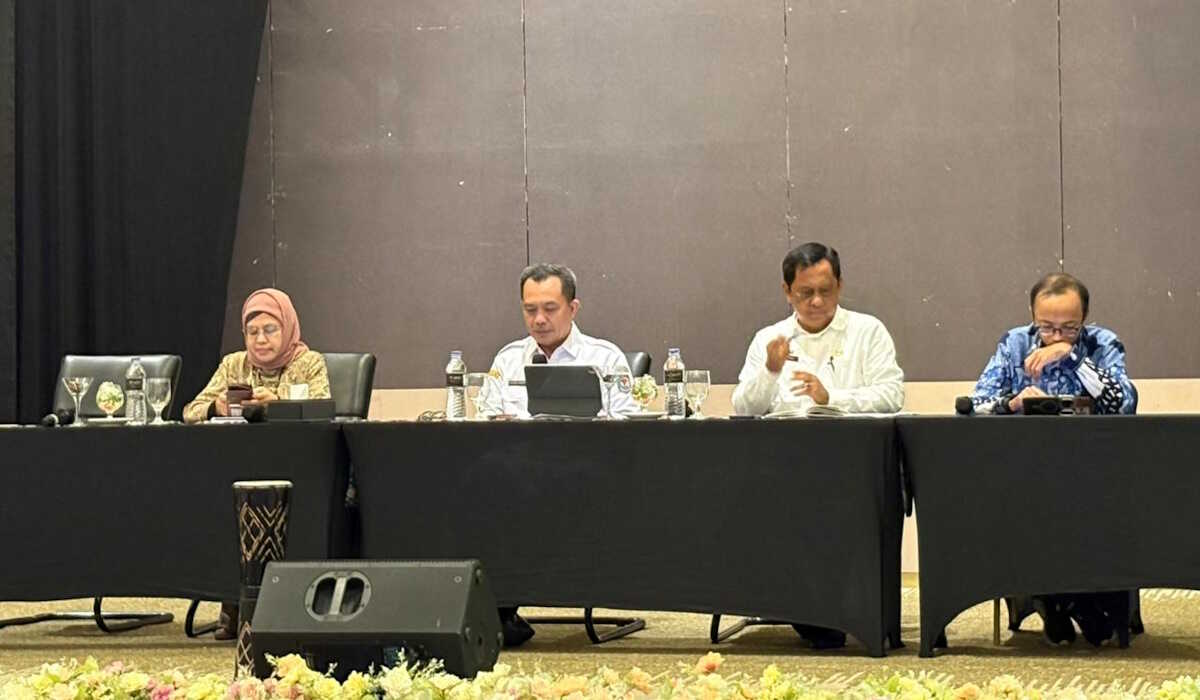
The Head of the Domestic Policy Strategy Agency (BSKDN) of the Ministry of Home Affairs (Kemendagri), Yusharto Huntoyungo, emphasized the importance of analyzing and evaluating policies that are no longer relevant to current conditions. In addition, regional governments are also expected to formulate anticipatory policies, especially in the fields of innovation and governance, to realize efficient, transparent, and accountable regional governance.
“To carry out these tasks, BSKDN, which was formerly the Research and Development Agency, has several instruments that we obtain from primary data resulting from measuring various indices that we have,” said Yusharto at the Policy Recommendation Writing (Policy Brief) Workshop with the SKALA (Synergy and Collaboration for Accelerating Basic Services) Program in Papua (February 25).
He also reaffirmed his commitment to overseeing evidence-based public policy through strengthening the role of policy analysts as regional think tanks. Some of the indices managed by BSKDN include the Regional Head Leadership Index (IKKD), the Regional Governance Index (ITKPD), the Regional Financial Management Index (IPKD), and the Regional Innovation Index (IID). These instruments serve as an objective basis in formulating measurable and accountable policy recommendations.
Yusharto also explained that best practices that have been proven can be strong evidence in the policy-making process. In this context, innovation is a key element in building evidence-based policies. Successful innovations that have a real impact can be highlighted as a reference for broader policy.
Furthermore, he said that BSKDN together with the State Administration Institute (LAN) also manage and develop the Functional Position of Policy Analysts. Strengthening the role of policy analysts has a strong legal basis, including through Law Number 20 of 2023 concerning State Civil Servants (ASN) and its implementing regulations, which regulate the hierarchy and career development of this functional position.
According to Yusharto, policy analysts basically serve as think tanks for regional governments. They are at the forefront in answering fundamental questions about what policies should be taken based on the actual problems faced by the region. “Policy analysts ensure that every recommendation is supported by data, scientific analysis, and impact projections. Thus, the policies produced are not temporary, but sustainable and strategic,” he said.
Given that strengthening the capacity of policy analysts is also part of the agenda of bureaucratic reform towards a world-class bureaucracy. Through improving the quality of policy analysis, regional governments are expected to be able to produce policies that are adaptive, progressive, and have a real impact on improving public services and community welfare.
For this reason, Yusharto emphasized that the development of policy analysts will continue to be carried out systematically and sustainably, in line with the vision of realizing modern, professional, and knowledge-based governance. With the strengthening of regional think tanks and the optimization of data-based measurement instruments, Yusharto is optimistic that public policy in the regions will be more effective, measurable, and able to answer development challenges comprehensively. (M-3)