
Regional Parliament Calls for Audit of Tabanan Regional Hospital Amid Medicine Shortage
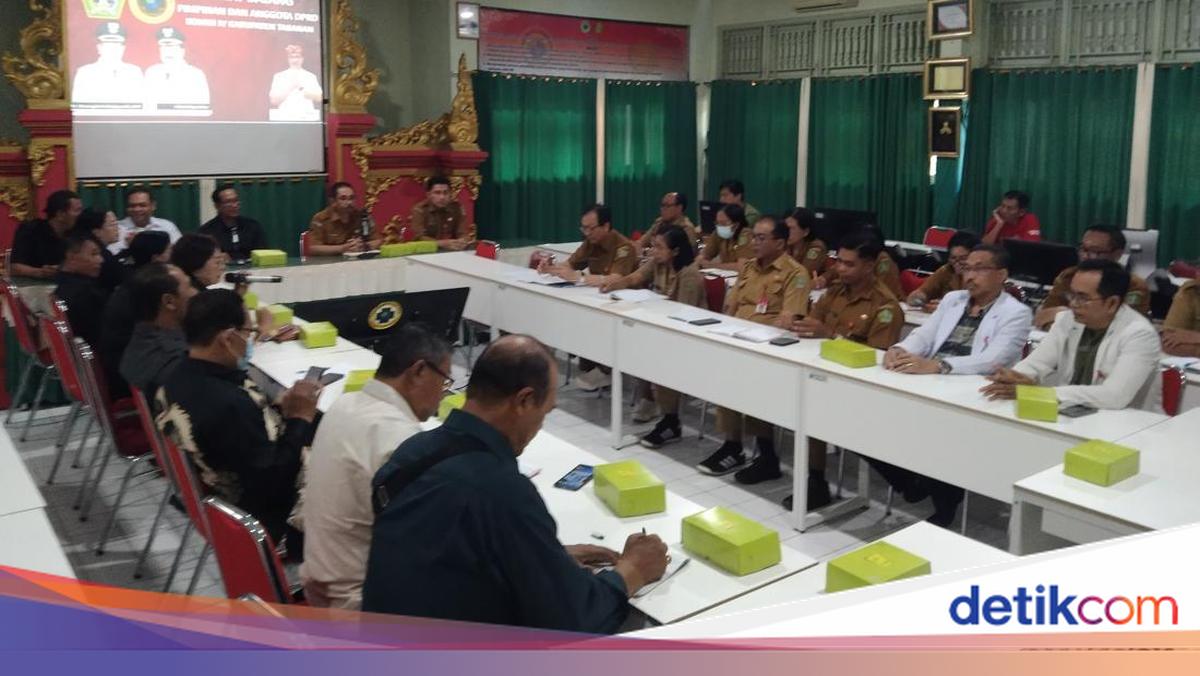
Financial turmoil at Tabanan Regional Hospital (RSUD Tabanan) continues to draw scrutiny. Commission IV of the Tabanan Regional Parliament (DPRD) has proposed that the regional hospital be audited following problems with receivables that have resulted in medicine shortages and unpaid service allowances (jaspel) for employees.
This emerged during a meeting between Commission IV of the Tabanan DPRD and the board of directors of RSUD Tabanan at the hospital. From the meeting, Commission IV proposed that the Type B hospital be audited immediately.
“An audit needs to be conducted if these receivable problems cannot be resolved,” said Wastana on Monday, 16 March 2026.
Wastana explained that one trigger for the financial deficit at RSUD Tabanan is the large number of general category patients who do not actually meet emergency criteria but must still be treated. This situation often occurs with patients who come directly to the emergency department without referrals from primary health facilities, meaning RSUD Tabanan cannot claim reimbursement from BPJS Kesehatan (Indonesia’s health insurance scheme).
Meanwhile, RSUD Tabanan holds the status of a Regional Public Service Agency (BLUD), managing finances independently. However, given these problems, officials believe regional government intervention is urgently needed to prevent RSUD Tabanan’s operations from being burdened by years of accumulated debt.
“Therefore, we plan to meet with and ask the Tabanan Regent to provide budget support to save RSUD Tabanan’s operations,” he said.
According to Wastana, the opportunity for the regional government to provide subsidies for RSUD Tabanan’s operations may be available in the 2026 Amended Budget. “A subsidy is not possible at present because the 2026 Base Budget is already in effect,” he said.
Beyond budget issues, parliament also highlighted weak oversight by the Supervisory Board (Dewas) and inadequate human resources in operating the digital medical record system using the NUHA platform. Officials hope that in future there will be stricter and more integrated guidance and supervision not only by the Health Office (Diskes), but also involving the Inspectorate and the Development Planning Agency (Bappeda).
Regarding obstacles with the digital system hindering BPJS claims, Commission IV believes that a two-week training programme for staff is insufficient. Wastana stated that serious commitment from management is needed to improve IT staff competence so that monthly BPJS Kesehatan claims processing runs professionally and optimally.