
Regional Inefficiency and the Central Paradox
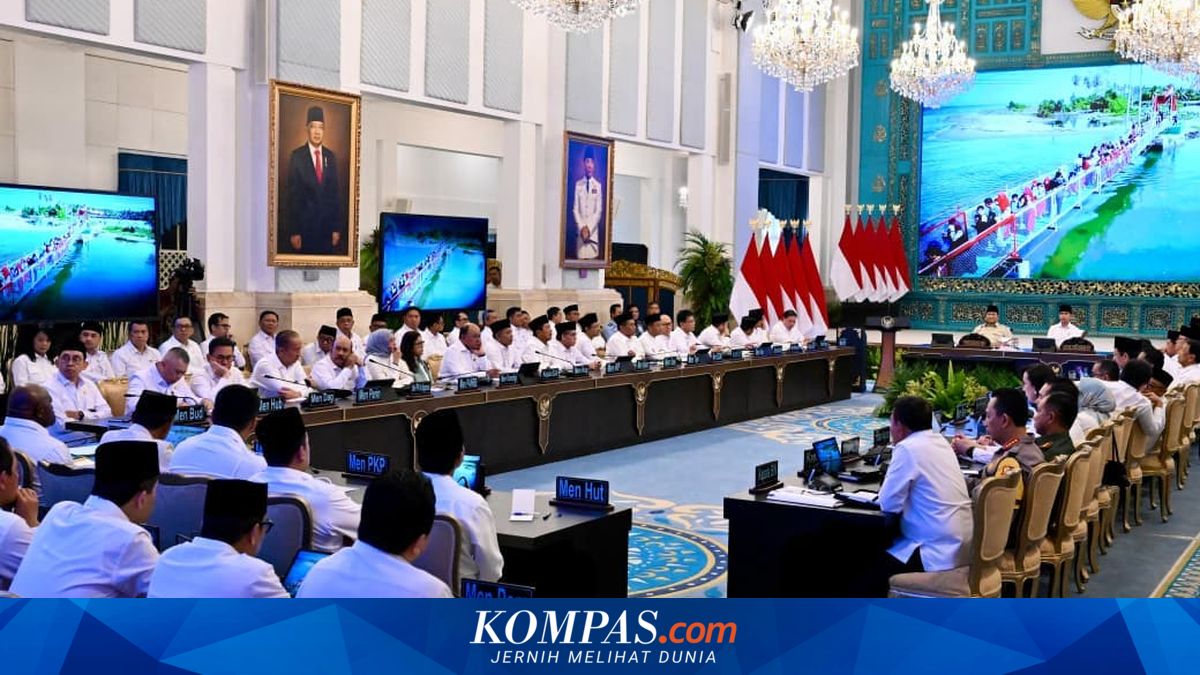
President Prabowo Subianto criticised the practice of budget management at the regional level, which he deemed inefficient and unproductive, during a limited discussion with selected observers and several senior journalists in Hambalang, Bogor, this past weekend.
This criticism, among other things, refers to the use of budgets for non-priority expenditures, including the procurement of fantastically expensive official vehicles in East Kalimantan, amid the many unmet basic needs of the community, such as village bridge infrastructure.
However, this criticism could spark debate from the perspective of government governance.
It cannot be simplified merely to the behaviour of regional governments, but must be viewed comprehensively within the framework of central-regional relations regarding aspects of guidance and supervision of autonomous regions.
Decentralisation requires the central government’s responsibility to provide guidance and supervision of regions (Binwas). The centre must not simply “sit back” after delegating authority.
In my opinion, systemically, the mechanism for supervising regional budgets is actually available through the levels of government—from governors to the Ministry of Home Affairs.
However, in practice, the evaluation function of regional budgets often runs only as a formality of administrative procedures.
There are also technical constraints, such as the limited evaluation time of only about two weeks, as well as an accumulation of workload, so that supervision is not optimal.
In addition, there are political factors that make supervision tend to be lenient to avoid conflicts between levels of government, such as governors versus regents and mayors.
The president’s criticism of regional inefficiency essentially targets aspects of guidance and supervision by the central government.
In other words, the problem cannot be separated from the central government’s responsibility as the guide and supervisor of regional governments.
Therefore, a solution in the form of cutting regional budgets is not the right approach. What happens is more like “scratching someone else’s itch.” The problem is governance, but what is cut is the regional budget.
Furthermore, the policy of cutting transfers to regions (TKD) to around 17 percent or Rp 650 trillion from the 2026 state budget of Rp 3,786 trillion actually has the potential to contradict the constitution.
Article 18A paragraph (2) of the 1945 Constitution mandates that financial relations between the central government and regional governments be regulated and implemented in a fair and balanced manner.