
Regent Mas Ipin Introduces Innovation to Combat Drought: Cold Vapour Turns into Water
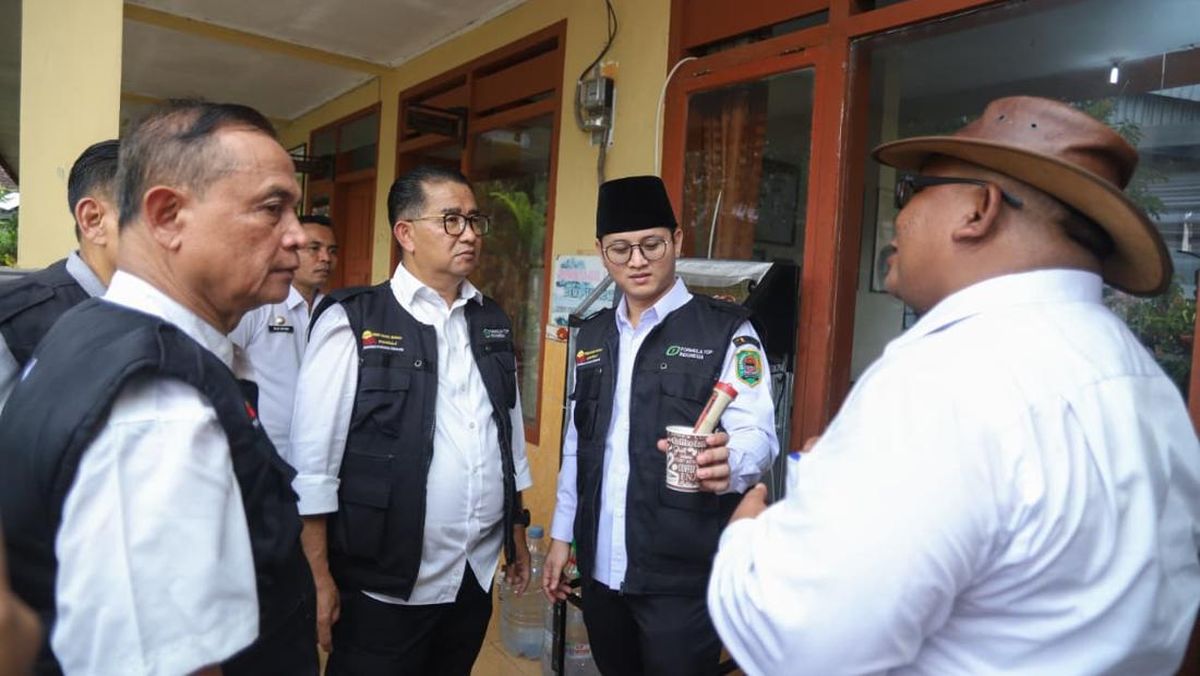
The Trenggalek Regency Government (Pemkab Trenggalek) has introduced an innovation to counter the severe drought threat anticipated this year, namely a simple condensation-based technology to produce water from cold vapour.
The innovation was presented directly by Regent Mochamad Nur Arifin (Mas Ipin) during a working visit to SDN 2 Sukorejo, Gandusari Subdistrict, on Wednesday (22/4).
The Regent explained that water availability is a crucial factor in supporting food security. However, the natural water cycle is currently declining due to reduced forest areas and damage to groundwater reservoirs, including karst regions affected by development.
“If we talk about food issues, one of the major components is water availability. Meanwhile, the natural water cycle has been reduced,” said Mas Ipin.
As a proactive measure, Pemkab Trenggalek is optimising condensation technology, a collaboration between the Head of the Agriculture Department and local innovators in Trenggalek.
According to data from the Meteorology, Climatology, and Geophysics Agency (BMKG), the drought potential for 2026 is quite high. During the dry season, around 92 to 100 villages in Trenggalek are usually affected by water shortages. This situation requires the Regional Disaster Management Agency (BPBD) to distribute clean water daily, which often experiences delays.
“So far, we have been sending water to affected areas, and BPBD is often overwhelmed because it has to go back and forth every day. With this technology, it is hoped that the community can produce water themselves,” added Mas Ipin.
From a budgetary perspective, the local government (Pemda) is also carrying out efficiencies by redirecting consumptive spending to investments in sustainable technology. Thus, the benefits provided will be useful in the long term compared to temporary solutions.
Pemkab Trenggalek stated that in the future, this condensation technology will continue to be developed. Currently, the system still uses electricity, but it is planned to increase its capacity by utilising solar energy. This step is expected to reduce operational costs in a more environmentally friendly manner, allowing it to be widely implemented in village communities.
This innovation offers new hope for the people of Trenggalek in facing the water crisis, while also serving as an example of adaptive simple technology utilisation in response to environmental changes.