
Regenerative Agriculture to Face Extreme Climate
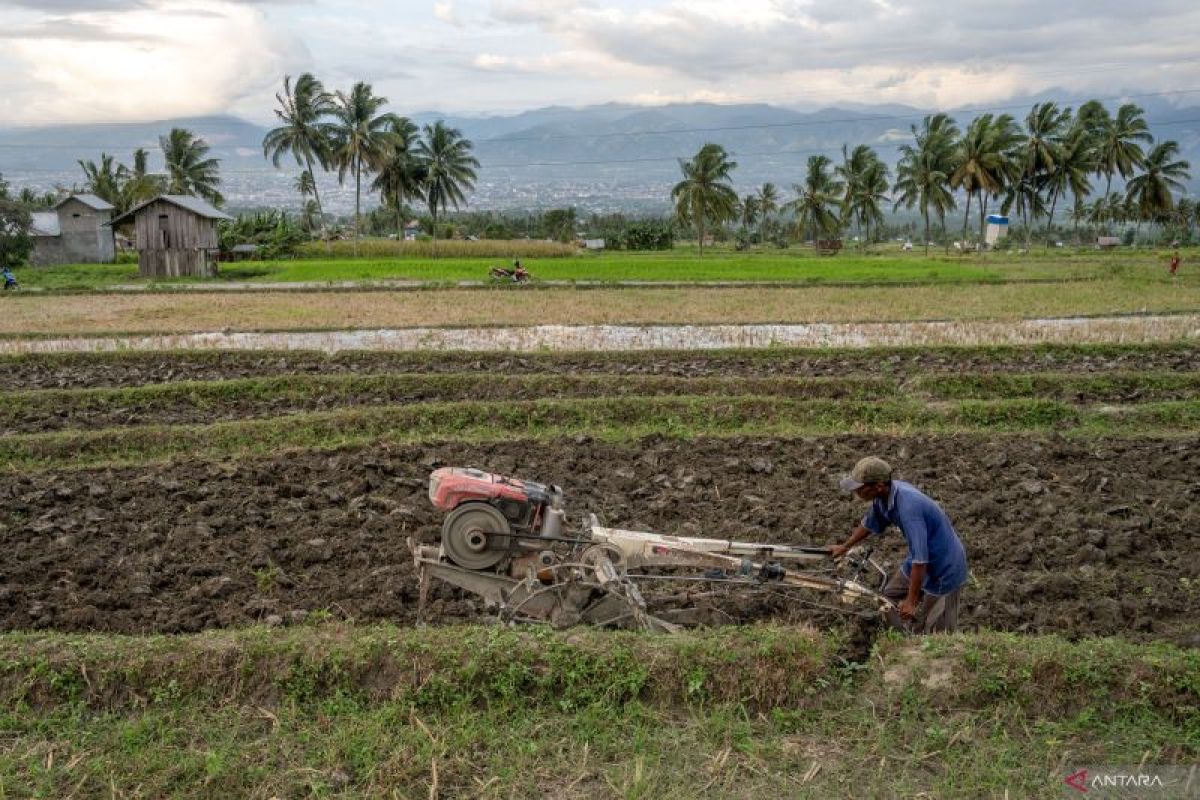
Regenerative agriculture aims to revitalise soil and land while still providing optimal benefits to the environment, economy, and society at large.
Jakarta (ANTARA) - Over the past two weeks, Indonesia has entered a transition period from the La Niña weather phenomenon to El Niño. In most parts of Indonesia, La Niña is generally marked by wet dry seasons, while El Niño is marked by dry dry seasons.
In other parts of the world, these signs may occur oppositely.
During this transition period, high temperatures reaching 35 degrees Celsius in the afternoon until evening have begun to be felt in the Jakarta, Bogor, Depok, Tangerang, Bekasi (Jabodetabek) area, although they are later followed by light to heavy rain towards nightfall.
On 20 March 2026, the Meteorology, Climatology, and Geophysics Agency (BMKG) even reported that the daily maximum temperature at several weather and climate stations around Jakarta, Banten, to Lampung exceeded 35 degrees Celsius, ranging from 35.2-35.7 degrees Celsius.
These temperatures indicate that hot weather conditions are still quite dominant in several regions. In fact, on 13 March 2026, the daily maximum temperature in West Java once reached 37.2 degrees Celsius.
Of course, such high temperatures make the atmosphere less comfortable. However, like it or not, these conditions must be faced because high temperatures will feel normal in the coming days.
For residents who are active outdoors and directly exposed to the sun, they must always provide drinking water to avoid dehydration.
The impact of weather changes is more felt in the agricultural sector. During the La Niña phenomenon last year, the agricultural sector, particularly the rice commodity, benefited because water was more available almost throughout the year. As a result, Indonesia achieved a rice surplus even though flooding occurred in some areas.
However, the El Niño phenomenon that will be faced is certainly different. Indonesia needs strategies to ensure that the agricultural sector, particularly the rice commodity, can remain resilient.
During the transitional period that still receives rain, the strategy that must be taken is to harvest as much rainwater as possible. Farmers in Madura generally dig basins in the middle of the fields and then line them with tarps to collect water.
Rainwater harvesting can also be done by blocking water channels along the edges of the fields so that the water does not directly flow into small rivers, large rivers, and then disappear into the ocean. Of course, this strategy can only be implemented carefully to avoid flooding if there is excess water volume during rain.